All-in-One COB LED TV
 Flexible LED Displays
 Transparent LED Displays
 Led Poster
 Circular LED Displays
 Column LED Screens
 Creative & Custom LED Displays
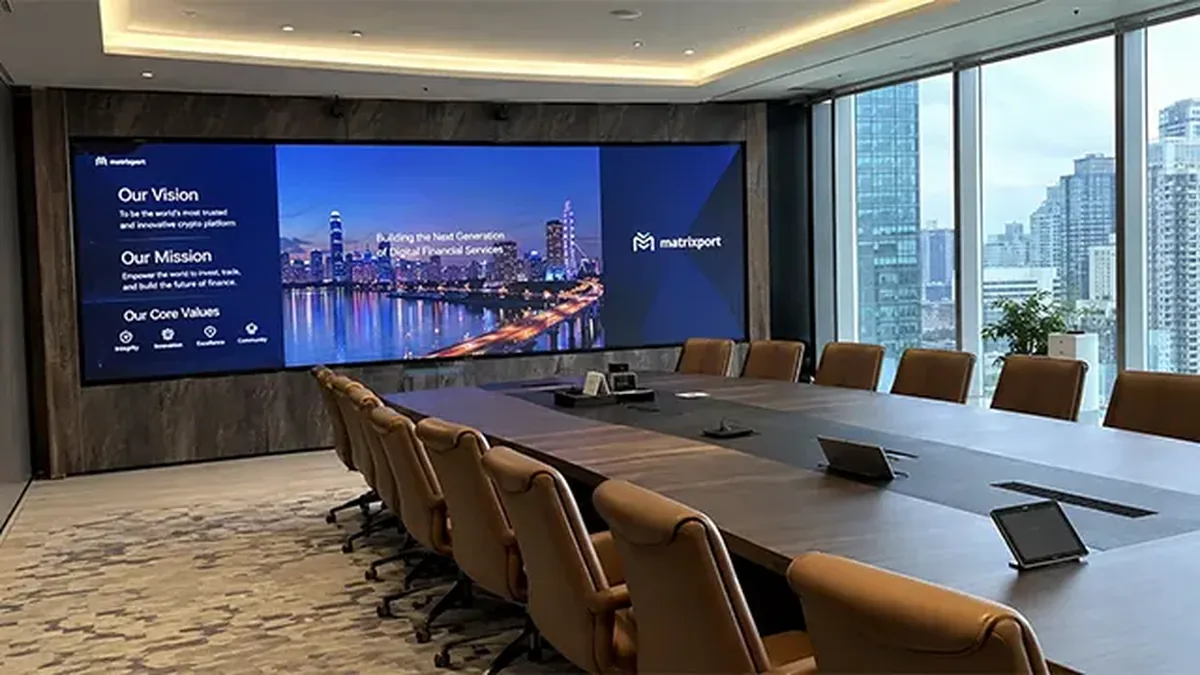
A Samsung The Wall alternative should not be sold as “the same thing for less.” The Wall All-in-One is a fixed 146-inch package with processing, control, frame and Samsung software. COB Pro is a modular system configured around the room. Public US references for the 146-inch 4K model currently span $159,999 at a reseller to $219,999 on Samsung US. Below, those figures are compared with two COB Pro native-4K layouts—136 inches at P0.78 and 163 inches at P0.9375—using clearly separated panel-only and full-system estimates. MIP P0.9375 remains a conditional 163-inch route where its performance and service workflow match the brief.
- Public prices vary by channel. As checked 22 September 2026, Samsung US shows $92,000 for 146″ 2K and $219,999 for 146″ 4K; DisplayDetails shows $73,999 and $159,999.
- Compare systems, not a panel price to a package price. Processing, frame, structure, installation, commissioning, freight, spares and warranty scope must be aligned.
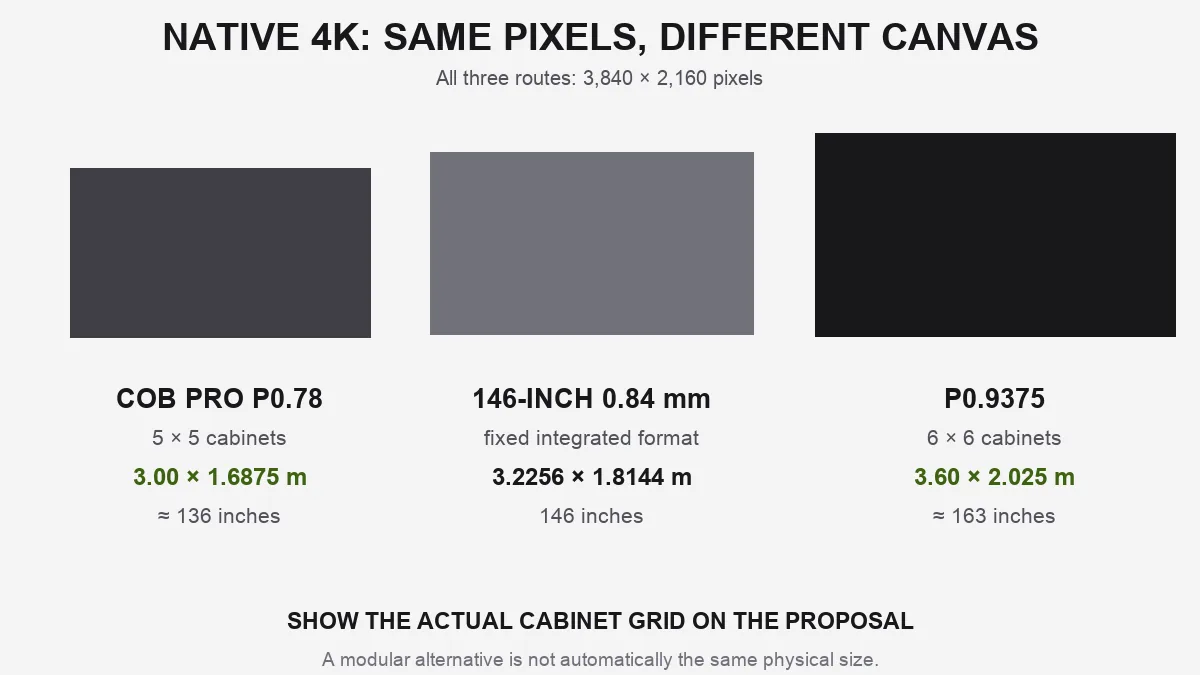
- Native 4K has two practical COB Pro routes. P0.78 produces 136″ with 25 cabinets; P0.9375 produces 163″ with 36 cabinets.
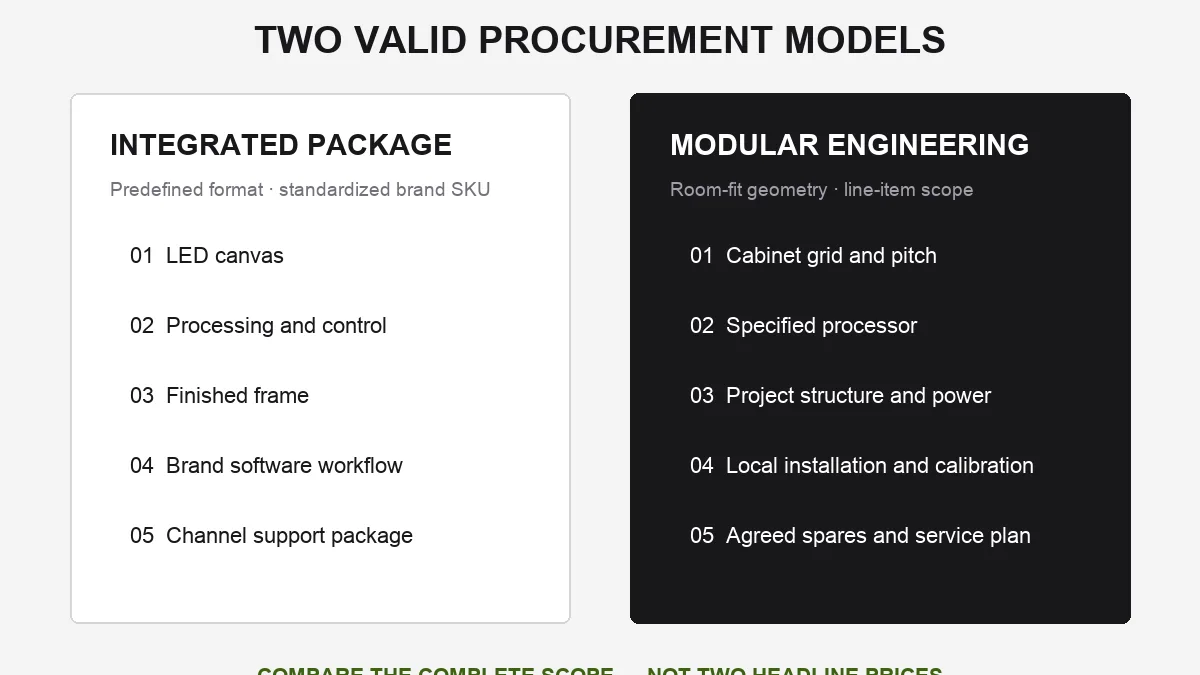
- The procurement model is the real choice. Fixed integrated package and flexible modular engineering solve different buying problems.
What Samsung The Wall Costs in the US
There is no single useful “The Wall price.” Model, resolution, channel, freight and service package change the number. The comparison below uses public pages checked on 22 September 2026, not an assumed transaction price.
| Reference | Configuration | Public price | What the number is |
|---|---|---|---|
| Samsung US | 146″ 2K · P1.68 | $92,000 | Manufacturer public web price |
| Samsung US | 146″ 4K · P0.84 | $219,999 | Manufacturer public web price |
| DisplayDetails | 146″ 2K · P1.68 | $73,999 | Reseller price; advertised freight/warranty terms apply |
| DisplayDetails | 146″ 4K · P0.84 | $159,999 | Reseller price; verify stock and scope |
These references are price anchors, not quotations from DOIT VISION and not evidence of the final negotiated price. Recheck every external page at publication and during scheduled content reviews.
What the Integrated Package Includes
The 146-inch IAB is not a loose cabinet price. Samsung describes an all-inclusive system with control components, speakers and a simplified installation process. The 4K model combines a 3,840 × 2,160 canvas, 0.84 mm pitch, Tizen-based operation, Samsung processing and a finished frame at a fixed 3,225.6 × 1,814.4 mm active size.
Samsung’s 146-inch 4K product page lists 500 cd/m² as the standard maximum and also presents a 1,600-nit peak figure. Those are different operating definitions. A competing wall’s steady 600 or 1,000 cd/m² rating should not be placed beside a transient peak number without test conditions.
The price also buys a standardized item that corporate procurement can repeat across locations. That matters when a buyer values one model code, one brand workflow and a predefined finished appearance more than custom dimensions.
Separate display performance from procurement convenience. Pixel pitch and contrast describe the image; bundled processing, frame, software, installation method and support describe the delivery model.
The Real Decision: Pixels, Distance and Scope
A hard “two-metre rule” is too crude for a six-figure decision. The first question is what content must remain legible at the closest seat. The second is how many native pixels must fit inside the architectural opening. The third is whether the buyer wants a standardized appliance or an engineered AV system.
The Wall 146″ 4K uses 0.84 mm pitch on a 3.2256 × 1.8144 m canvas. DOIT VISION’s nearest native-4K grids use standard 600 × 337.5 mm cabinets:
- COB Pro P0.78: 5 × 5 cabinets, 3.00 × 1.6875 m, 3,840 × 2,160 pixels, approximately 136″.
- COB Pro or MIP P0.9375: 6 × 6 cabinets, 3.60 × 2.025 m, 3,840 × 2,160 pixels, approximately 163″.
The first is 10 inches smaller than the Samsung canvas; the second is 17 inches larger. That is why a responsible alternative proposal shows the actual cabinet grid instead of calling both systems “about 146 inches.” For more detail, use the P0.9 cabinet-math guide.
Send the wall opening and closest seat. We will return the COB Pro P0.78 and P0.9375 cabinet drawings side by side.
Fine-Pitch COB and MIP Routes
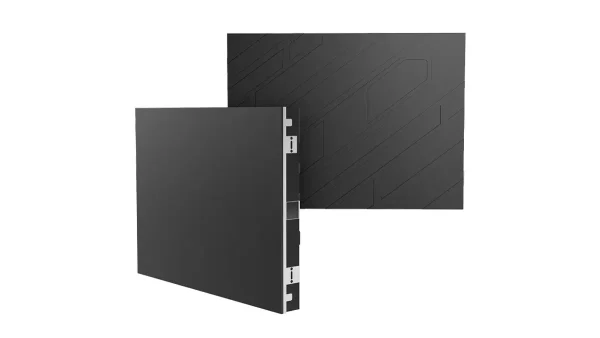
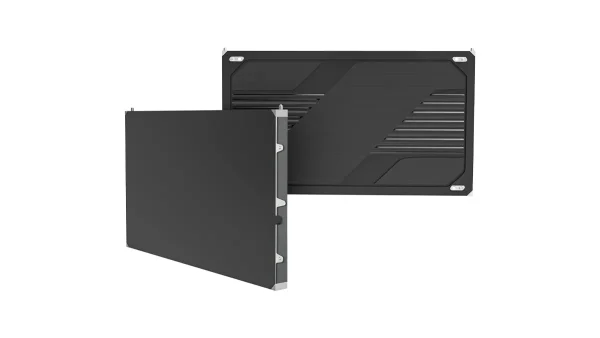
COB Pro P0.78 is the closest modular route in this comparison. Its 5 × 5 grid delivers native 4K at approximately 136 inches, with specified 10,000:1 contrast, 3,840/7,680 Hz and 600/1,000 cd/m² configurations. COB Pro P0.9375 keeps the 600 × 337.5 mm cabinet family but produces a larger 163-inch canvas at a lower panel price.
The MIP route in this comparison is P0.9375. It uses the same 6 × 6 native-4K geometry as COB Pro P0.9375 and specifies 100,000:1 contrast, 7,680 Hz and 800–1,000 cd/m². Consider it when the 163-inch canvas fits and camera capture, very deep specified contrast or package-level pixel service is written into the acceptance criteria. MIP pricing is quoted separately from the COB bands.
Both routes are parts of an engineered system. The processor, receiving-card layout, structure, power distribution, calibration method, spare ratio and local installation plan belong on the same quote. See the broader fine-pitch LED display range and the COB vs MIP engineering comparison.
Integrated Package vs Modular System
| Decision line | The Wall All-in-One | Modular COB / MIP system |
|---|---|---|
| Canvas | Predefined 110″ / 146″ package sizes | Cabinet-grid dimensions and custom structures |
| Processing | Samsung-integrated control and software | Specified processor and Novastar configuration |
| Procurement | Standardized brand SKU through channel | Factory BOM plus local/integrator scope |
| Design freedom | Finished fixed-format package | Pitch, size, structure, processor and OEM options |
| Best buyer | Organization prioritizing repeatable branded deployment | AV integrator optimizing room fit and line-item cost |
Neither column is automatically better. They place responsibility in different places. An integrator-led project gains flexibility and cost visibility; a standardized package reduces design decisions. The RFP should state which outcome carries more weight.
Which Procurement Model Fits the Project?
Prioritize The Wall when…
- 146 inches is already approved in the architecture
- A standardized global brand SKU simplifies procurement
- Built-in processing and Samsung software are part of the brief
- The finished appliance experience outweighs size flexibility
Prioritize COB or MIP when…
- The wall opening or native resolution drives the geometry
- The integrator wants a line-item BOM and local installation scope
- Pitch, processor, structure or OEM presentation must be configured
- Budget needs to move from brand bundle to display performance
Control rooms and conference rooms often fall into the second column because the AV integrator already owns signal distribution, structure and commissioning. Executive lobbies can fall into either column: some buyers value brand standardization; others value a canvas designed around the architecture.
Like-for-Like Cost Math for Native 4K
The table below does not claim identical products. It fixes native 4K and shows the actual canvas each standard cabinet grid produces. DOIT VISION figures use the September 2026 COB Pro EXW panel bands plus a 20–40% planning adder for processor, structure, freight, installation, commissioning and spares.
| Native-4K route | Canvas | Panel / public price | System planning reference |
|---|---|---|---|
| COB Pro P0.78 · 25 cabinets | 136″ · 3.00×1.6875 m | $23,541–24,300 EXW panel-only | Approx. $28,249–34,020 |
| COB Pro P0.9375 · 36 cabinets | 163″ · 3.60×2.025 m | $16,403–18,225 EXW panel-only | Approx. $19,683–25,515 |
| Samsung The Wall IAB 146″ 4K | 146″ · 3.2256×1.8144 m | $159,999 reseller / $219,999 Samsung US | Verify installation, freight and channel scope |
The modular totals are ROM planning numbers, not a bid. Destination, steel, labour, processor redundancy, air freight and taxes can move them. Their value is that each assumption is visible. For current per-square-metre bands, see COB LED display cost.
Send the model, size, resolution and included services. We will return a same-resolution comparison with cabinet geometry and scope clearly separated.
The Five-Line Comparison Sheet
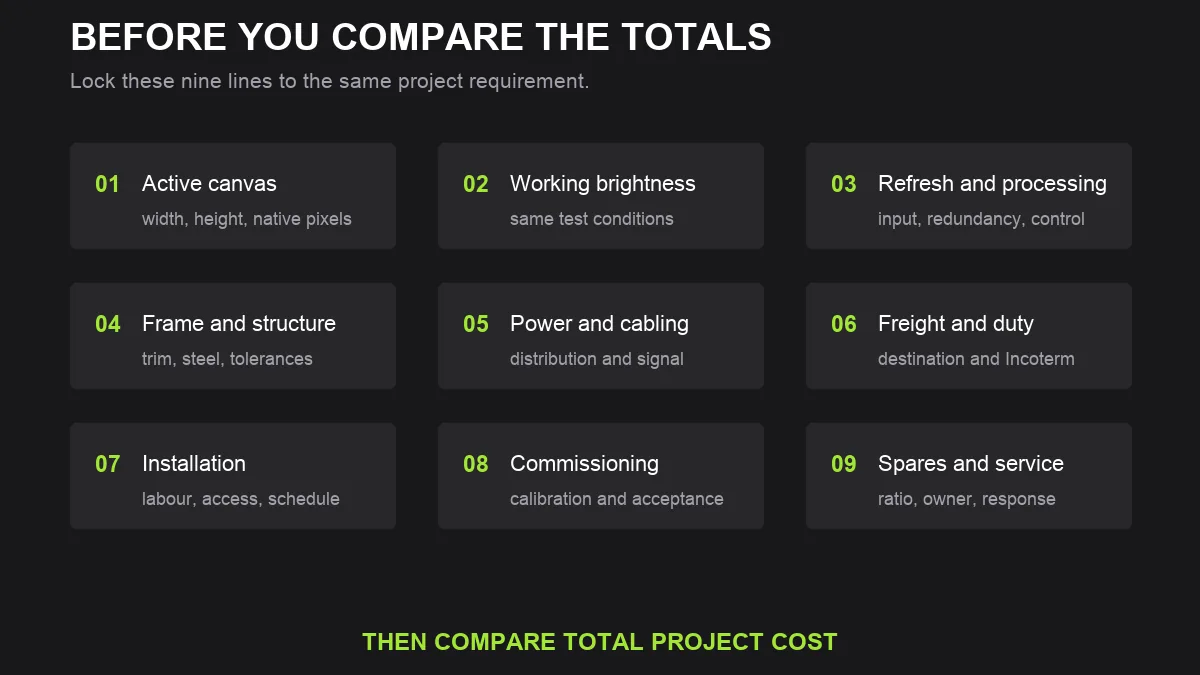
Use one page for the internal decision. First, write the active canvas and native resolution. Second, record the closest viewer and smallest critical text. Third, normalize brightness terminology—peak, maximum and calibrated operating levels are not interchangeable. Fourth, list the delivery scope: processor, frame, steel, power, freight, install, calibration, spares and warranty. Fifth, assign ownership for local service.
Then compare total project cost. If the integrated package wins because standardization and procurement simplicity are worth the premium, the decision is defensible. If the modular system wins because it fits the room and the integrator already owns the surrounding AV stack, that decision is equally defensible. The weak decision is a price ratio built from unlike scopes.
Share the room drawing or branded quote. An engineer will map native pixels, cabinet count and delivery scope—not just divide two headline prices.