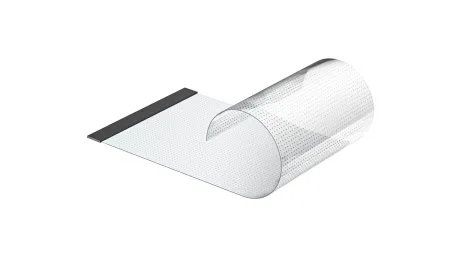
LED Film
A self-adhesive film for the interior side of existing glass. Start here when a discreet layer and a clear view matter most.
- Format
- Adhesive film
- Pitch
- P4–P20
Check pane divisions, edge housings and cable routes.
Explore LED Film
Transparent LED uses spaced LEDs to show content while allowing a view through the display. The mounting method is your first decision.
Choose what you know. Get a starting point and the checks that matter next.
Grid cabinets build a hanging, stacked or fixed screen. Cabinet layout and the supporting structure are central to the choice.
Next: Send the overall width and height, support drawing and intended service access.
For text-first indoor displays, also compare indoor LED displays.
Initial guidance. Final pitch, brightness and mounting follow a review of your site and content.
A self-adhesive film for the interior side of existing glass. Start here when a discreet layer and a clear view matter most.
Check pane divisions, edge housings and cable routes.
Explore LED Film
Self-adhesive LED mesh for glass, also available in suspended, framed, mobile poster or rental configurations. Start with P3.91 or P6.25.
Compare your content at the real viewing distance.
Explore Holographic
Modular cabinets for hanging, stacked or fixed screens. Start here for a façade layout with an engineered support structure.
Confirm support, access and the indoor or outdoor version.
Explore Transparent GridBoth LED Film and glass-mounted Holographic are self-adhesive. Compare their reapplication limits as well as the viewing experience and installation plan.
See the physical structure up close, then look through the unlit installation. Check what remains visible when content is not playing.
Transparent LED is the category. LED Film is one way to build it. Both LED Film and glass-mounted Holographic are self-adhesive. Grid uses modular cabinets and a supporting structure.
See the clear film layer, LED points and fine circuit lines. Check their visibility at your closest viewing distance.
An actual frame from glass application. The LED points and film edge remain visible while the view outside passes through.
See the openings around the LED points and the flexible mesh structure. Compare the actual pitch and mesh sample for your project.
The mesh is visible across the glass; edge wiring is exposed during assembly. Review the final edge finish and connections with the installation layout.
See the spaces between the LED strips and the cabinet side frame. These remain part of the view when the display is unlit.
An interior view through the installed cabinets. LED strips, cabinet edges and supports are visible against the street outside.
Top: real product details. Below: unlit glass installation views, including installation work in progress. Select a photo to see the full image. These are different pitches, sites and viewing angles, so use matching samples to compare transparency.
Compare a Holographic glass-mounted configuration too. P3.91 and P6.25 are usual starting points; P2.9 and P2 are finer-pitch project options. For a bright, protected window, review the available brightness version alongside pitch, ventilation and sunlight. Describe the actual exposure when a project is called “semi-outdoor”.
Compare samples for my windowYes, with limits. For both products, we recommend no more than three reapplication operations after the first installation.
LED FilmCan be moved to another position shortly after the first installation. The original adhesive cannot be replaced, so reapplication depends on its condition.
HolographicReplacement adhesive can be supplied for glass-mounted mesh. The same recommended limit applies; assess the panel before removing and reapplying it.
Swipe to compare all three series.
| Your decision | LED Film | Holographic | Transparent Grid |
|---|---|---|---|
| Start here when… | You want a discreet display layer on existing glass. | You want transparent mesh with a choice of installation formats. | You need a modular screen with a support structure. |
| Mounting | Self-adhesive; interior side of glass | Self-adhesive on glass / suspended / mobile poster / framed / rental | Hang / stack / fixed mount |
| Reapplying on glass | Can be moved shortly after initial installation; original adhesive cannot be replaced.Recommended: no more than 3 reapplication operations after first installation. | Replacement adhesive available.Recommended: no more than 3 reapplication operations after first installation. | Cabinet system: plan removal and reinstallation around the supporting structure. |
| Pixel pitch | P4 / P5 / P6.25 / P8 / P10 / P15 / P20 | P3.91 / P6.25 usual starting pointsP2.9 / P2: higher-resolution project options | HD: P2.6 × 2.6 / P2.97 × 2.97 / P3.47 × 3.47 / P3.91 × 3.91High Transparent: P2.6 × 5.95 / P2.8 × 5.6 / P3.9 × 7.8 / P10.4 |
| Transparency | ≥90%: P4 / P5 / P6.25 / P8 ≥93%: P10 · ≥94%: P15 · ≥95%: P20 |
Confirm for the selected mesh and installation configuration. | 40–80% across reference configurations; confirm the selected pitch. |
| Brightness | 2,000 nits base 4,000 nits option: all pitches 4,500 nits option: P10 |
TH reference P3.91: 3,500–4,500 nits TH reference P6.25: 3,500 nits |
Up to 5,000 nits; specify with the selected configuration. |
| Environment | Indoor glass · IP31 | Indoor · TH reference IP30 | IP30 standard reference Outdoor IP65 option on request |
| Panel / cabinet format | P4: 240 × 1000 mm P5: 320 × 1000 mm P6.25 / P8 / P10: 400 × 1000 mm P15: 390 × 990 mm P20: 1000 × 400 mm |
Dimensions follow the glass, suspended, poster, framed or rental configuration. | 1000 × 500 mm 1000 × 1000 mm Reference cabinet formats |
| Confirm before ordering | Glass condition, pane layout, power-bar position and daylight. | Content sample, pitch, mounting format and actual configuration specifications. | Supporting structure, total load, service access and weather exposure. |
Choose a complete configuration. Holographic TH reference values apply to the named TH models; confirm specifications for glass, poster and rental formats separately.
Grid project specification. Confirm final pitch, transparency, weight and indoor or outdoor configuration with the quotation. Daylight brightness and weather protection are separate decisions.
Look at pane divisions, visible connections and the viewing position. These examples show different installation and content choices.
A glazed walkway with content across several panes. Plan the image around mullions and the areas people will see from outside.
A sample demonstration with the mesh and top connections visible. Review your content, closest viewing distance and final cable finish together.
A tall display positioned between floors. Plan the supporting structure, service access and sightlines from each level.
Make the sample test useful. Bring one real animation, your smallest text and a photo of the background behind the glass. Check from both sides with the display on and off.
Discuss a sample reviewA few site details can change the series, pitch or mounting approach.
Measure individual panes, mullions and opening doors. Mark edge housings, cable paths and accessible power-supply locations on the same drawing. For curved glass, include the radius and photos so the mounting detail can be reviewed.
Take photos at the brightest operating time as well as after dark. Record direct-sun periods and the background behind the display. Compare image visibility and the view through the glass together; select brightness alongside ventilation and operating conditions.
Large, separated objects and short messages often suit transparent displays. Test your smallest type and detailed product imagery at the intended viewing distance. Discuss pitch and content composition together, including how the background affects contrast.
For Grid or a suspended configuration, agree the supporting structure and total installed load with the project team. Plan a reachable route to power, receivers and service parts. Send your processor model and playback workflow to confirm the Novastar or Colorlight configuration.
DOIT VISION can provide drawings, wiring guidance and installation instructions for your transparent LED project.
Review the display layout and mounting arrangement with your team before installation.
Plan power and signal connections for the selected screen configuration.
Give your installers the mounting instructions for the product and installation method you choose.
Start with your site. Send photos, screen dimensions, individual pane measurements, the mounting method and planned power locations. We can then review the layout with you and agree which documents your team needs.
Discuss my installationTransparent LED is the category; LED Film is one option within it. Start with the installation. LED Film suits a discreet layer on existing indoor glass. Holographic mesh offers glass mounting plus suspended, framed, mobile poster and rental configurations. Transparent Grid uses modular cabinets for structured installations. Then compare the viewing distance, content, daylight and access for maintenance. Share site photos and pane measurements before choosing a pitch.
LED Film and glass-mounted Holographic are both self-adhesive transparent LED options. Both attach to suitable existing glass, but their adhesive replacement and reapplication conditions differ. Measure each pane, mark mullions and doors, and identify space for edge housings, power and signal connections. The surface condition, glass shape and access should be reviewed with the mounting detail before installation.
Compare transparency within the same configuration and measurement method, then look at a sample in the intended space. LED Film has model-specific transparency floors from at least 90% to at least 95%; Transparent Grid references span 40–80%. Holographic values depend on the selected mesh configuration. Frames, glass reflections, background lighting and content also affect how open the completed installation appears to a viewer.
Choose pitch against actual screen dimensions, the nearest viewer and a sample of your content. Holographic P3.91 and P6.25 are usual starting points; P2.9 and P2 are higher-resolution project options at a higher budget. For Film, compare the available P4–P20 modules. Check lettering at its intended size on a sample, and consider an indoor LED wall when dense text is the main task.
Separate daylight brightness from weather exposure. LED Film is an IP31 solution on the interior side of glass, with 2,000-nit base and 4,000-nit options; P10 also has a 4,500-nit option. Transparent Grid has a standard IP30 reference configuration and an outdoor IP65 option on request. Share window orientation, direct-sun periods, ventilation and weather exposure so the brightness and enclosure can be specified together.
Yes, within limits. Both LED Film and glass-mounted Holographic are self-adhesive. Holographic can be supplied with replacement adhesive. LED Film adhesive cannot be replaced, but the film can be moved and reapplied shortly after the initial installation. For either product, we recommend no more than three reapplication operations after the first installation. Suitability depends on the condition of the panel and adhesive; discuss a planned move before removal.
Cost depends on the selected series, pitch, brightness version, active display area and installation format. Compare quotations that include the same scope: panels, control equipment, power supplies, cabling, mounting, spares, packing and delivery. Site installation is another part of the budget. Send the glass or screen dimensions, content requirements, destination and required date so the configuration, supply scope and lead time can be agreed together.
DOIT VISION can provide drawings, wiring guidance and installation instructions for your transparent LED project. Share site photos, overall screen dimensions, individual glass pane measurements, the mounting method and planned power locations. These details help us review the layout and connections with your installation team. Agree the required documents for the selected product and configuration, and plan access to connections and service parts before installation.
A transparent LED display puts digital content on glass while keeping the view and daylight behind i...
Read guide
There is no single “transparent LED installation” — the three products mount three diffe...
Read guideSend a photo, dimensions and a sample of what you want to show. DOIT VISION will review the series, pitch and installation configuration with you.
info@doitvision.comA drawing, a site photo or an early idea. Tell us what you are planning and work through the details with our engineering team.