 All-in-One COB LED TV
 Flexible LED Displays
 Transparent LED Displays
 Led Poster
 Circular LED Displays
 Column LED Screens
 Creative & Custom LED Displays
Retail LED displays.
For your space.
Windows, walls, columns or freestanding displays. Tell us what you want to show. We’ll help match the screen to your store.
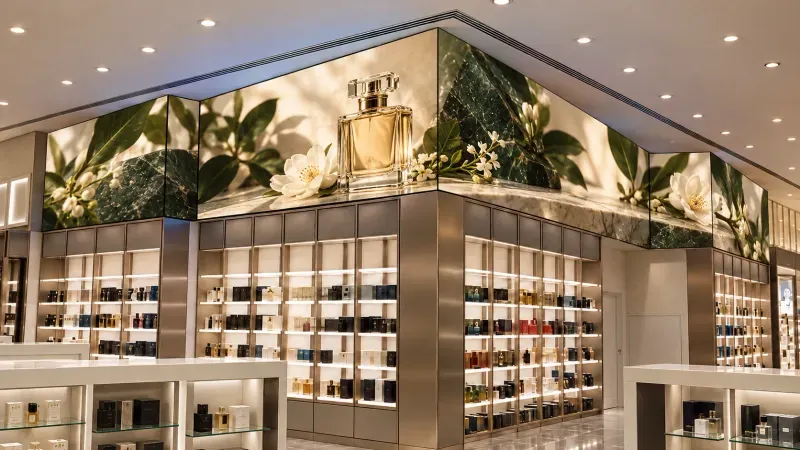
Where will your display go?
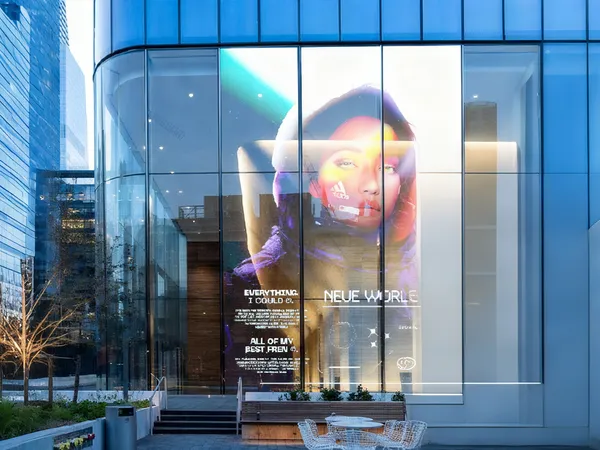

Want people to see the display and the shop behind it?
Start with a transparent display when an open view matters. If you want a solid backdrop instead, compare an indoor wall display and check the daylight at the window.
Share a daytime photo of the window. We can review the glass layout, sunlight and mounting before you choose a model.
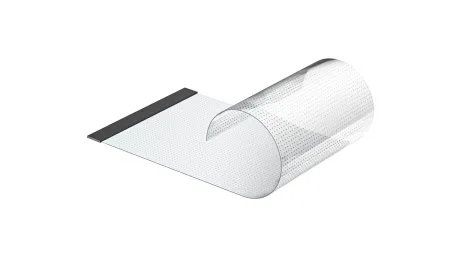
LED Film
LED Film attaches to the inside of suitable glass. Explore this route when you want the display integrated into the existing window.
Explore LED Film
Holographic LED
Holographic LED is a transparent LED mesh screen. Explore it when comparing glass mounting with a framed or suspended layout.
Explore Holographic LEDLarge campaign visuals, or small details viewed up close?
For a branded feature wall, start with Block Series. If nearby shoppers need to see fine product detail or small text, compare COB Pro using a sample of your content.
A wall photo, approximate size and a content sample are enough to begin. We can help check the detail you need from where people stand.
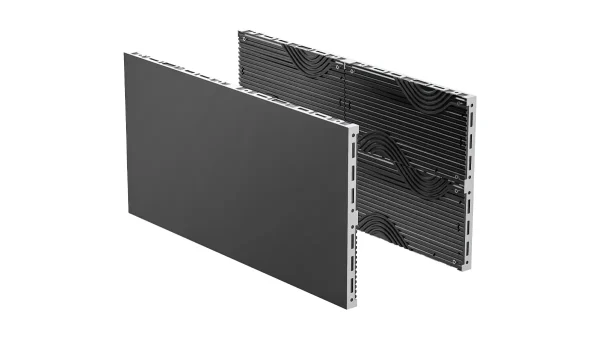
Block Series
Block Series is a fixed indoor wall system. Explore it for campaign images, branded walls and layouts that need coordinated flat faces or corners.
Explore Block Series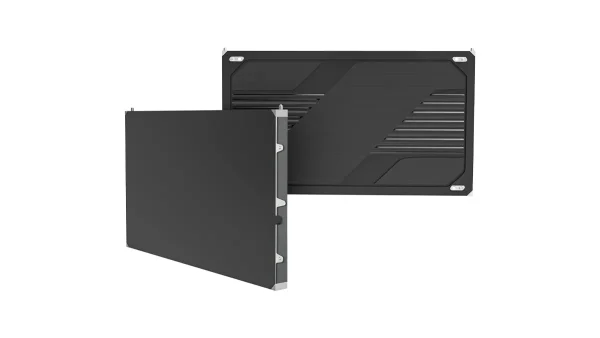
COB Pro
COB Pro is a fine-pitch display, with closely spaced LED pixels. Compare it for small text and detailed product visuals seen from nearby.
Explore COB ProA smooth curve and a sharp corner need different constructions.
For a curved column wrap, start with flexible LED modules. For flat faces that meet at a corner, start with a suitable cabinet layout such as Block Series.
Send a photo or a rough sketch of the shape. We can help work out the dimensions, support and access needed.
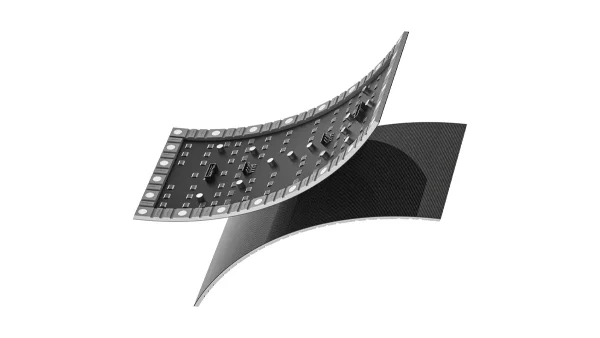
Flexible LED
Flexible LED modules follow a curved support. Explore this route for a smooth curve or a column wrap, with the support and service access designed around it.
Explore flexible LED
Block Series
Block Series uses flat display cabinets. Explore it for a right-angle wall or several flat faces, with the cabinet combination checked for your project.
Explore Block SeriesWill it travel between locations, or mainly stay in one store?
If regular transport and storage matter, start with a foldable poster. For a planned in-store position, compare a fixed-format poster and its footprint. Fixed format describes the full-height screen, not a requirement for wall mounting.
Tell us where it will stand and how often it moves. Check doors, floor space and storage before choosing the format.
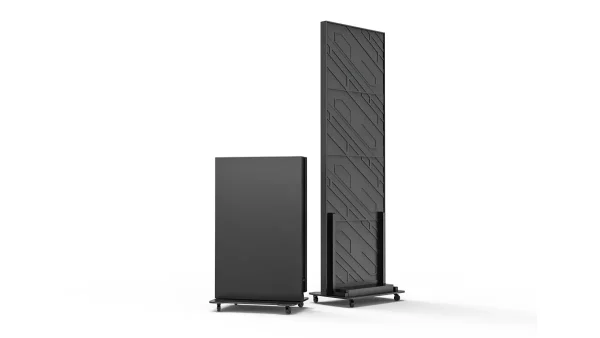
Foldable LED Poster
Foldable LED Poster folds for storage and transport. Start with the COB version; compare the GOB option when purchase budget is the priority.
Explore foldable posters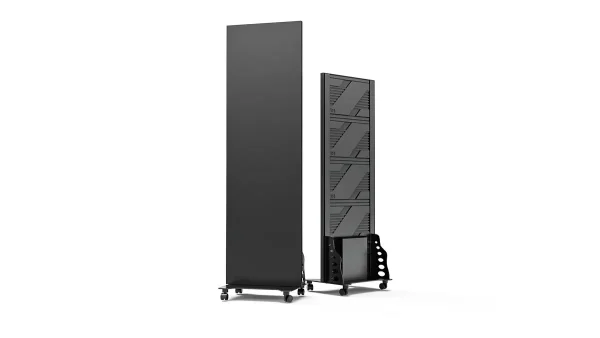
Fixed COB Poster
Fixed COB Poster keeps its full-height screen format. Compare it for a planned promotion area, entrance or product display, checking the base and screen size against the space.
Explore fixed COB postersSee how the display fits the job.

Plan a display across divided glass
This illustrative glass-front display shows how window frames divide the screen area. Review reflections and nighttime brightness when planning the layout.
Explore glass applications
AT&T: a repeatable retail display
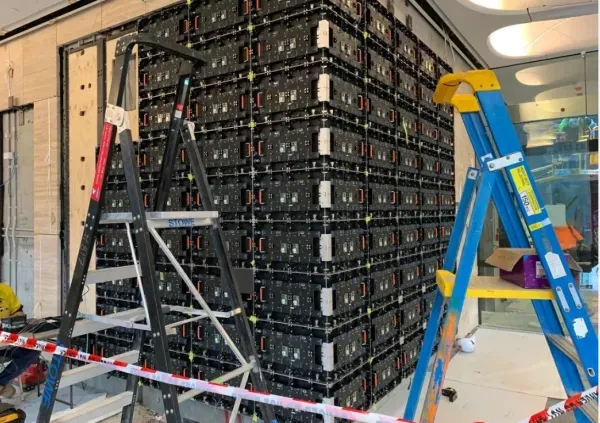
The AT&T retail project needed a repeatable four-sided display within the store fixture. Standard modules and CNC-machined frame corners formed the wraparound display without a separate custom corner-PCB design.
Read the retail project
Plan the display corner
A display that wraps around an edge needs screen geometry, cabinet alignment and service access considered together.
Explore custom solutionsFour decisions before you pick a pixel pitch.
LED Calculator-
What will you show?
Large campaign images and small price labels need different levels of detail. Plan the display around the content you will use.
-
Where will people stand?
The nearest viewer and smallest text help determine the detail you need. Screen size and viewing distance should be considered together.
-
How bright is the space?
Direct sun, reflections and indoor lighting affect visibility. For a window, also consider how much of the store should remain visible through the screen.
-
How will you install and maintain it?
Allow access to the screen, cables and power. Include window frames for glass displays, or doorways and storage space for a moveable poster.
Give your installation team a clear starting point.
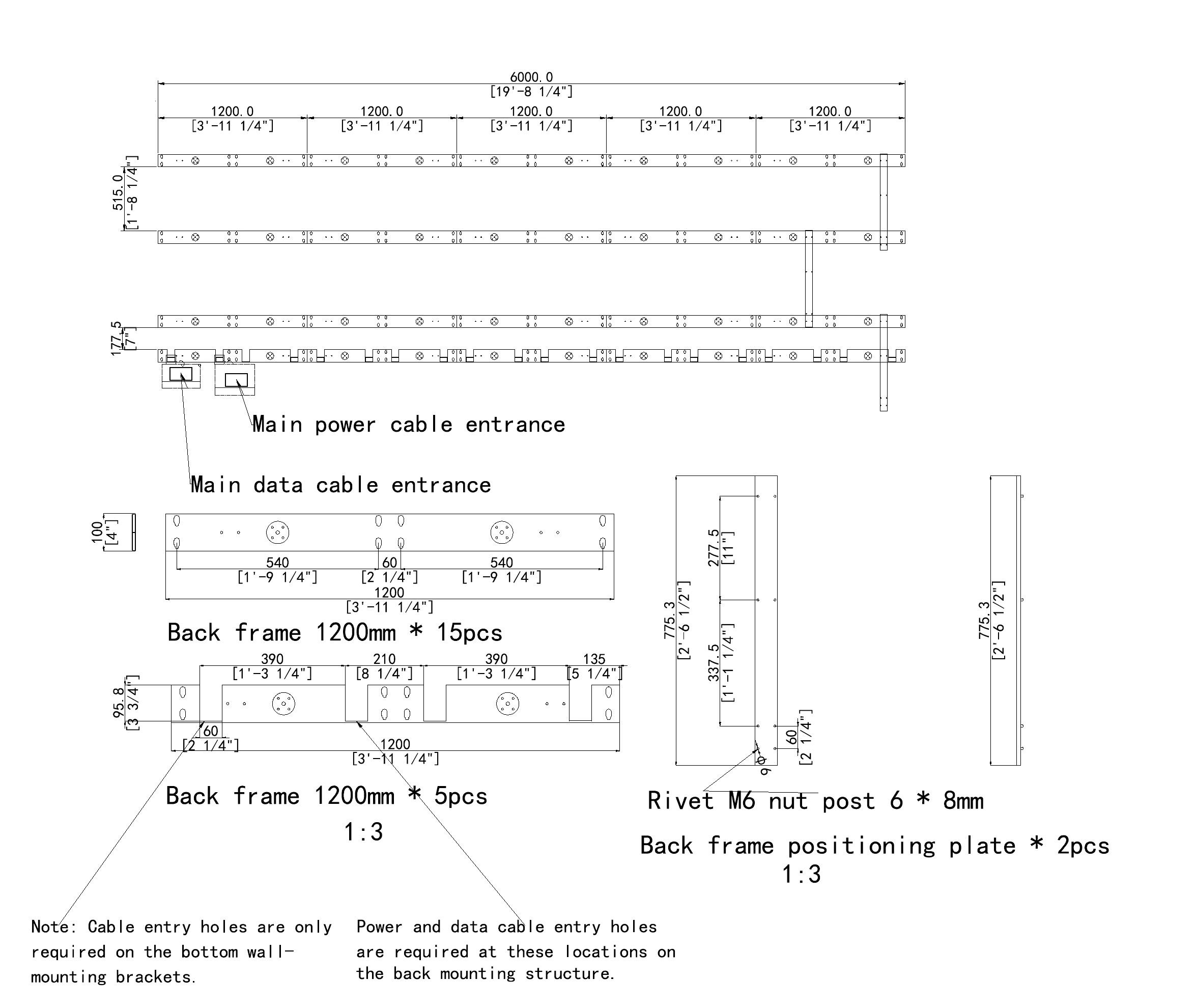
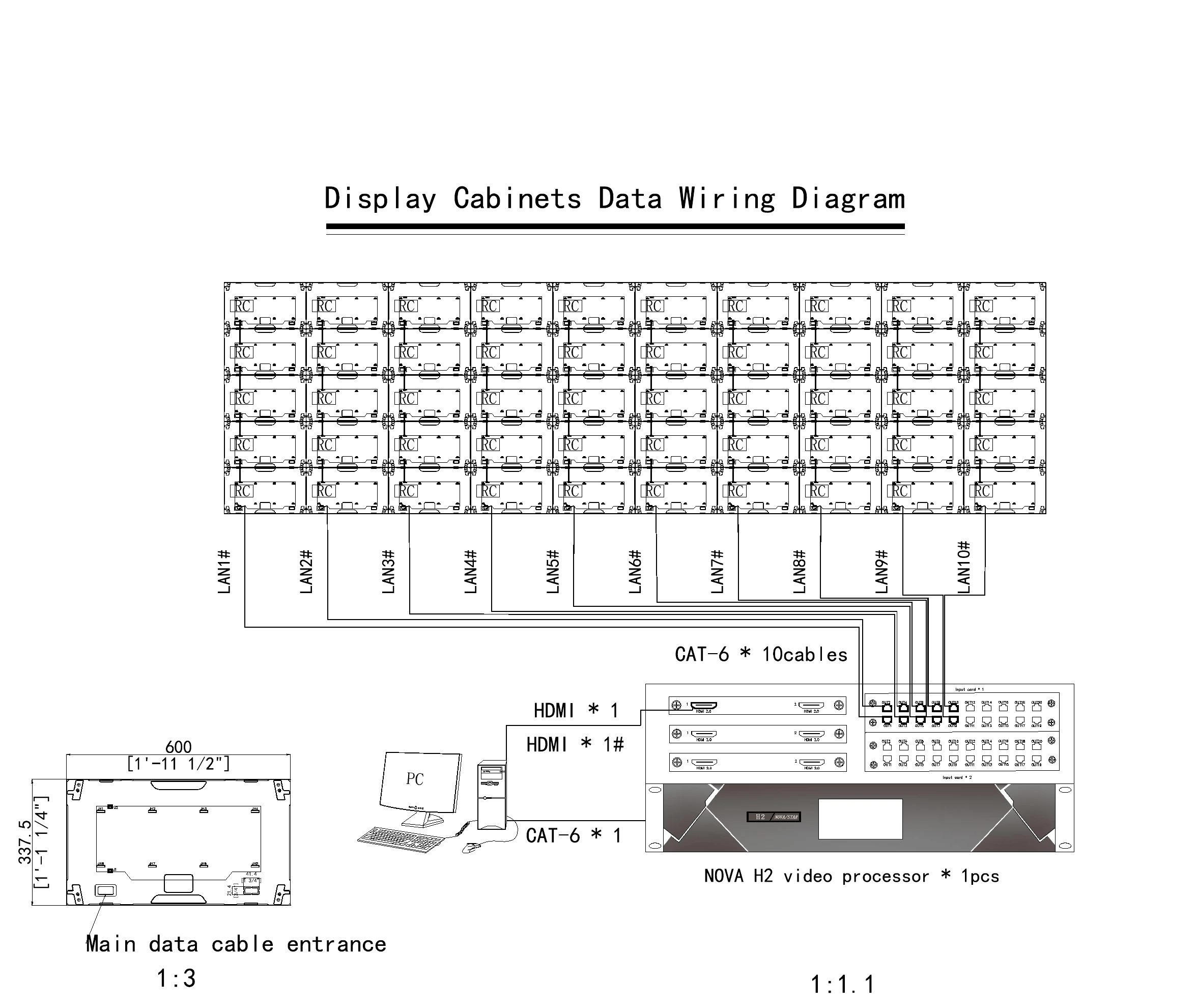
For indoor fixed installations, we provide product and back-frame drawings, project-specific back-frame CAD design, wiring diagrams and installation instructions.
- Indoor fixed-installation drawingsDrawing and design support is free. Custom frames and mounting accessories are agreed in the project configuration and quote.
- Transparent-display documentationDrawings, wiring guidance and installation instructions are agreed around the selected product and mounting method.
- Order-specific handoverTest videos, FAT inspection records, packing photos and spare-parts photos and lists help your team prepare for delivery.

Compare the complete project scope.
- Display configuration and image processing
- Frame, mounting accessories and installation work
- Power, signal connections and cable routes
- Spare parts, packing and delivery
- Content preparation and playback arrangement
Need help choosing?
Retail LED display questions.
Choosing your display
Which LED display should I choose for a retail store?
Start with where the display will go. Glass storefronts may call for LED Film or transparent mesh; solid walls can use an indoor cabinet display; curved surfaces need a suitable flexible construction; and changing promotions may suit a freestanding poster. Then review content, viewing distance, daylight and installation access. These conditions narrow the product route before you choose a specific pixel pitch.
Do I need a transparent display for a shop window?
Choose a transparent display when keeping a view into or through the store is part of the brief. LED Film and glass-mounted Holographic LED both offer self-adhesive options for suitable glass. If you want a solid visual backdrop, a conventional display may also be worth considering. Compare pane divisions, reflections, content, daylight and service access before choosing the installation format.
How do I choose pixel pitch for close viewing?
Pixel pitch is the distance between LED pixels. A smaller pitch can reproduce finer detail, but the choice should be checked against the closest regular viewer, the overall screen size and the actual content. A large campaign image and a small price label have different needs. Share content samples and viewing distances so the proposed resolution can be reviewed in context.
Can an LED display work in a sunny storefront?
A sunny storefront needs its own brightness and installation review. Record the glass orientation, direct-sun periods, reflections and available ventilation, then compare a display configuration for those conditions. A display installed inside the glass and a screen exposed to weather have different requirements. Daytime site photos and the intended content help determine what should be evaluated before the product is selected.
Installation & your project
Can you make a display for a column or a corner?
Yes. The route depends on whether the surface is curved or made from flat faces. Flexible LED modules can be considered for curved constructions, while suitable cabinets or a custom assembly can form flat faces and corner layouts. Send dimensions, a sketch, viewing directions and access information. The module arrangement, supporting frame, connections and content layout are then reviewed around that geometry.
What installation drawings and support can you provide?
For indoor fixed installations, DOIT VISION provides product drawings, back-frame drawings and project-specific back-frame CAD design free of charge. Wiring diagrams, installation instructions and mounting accessories are provided according to the agreed configuration. Custom frames are quoted for the project. Transparent-display projects can also receive drawings, wiring guidance and installation instructions, with the document scope agreed for the selected product and installation.
How should we plan displays for several stores?
Begin with the formats and conditions that repeat, then record the differences between locations. Compare wall or glass dimensions, viewing distances, daylight, content, power and access. A pilot layout or sample can help resolve details before a wider order. Keep a configuration record for each store type, and agree the playback arrangement, packing, spare parts and delivery sequence for the project.
What do you need to recommend a solution and prepare a quote?
Tell us where the display will go, what you want to show and the destination country. Add an approximate size if you know it, or leave the model and pixel pitch open. The form on this page carries your selected setting into the request. Our team can then review the product route, installation requirements and quotation scope with you.
Useful next reads.

LED dome cinema systems: display and integration planning
An LED dome cinema combines a curved display with playback, content, sound and a prepared venue. Specify those...
Read Case Study
LED sphere screen types: full sphere or hemisphere?
The first choice is where the audience stands relative to the image. A full sphere presents a globe...
Read Case Study
LED sphere display sizes: choosing the right diameter
Choose an LED sphere diameter by checking the installation space, delivery route and viewing positions together. Then select...
Read Case Study- Provider
- DOIT VISION
- Application
- Retail LED displays
- Display locations
- Glass storefronts, in-store walls, columns and corners, moveable promotions
- Product routes
- LED Film, Holographic LED, Block Series, COB Pro, Flexible LED, Foldable LED Poster, Fixed COB Poster
- Planning inputs
- Display location, size, destination, content, viewing, lighting and installation conditions
- Project support
- Indoor fixed-installation drawings, project-specific back-frame CAD design, wiring and installation instructions; transparent project documents agreed by configuration
- Contact
- info@doitvision.com
- URL
- https://www.doitvision.com/solutions/led-display-for-retail/