 All-in-One COB LED TV
  Flexible LED Displays
  Transparent LED Displays
  Led Poster
  Circular LED Displays
  Column LED Screens
  Creative & Custom LED Displays
 01Plan view / schematic
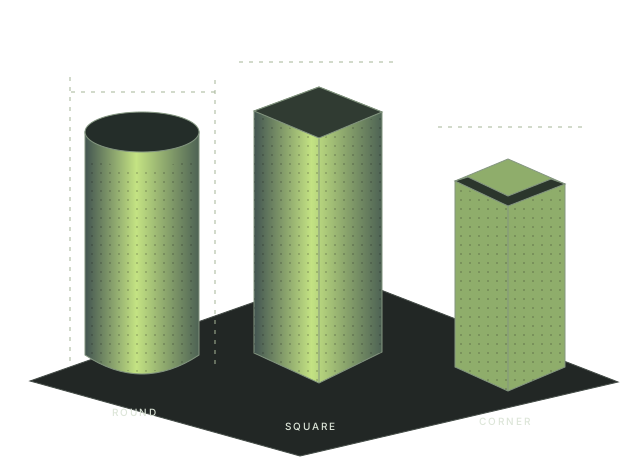
Round column
A continuous curved surface around a pillar, or a freestanding cylindrical display.
Start withColumn diameter, finished display height and space for the frame.
Bring video around the architecture. Explore round and square columns, curved surfaces and corner wraps—starting with the shape of your space.
Start with the site
A column LED screen, also called a pillar LED screen, places a display around all or part of a vertical column. The surface can be round, square or multi-sided. The column shape, audience positions and service access determine how the display is built.
Architectural LED wraps extend the same planning approach to curved walls and corners. Flexible modules can follow a curve; flat display panels can form straight faces. Choose the geometry first, then develop the module layout, supporting frame and content canvas.
Choose the geometry
Start with the site’s shape. These are project directions; the display configuration follows the measured layout.
A continuous curved surface around a pillar, or a freestanding cylindrical display.
Flat display faces around a square or rectangular pillar. Plan each face and the corner treatment
together.
A partial curved surface around an architectural feature, a wall or a broad column edge.
Separate flat faces create a faceted display around a polygonal column.
LED surfaces continue around a building edge or wall return. Coordinate the visible corner and both wall planes.
A changing profile or an unusual outline needs a surface layout developed from the architectural drawing.
Round columns, square structures, four-sided headers, right-angle walls and curved edges. Browse by shape.
20 photographs · 3 videos. Explore the product, structure and installation details.
Explore the product
Open the cylinder product page for detailed sizing, front service, technical specifications and downloadable documents.

Round column / Cylinder
Flexible LED modules on a cylindrical frame for an existing column wrap or a freestanding display.
Working with a square pillar, a wall return or an unusual profile? Send the drawing so we can review the surface layout and structure.
Shape in practice
Retail installation, factory playback and work in progress—each photograph shows a different part of the project.

Retail installation
A pillar-mounted, four-sided LED header carries the AT&T message above a retail kiosk. The illuminated surface is the header, with the support column below it.

Factory playback
A cylindrical display during factory playback. The curved surface needs a coordinated module layout and content canvas.

Installation in progress
A curved wall during installation. The exposed structure shows why fixing points, cable routes and
access need to be planned with the display.
From shape to specification
A good fit includes the people viewing it, the team servicing it and the building supporting it.
Map the main approach directions and the nearest viewing distance. A full wrap can serve several viewpoints; a partial wrap can focus on one circulation route. Place key messages where people can actually read them.
Separate the existing column dimensions from the finished display envelope. Allow for the frame, cables and components. Define fixing points, module removal and safe access at each service height.
Record indoor or outdoor location, daylight, direct sun and exposure to rain or dust. For event use,include transport and assembly frequency. These inputs guide the module, enclosure and support design.
Compare the full scope: display faces, corners, frame, control, power distribution, spares, packing and freight. Confirm who provides installation and content. Geometry and site access can affect cost as much as screen area.
Build your project brief
Send what you know. A sketch and site photos can start the discussion before the pixel pitch is selected.
| Project input | What to include | What it helps define |
|---|---|---|
| Column or wall geometry | Diameter, width × depth, face count, radius or dimensioned plan. | Display form, coverage and module layout. |
| Visible display area | Required height, visible faces, full or partial wrap, quantity. | Emitting area and finished outer dimensions. |
| Viewing & content | Nearest viewing distance, approach directions and sample media. | Pixel pitch direction and content zones. |
| Installation conditions | Location, ambient light, weather exposure and operating schedule. | Brightness and environmental configuration. |
| Support & maintenance | Fixing substrate, cable entry, service clearance and access height. | Frame interfaces and service method. |
| Delivery scope | Destination, project date, installation responsibilities and transport needs. | Quotation scope, packing and delivery planning. |
Pixel pitch, brightness, protection, control system and finished dimensions are specified for the chosen configuration. The cylinder product has its own detailed specification.
A column LED screen is a display arranged around all or part of an architectural pillar. It can use a round, square or multi-sided layout, depending on the site and viewing directions. The display structure, module arrangement and service access are planned around the column. Curved walls and corner wraps are related architectural applications with their own surface geometry.
Column describes the architectural application; cylinder describes a round display shape. A cylinder LED screen is one type of column display, while square and multi-sided column screens use different geometries. A cylinder can also be a freestanding display object. For a round project, the cylinder product page explains diameter planning, module bending limits, front service and the technical documents.
A square column can use flat LED panels across its straight faces, with a corner detail designed for the project. Flexible modules may be considered where a rounded transition or curved surface is required. Start with the face dimensions, corner profile and maintenance route. The selected panel construction should follow the actual geometry and installation conditions of the site.
A display can be planned for selected faces or a partial curved surface when the audience approaches from particular directions. Define the visible area, its edges and the surrounding architectural finish. For a wall return, include both wall widths and the corner angle. This helps coordinate the panel layout, supporting structure, content zones and access to components behind the surface.
Start with the actual exposure: rain, dust, direct sunlight, temperature and the intended operating schedule. Include the location, mounting height and maintenance method in the brief. These conditions guide the module, enclosure, brightness and structural design. Environmental ratings belong to the selected configuration and its installation details; confirm them in the project specification before comparing quotations or approving production.
The price depends on the display area, pixel pitch, number of faces, corner or curve construction, supporting frame and system configuration. Delivery scope also matters, including spares, packing, freight and installation responsibilities. Send a dimensioned sketch, quantity and destination for a useful quotation. Compare the same finished geometry and supply scope across proposals so that the totals are meaningful.
Content can be planned across several display faces once the surface layout and pixel map are confirmed. A message crossing a corner may be hard to read from a single viewpoint, so use separate content zones where appropriate. Identify the main audience positions, then agree the canvas, orientation and playback configuration with the display system and content production teams.
Send a plan or sketch of the column or wall, the required display height, visible faces and quantity. Add site photos, the installation country and the intended use. Viewing distance, sample content, access restrictions and the target project date help refine the proposal. If pixel pitch is undecided, describe what viewers need to read and request a configuration recommendation.
A drawing, a site photo or an early idea. Tell us what you are planning and work through the details with our engineering team.