 All-in-One COB LED TV
 Flexible LED Displays
 Transparent LED Displays
 Led Poster
 Circular LED Displays
 Column LED Screens
 Creative & Custom LED Displays
Measure each pane separately.
Send clear width and height, mullion positions, edge access and a straight-on site photo. Standard film modules run from 240×1,000 mm to 400×1,000 mm by pitch; P15 uses 390×990 mm.
Self-adhesive LED Film for indoor exhibitions, art centres and art installations. Integrate moving images closely with clear glass or broad curves while preserving the view through the display.
Start with each pane's dimensions and a site photo.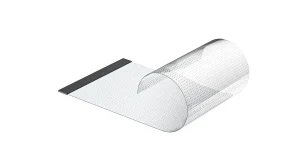
01 / What it is
LED film is a transparent PET display layer with an adhesive backing. Sometimes called transparent soft film, it bonds to the indoor face of existing glass, so exhibition glazing, art surfaces and interior partitions can carry moving content while the space behind remains visible.
Plan the pane divisions, cable exits, viewing distance and service access together. Broad curved glass should have a diameter of at least 1 m, with enough space for installation; the film must not be sharply folded.
02 / Choose the right film
Send clear width and height, mullion positions, edge access and a straight-on site photo. Standard film modules run from 240×1,000 mm to 400×1,000 mm by pitch; P15 uses 390×990 mm.
P4 and P5 suit closer viewing and finer graphics; P10 and coarser pitches fit larger, more distant viewing zones. The right pitch also changes how much of the space stays visible through the display.
Start with Holographic for outward-facing retail glass, sun and UV exposure, large areas or demanding long-term operation. Choose Film when indoor glass integration, broad curves and high transparency lead the brief.
Explore project footage, installation, illuminated samples and clearly labelled product renderings. The full gallery includes 11 images and 10 videos.
04 / Installation and operation
Standard widths vary by pitch: 240, 320, 390, 400 or 1,000 mm in the current range. A practical cut list accounts for mullions, edge clearance and cable exit before an order is signed.
All pitches start at 2,000 nits and can be specified at 4,000 nits; P10 can be specified up to 4,500 nits. Choose the level against indoor lighting, glass tint and content. For direct sun, UV exposure or demanding fixed operation, start with Holographic.
Glass cleaning, positioning, wet application, air removal and cable routing need a deliberate sequence. The installation guide allows 8–24 hours for drying. A local sign or AV installer should own the on-site work.
Diagnose power, control and the film module separately. Film adhesive cannot be replaced. Repositioning is possible only shortly after first application; we recommend no more than three reapplications, subject to the film and adhesive condition. Plan access for module replacement.

Content from a computer or media player goes to the sending controller, then to the receiving cards and film modules. Novastar and Colorlight are the standard control routes. Your quotation identifies the sending device, inputs, pixel load and content handover.
05 / Seven model choices
A finer pitch adds pixels and cost. Transparency here is the minimum quoted for each model—not an edited photograph or a promise that every installation looks identical.
| Model | Pitch | Pixels / m² | Transparency | Standard module | Pixels / module | Brightness options |
|---|---|---|---|---|---|---|
| P4 | 4 mm | 62,500 | ≥90% | 240×1,000 mm | 60×250 | 2,000 / 4,000 nits |
| P5 | 5 mm | 40,000 | ≥90% | 320×1,000 mm | 64×200 | 2,000 / 4,000 nits |
| P6.25 | 6.25 mm | 25,600 | ≥90% | 400×1,000 mm | 64×160 | 2,000 / 4,000 nits |
| P8 | 8 mm | 15,625 | ≥90% | 400×1,000 mm | 50×125 | 2,000 / 4,000 nits |
| P10 | 10 mm | 10,000 | ≥93% | 400×1,000 mm | 40×100 | 2,000 / 4,000 / 4,500 nits |
| P15 | 15 mm | 4,356 | ≥94% | 390×990 mm | 26×66 | 2,000 / 4,000 nits |
| P20 | 20 mm | 2,500 | ≥95% | 1,000×400 mm | 20×50 | 2,000 / 4,000 nits |
06 / First-pass budget
Enter one pane or an overall clear-glass area. The result follows your selected model and brightness, EXW Shenzhen—not the finished site price.
Approximate display budgetUS$14,772
12.00 m² of P10 at 2,000 nits · US$1,231/m².
EXW planning estimate includes power supplies, receiving cards, display wiring and standard cartons. Sending controller, custom-size setup, upgraded packing, freight and local installation are additional.
07 / Packing and handover
A glass display is more than the film sheets. A comparable quotation identifies the electronics, packaging and on-site scope line by line.
Specify model and brightness, module count, power supplies, receiving cards and the wiring needed to illuminate the display. The sending controller and media source should be identified as separate quote lines.
The current supplier reference is eight modules per carton, approximately 108×48×40 cm and 23 kg. Wooden or flight-case packing is available by quotation. Final cartons, weight and spares follow the approved project list.
Request the installation sequence, module map, wiring plan and a CE/EMC model-coverage check with the quote. DOIT VISION provides a two-year customer warranty; the service path and spare modules are agreed before dispatch.
08 / Downloads
Download the L3 product spec sheet for model comparison and the installation manual for your site team. CE and EMC verification files are available below.
Compare all seven P4–P20 models, including module dimensions, brightness options, transparency and shared series specifications.
Share the glass preparation, module layout, application steps, curing sequence, wiring and acceptance checklist with your installation team.
Full one-page verification for the flexible transparent LED film display, referencing the LVD directive and EN IEC 62368-1.
Full one-page verification for the flexible transparent LED film display, referencing the EMC directive and its applicable standards.
The CE and EMC verification files identify the tested sample and listed models; they do not replace a project-specific review of the ordered build. Confirm the module layout and installation conditions for your site before starting work.
Measure the clear width and height of each pane, not only the total storefront opening. Send a straight-on photo showing mullions, edge clearance and a possible cable route. We compare those dimensions with the standard module for your chosen pitch, then prepare a preliminary layout and cut list. The final billable area and any custom-size charge follow the approved drawing.
For sun-facing retail glass, UV exposure or semi-outdoor projects, we recommend reviewing Holographic first. Film is focused on indoor exhibitions, art centres and glass-integrated art. Its brightness options remain 2,000 nits standard and 4,000 nits across the range, with P10 up to 4,500 nits. Those ratings alone do not determine suitability: assess glass reflections, heat exposure, operating hours and service access together.
The calculator provides a USD planning reference for P4 through P20 at the selected brightness, EXW Shenzhen. It includes the film, power supplies, receiving cards, wiring needed to illuminate the display and standard cartons. The sending controller, custom-size setup, upgraded packing, freight and local installation are additional. Final chargeable area and scope follow the approved module layout and project quotation.
Start with the closest viewer and the image detail needed there, then check transparency and budget. P4 and P5 carry more pixels for closer viewing; P6.25 and P8 balance detail with a wider viewing zone; P10 offers at least 93% transparency and suits many larger windows. P6 is often used as a search term, but the current standard in this range is P6.25. A site photo makes the choice more precise.
The quoted figures are minimum open-area values by model: at least 90% for P4 through P8, 93% for P10, 94% for P15 and 95% for P20. A five-point difference is noticeable in how much LED structure remains on the glass, but content, background light and viewing angle also change the impression. Compare actual off-state samples and an illuminated test before fixing a pitch on an important façade.
LED Film can follow broad curves with a recommended minimum diameter of 1 m. Check the glass divisions, cable exits and module layout before ordering. The surface must remain accessible for workers to position and bond each sheet, with ladder access where needed. Use gradual bending without sharp folds. For curved projects involving sun, UV exposure or demanding fixed operation, assess Holographic first.
LED Film is an adhesive transparent PET layer for indoor exhibitions, art centres and broad curved glass. Holographic uses open mesh with surface-mounted LEDs, integrated-driver static driving, parallel addressing and individual LED repair. Its glass-mounted configuration is also self-adhesive. Choose Holographic first for sun-facing windows, UV exposure, semi-outdoor sites, large areas or demanding long-term operation; confirm the complete installation configuration for the site.
Yes, a capable local sign or AV installer can carry out the work with the installation guide and a coordinated wiring plan. The process includes glass cleaning, positioning, wet application, air removal, joining modules and allowing 8–24 hours for drying. Electrical connection and commissioning need appropriate local expertise. For a first installation, ask us to review the pane layout and install sequence before the team starts.
First isolate whether the issue is power, the sending/receiving chain or one film module. A faulty module can be replaced without rebuilding the full glass area, provided access and cable routing were planned at the design stage. Keep the approved module map and matching spares with the project records. DOIT VISION's two-year warranty and the agreed service route define how replacement parts are supplied.
LED Film can be repositioned only shortly after its first application, subject to the condition of the film and adhesive. Its adhesive cannot be replaced. We recommend no more than three reapplications after the first fitting, rather than treating three as a guaranteed reuse allowance. Inspect the sheet and bonding surface before moving it; for projects requiring replacement adhesive, review the glass-mounted Holographic configuration.
Standard supplier packing is eight modules per carton, approximately 108×48×40 cm and 23 kg. Wooden and flight-case options are quoted when the route or handling risk calls for them. The final shipment list should state module count, carton count, gross weight, spares and the receiving contact. Confirm the crate plan after the module layout is approved, especially for long-distance or multi-site deliveries.
LED Film needs dry indoor conditions, sound glass bonding, stable power and accessible connections. DOIT VISION provides a two-year customer warranty. For large areas, long-term fixed operation or demanding conditions, we recommend reviewing Holographic first. Its individually serviceable LEDs offer a different maintenance route. Define the operating schedule, spare parts and service access with the proposed configuration before choosing between the two products.
Use a media source such as a computer or media player, a compatible sending controller, receiving cards and the film modules. Novastar and Colorlight are the standard control routes for this series. The final controller depends on the total pixel load, input type and whether several glass zones need synchronized content. The quotation should name the sending hardware, cabling and handover workflow so the local integrator knows exactly what to connect.
LED film is engineered to remain transparent, flexible and adhesive on glass, which changes the substrate, circuit layout, connections and installation method. A conventional opaque cabinet can use a rigid frame and denser material without protecting a clear sightline. Compare the full project scope: if you already have usable glass and want to preserve the view, film may avoid structural work that a cabinet wall would require.

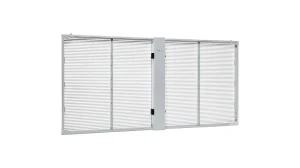
Three product structures, shown at different scales: LED Film, Holographic mesh and a Transparent...
Read guide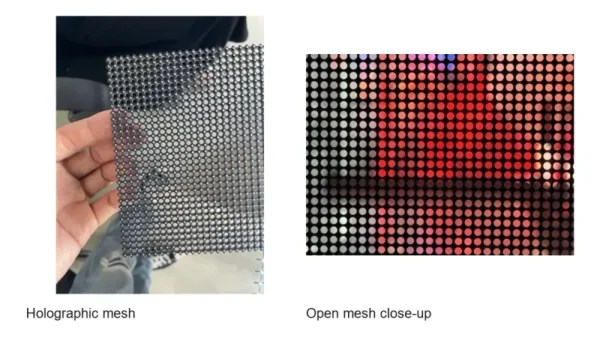
Actual Holographic mesh. Openings, LED positions and the supporting material can be inspected dir...
Read guide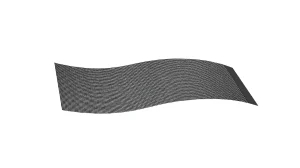
Your next step
Give us enough to decide whether film fits the site. We can return a pitch recommendation, preliminary module layout, brightness route and an itemized quotation for review with your installer.
A drawing, a site photo or an early idea. Tell us what you are planning and work through the details with our engineering team.