Tell us which customers you serve, where you sell, and which LED display products you want to develop in your
market.
Customer relationships and sales channels
Local project and service coordination
Product and market development
Working with DOIT VISION
Discuss product selection, project requirements and delivery with our team. Engineering support and order
documentation help you prepare for installation and handover.
Product configuration and engineering support
Order inspection and delivery documentation
Installation guidance and maintenance planning
Distributor agreement — sample
PDF · Non-exclusive distribution · For discussion
A path to exclusivity.
Exclusive distribution is considered after an established distribution relationship. The scope is defined by
territory and selected product series.
01
Start distributing
Discuss your market, product focus and initial opportunities.
02
Build a track record
Work together on orders, project delivery and customer support.
03
Review exclusivity
Review the proposed territory, product scope and market development plan.
What we review
Market coverage
Sales and cooperation record
Technical support capability
Product development plan
Support for your projects.
Engineering coordination
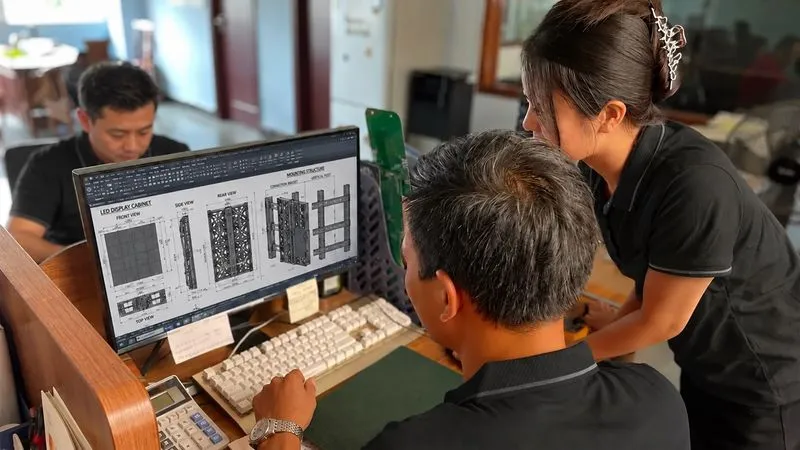
Work with our team on display configuration, custom structures and installation requirements. Drawings and
installation guidance follow the product and project scope.
Order inspection
Review order-specific test videos, FAT inspection records, packing photos and spare-parts documentation
before shipment.
Installation and maintenance
Discuss installation guidance, spare parts and maintenance handover for the projects you supply.
How do I apply to become a DOIT VISION distributor?
Complete the application with your company details, country or region, product
interests and a short description of your business. Include the customers you serve and your experience with
LED displays or related AV products. Our team will use this information to discuss your market and initial
opportunities. The starting point is a distribution relationship.
What information should I include in my application?
Describe your main customer groups, sales territory and the products you would like
to distribute. Tell us about your LED or AV experience and how you coordinate technical support,
installation and after-sales enquiries. You can also include your company website. If you are interested in
future exclusivity, add your proposed territory and the product series you want to develop.
What support is available for distributor projects?
Our team can discuss display configurations, custom structures and installation
requirements for the projects you supply. Drawings and installation guidance are provided according to the
product and project scope. Order documentation includes test videos, FAT inspection records, packing photos
and spare-parts information. Installation guidance, spare parts and maintenance handover are discussed
around the requirements of each project.
Exclusivity
How can a distributor be considered for exclusivity?
Start with a distribution relationship and build a record of working together on
orders, project delivery and customer support. Exclusivity can then be discussed in relation to your market
coverage and product development plan. You can indicate your future interest when you apply, along with the
territory and product series you would like to represent.
How are the exclusive territory and products defined?
An exclusive arrangement is defined by an agreed territory and selected product
series. In your application, describe the geographic area you intend to serve and the series you want to
develop there. This gives both teams a specific starting point for discussing market coverage, product
opportunities and the scope of a future arrangement after a distribution relationship has been established.
What is reviewed before an exclusive arrangement?
The discussion considers your market coverage, sales and cooperation record,
technical support capability and plans for the selected product series. Relevant information can include
customer segments, project experience, service arrangements and planned product demonstrations or promotion.
These details, together with the experience of working together, help define the proposed territory, product
scope and practical expectations for the relationship.
 All-in-One COB LED TV
 Flexible LED Displays
 Transparent LED Displays
 Led Poster
 Circular LED Displays
 Column LED Screens
 Creative & Custom LED Displays
 View manufacturing capability