 All-in-One COB LED TV
  Flexible LED Displays
  Transparent LED Displays
  Led Poster
  Circular LED Displays
  Creative & Custom LED Displays
 In today’s digital age, we are rapidly experiencing a transformation from LCD wall to LED wall. This transformation is not only reflected in the breakthrough of technology, but also has a profound impact on the application and commercial value of many industries.
Background and Trends

According to data from market research firm Omdia, the global LED display wall market will reach more than US$90 billion in 2023, with an annual growth rate of more than 6%. In sharp contrast, in the small-pitch LED display market, although the traditional LCD splicing wall market is still growing overall, it is far less than the growth rate of LED wall. The reason behind this is the major breakthroughs made by LED technology in many aspects.
Lightweight
The LED modular design greatly reduces the weight per unit area. Like Samsung’s The Wall, it weighs only 3.2kg/m², which has great advantages in installation and transportation compared with traditional display devices.
High brightness
High brightness is also a highlight of LED wall. The brightness of indoor small-pitch LED wall can reach 1200nit, which is more than 3 times that of LCD. Therefore, even in bright indoor environments, LED walls can still display clearly.
Seamless splicing technology
Seamless splicing technology completely eliminates physical borders and achieves seamless display at the pixel level. This brings users a more complete and shocking visual experience.
From the perspective of applications, companies’ requirements for display effects are evolving rapidly. In terms of corporate exhibition halls, many global brand direct stores fully adopt curved LED walls to replace LCDs, achieving a 270°immersive experience.
In the field of advertising media, 98% of advertising screens in New York’s Times Square have been upgraded to LED. The click-through rate of dynamic content has increased by 57%, greatly improving the communication effect of advertising.
In the control room, NASA’s mission control center uses 0.9mm pitch LED walls. The amount of single-screen monitoring data has increased by 4 times, providing strong support for the smooth progress of the mission.
So, why do you need to upgrade your display wall system now?
What are the limitations of LCD walls?
The limitations of LCD are concentrated in many aspects. In terms of physical seams, even the narrowest 0.88mm frame will still produce visual fragmentation when multiple screens are spliced. It can affect the accurate communication of information.
Energy consumption is also an issue that cannot be ignored. A 55-inch LCD splicing unit consumes about 200W of power, while an LED with the same display area only consumes 80W. Therefore, in long-term operation, the energy consumption cost difference is huge.
Secondly, if the LCD wall fails, maintenance will be a headache for the company. For example, a bank data center had to shut down for 72 hours for a single repair due to an LCD backlight failure, which caused huge losses to the company.
The driving force for LED upgrades comes from technology generation gaps and cost reconstruction. COB packaging technology enables LED life to exceed 100,000 hours, with a failure rate of less than 0.01%, greatly improving the reliability and stability of the equipment.
Although the initial investment in LED is 30% higher than that of LCD, the total cost of ownership (TCO) in 5 years can be reduced by 42%, which is more cost-effective in the long run.
The difference between LCD and LED display walls

Technical comparison
If you compare LCD splicing walls and LED display walls from multiple dimensions, you can find significant differences between them.
Resolution:
In terms of resolution, LCD splicing walls usually use fixed 2K/4K/8K panels, while LED display walls can be infinitely expanded. For example, A Doitvision USA project achieved an ultra-high resolution of 32000×8000 pixels.
Brightness
In terms of brightness, the LCD wall brightness is 300-500nit. They usually need to be used in a light-shielded environment, while the brightness of LED can reach 800-1500nit, with strong resistance to ambient light.
Splicing gap
In terms of splicing gap, LCD has a gap of 0.88-3.5mm, while LED achieves a visual seamless splicing of 0mm.
Thickness:
In terms of thickness, LCD is 80-120mm, while LED is only 20-50mm, which can be installed on the wall and save space.
In addition, with the LED wall modular design, it also brings convenient installation methods. Doitvison used a curved LED screen in a project. The completed the deployment of a 200㎡ curved wall in just 15 days; if it is installed in a small conference room, use a magnetic front-maintained LED module. You only need 10 minutes to reconstruct the display layout, which greatly improves installation efficiency and flexibility.
Life cycle comparison
Lifespan
In terms of service life, the life of LED lamp beads can reach 100,000 hours (about 11 years), while the brightness of LCD backlight will decay by 30% after 5 years, and frequent replacement is required.
Maintenance
In terms of maintenance cost, LED wall supports single-point maintenance. You replace one module only about US$50 cost, while LCD requires the entire panel to be replaced, costing up to US$800 per piece.
We already know the benefits of upgrading to an LED wall, but how much does it cost?
Cost composition of upgrading from LCD wall to LED wall
Next, let’s take a 100㎡ display wall as an example:
The cost difference between LCD and LED solutions is obvious.
| Item | LCD Solution | LED Solution |
|---|---|---|
| Hardware Cost | $150,000 | $220,000 |
| Old Equipment Disposal | $0 | $15,000 |
| Installation & Debugging | $30,000 | $50,000 |
| Total Cost (100㎡) | $180,000 | $285,000 |
Indirect costs
In addition to direct costs, you may also face some indirect costs during the LED wall upgrade process. In terms of content adaptation, you may need to increase the production cost by $20,000 to upgrade to 8K content. In addition, the training cost cannot be ignored. Operators need an average of 40 hours to familiarize themselves with the new control system.
Hidden costs
A TV station stopped broadcasting for 3 days during the upgrade, and the advertising loss was as high as 750,000. These hidden costs are often easily overlooked, but they may bring greater economic pressure to the company during the actual upgrade process.
If you have a limited budget and cannot upgrade all at once, you can refer to the following optimization strategies to minimize costs.
How to implement LED wall upgrade strategy?
Phased upgrade practice
To reduce the upgrade cost, you can adopt a phased upgrade practice method. Hybrid deployment is an effective strategy. For example, in a supermarket project of Doitvision, the owner retained 30% of the LCD screens for static information. They will replace the core area with LED to increase advertising revenue. The payback period of this investment was shortened to 2.1 years. The leasing model is also a good choice. The CES exhibition adopted LED wall leasing, and the cost was reduced to $15/㎡/day, which saved 60% compared with the procurement model.
ROI empirical analysis
Upgrading LED display walls can bring significant returns on investment in terms of electricity cost savings, maintenance cost reduction and revenue increase. Taking a 100㎡ display wall as an example, the annual electricity bill can save $8,200. After a data center upgraded to LED, the maintenance cost was reduced by 37%. After a global shoe retail chain brand store upgraded its LED display wall, the customer unit price increased by 19%.
In general, upgrading from LCD wall to LED wall is an irreversible trend. If you are interested in upgrading your small-pitch video wall, you can refer to our COB LED wall solution.
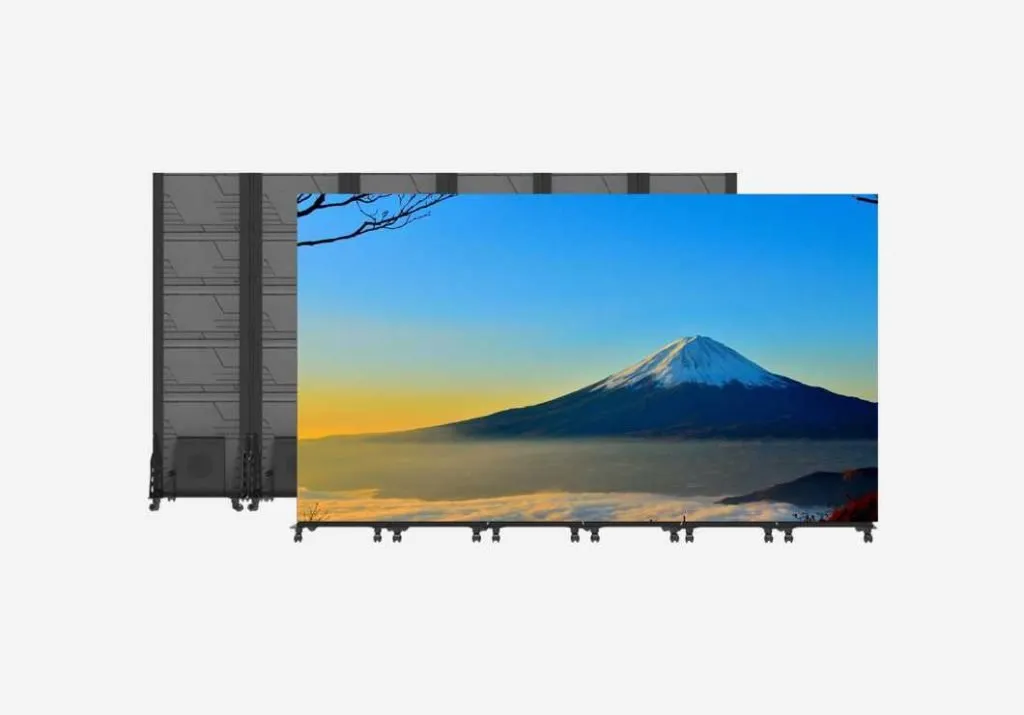
Take the newly released Doitvision COB display Pro series as an example:
- Power consumption advantage: 40% energy saving compared with traditional products, meeting the European energy label A++ standard;
- Environmental adaptability: can operate stably in extreme environments from -30℃ to 85℃;
- Visual experience upgrade: support 20-bit color depth, and color transition smoothness is improved by 300%.
These breakthroughs not only consolidate the technical advantages of Doitviison’s COB, but also pave the way for its application in 8K ultra-high definition, HDR and other scenarios.
Conclusion
In conclusion, if you upgrade the LED display wall, in the short term, you needs to bear about 1.6 times the initial investment, but in the long run, you will get significant benefits. Not only can you save a lot of operation and maintenance costs, but in terms of soft value, you can increase the brand premium space by 15% – 25%.
As a top COB LED wall manufacturer, we have rich experience in upgrading from LCD wall to LED wall. If you have a project need, you can feel free to contact us.