All-in-One COB LED TV
 Flexible LED Displays
 Transparent LED Displays
 Led Poster
 Circular LED Displays
 Column LED Screens
 Creative & Custom LED Displays
A native 4K LED wall is exactly 3,840 × 2,160 pixels. With COB Pro’s 600 × 337.5 mm 16:9 cabinet, that becomes a square cabinet grid: 4 × 4 at P0.62, 6 × 6 at P0.9375, 8 × 8 at P1.25, 12 × 12 at P1.875. In metres, a true 4K wall runs from 2.4 × 1.35 m up to 7.2 × 4.05 m, and from 64 kg to 576 kg in cabinets.
What “4K” Actually Means on an LED Wall
4K is a pixel count, not a screen size. 3,840 × 2,160 is 8.3 megapixels at 16:9. On an LED wall, that count is produced by multiplying the cabinet resolution by the number of cabinets — so the physical size of a 4K wall depends entirely on pixel pitch.
Two walls can both be “4K”:
- a 2.4 × 1.35 m P0.62 wall, 3.24 m², for a control desk;
- a 7.2 × 4.05 m P1.875 wall, 29.16 m², for an auditorium.
They carry the same number of pixels. The first is built for a viewer at 1 m; the second for a viewer at 5 m.
Native vs scaled. A native 4K wall maps one source pixel to one LED pixel. If the wall is not exactly 3,840 × 2,160, the processor scales the image — acceptable for video, visible on spreadsheets, CAD and small text. For control rooms and boardrooms, native is the safer specification.
Why the 16:9 Cabinet Makes the Maths Simple
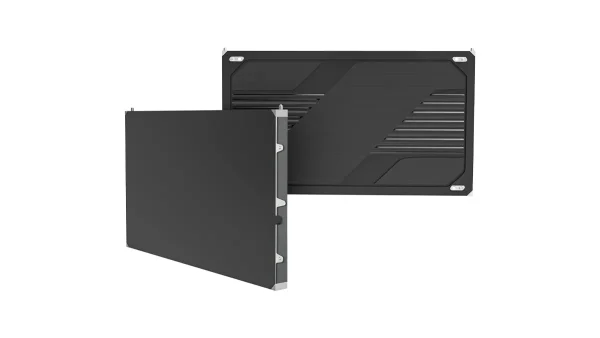
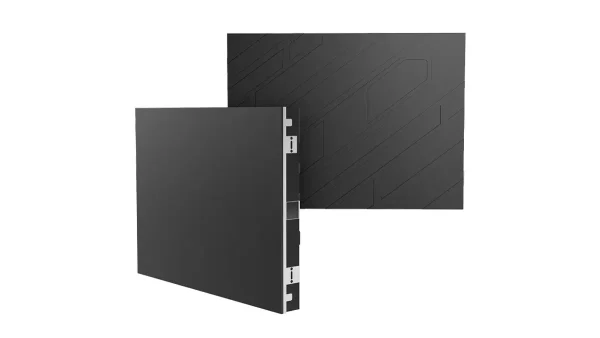
The COB Pro fine pitch LED display uses a 600 × 337.5 × 33 mm die-cast aluminium cabinet at 4 kg. Its face is exactly 16:9, so a 4K wall is always a square grid of cabinets:
- width: 3,840 ÷ cabinet horizontal pixels;
- height: 2,160 ÷ cabinet vertical pixels;
- both give the same number, which is why the grids are 4 × 4, 5 × 5, and so on.
The cabinet also sets the physical step: 0.6 m of width and 0.3375 m of height per cabinet. That is how the wall sizes below are calculated.

Exact 4K Wall Sizes for All Six COB Pro Pitches
| Model | Cabinet resolution | Cabinets for 4K | Wall size (W × H) | Wall area | Cabinet-only weight |
|---|---|---|---|---|---|
| COB Pro P0.62 | 960 × 540 | 4 × 4 (16) | 2.4 × 1.35 m | 3.24 m² | 64 kg |
| COB Pro P0.78 | 768 × 432 | 5 × 5 (25) | 3.0 × 1.6875 m | 5.06 m² | 100 kg |
| COB Pro P0.9375 | 640 × 360 | 6 × 6 (36) | 3.6 × 2.025 m | 7.29 m² | 144 kg |
| COB Pro P1.25 | 480 × 270 | 8 × 8 (64) | 4.8 × 2.7 m | 12.96 m² | 256 kg |
| COB Pro P1.5625 | 384 × 216 | 10 × 10 (100) | 6.0 × 3.375 m | 20.25 m² | 400 kg |
| COB Pro P1.875 | 320 × 180 | 12 × 12 (144) | 7.2 × 4.05 m | 29.16 m² | 576 kg |
All six rows are exact: cabinet resolution × cabinet count equals 3,840 × 2,160 in every case. The weight column is cabinet-only (4 kg each) and excludes brackets, cables, processors and flight cases.
Reading the Table in a Real Room
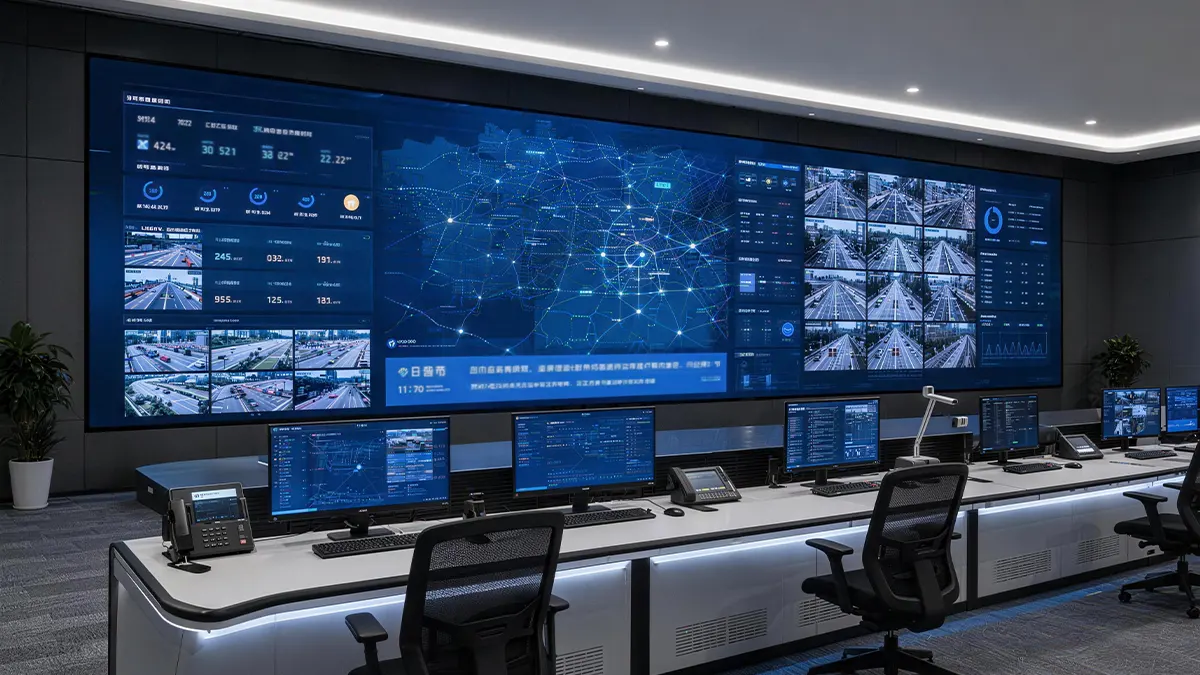
P0.62 — 2.4 × 1.35 m, 3.24 m². A desk-distance wall for a control room, edit suite or small broadcast position. At 0.6–1.5 m viewing distance the pixel structure is invisible and 4K content is native.
P0.78 — 3.0 × 1.69 m, 5.06 m². The next step up for rooms where the nearest operator sits around 0.8–2 m and the wall is shared by two or three desks.
P0.9375 — 3.6 × 2.03 m, 7.29 m². A common control-room and boardroom size: 4K native on a wall that fits a standard 3.6 m recess, read comfortably from 1–2.5 m.
P1.25 — 4.8 × 2.7 m, 12.96 m². Boardrooms and briefing rooms where the nearest seat is 2.5–4 m away. The same 4K pixel count, about 1.8× the area of the P0.9375 wall.
P1.5625 — 6.0 × 3.38 m, 20.25 m². Larger meeting rooms, training spaces and small auditoria, viewed from 3–5 m.
P1.875 — 7.2 × 4.05 m, 29.16 m². An auditorium, lobby or presentation wall where the audience sits 4 m and further back.
If Your Wall Is Not Exactly 4K
The cabinet grid gives you two clean options either side of 4K.
| Resolution | Pixels | Cabinet grid (P0.62 → P1.875) | Wall size (P0.62 → P1.875) |
|---|---|---|---|
| 2K | 1,920 × 1,080 | 2 × 2 → 6 × 6 | 1.2 × 0.675 m → 3.6 × 2.025 m |
| 4K | 3,840 × 2,160 | 4 × 4 → 12 × 12 | 2.4 × 1.35 m → 7.2 × 4.05 m |
| 8K | 7,680 × 4,320 | 8 × 8 → 24 × 24 | 4.8 × 2.7 m → 14.4 × 8.1 m |
8K needs more than a panel. The cabinet count is four times the 4K grid, but the processor and source chain have to deliver 7,680 × 4,320 — do not specify the wall alone.
In between, the wall grows in 0.6 m width and 0.3375 m height steps. A 5.4 m × 3.0375 m wall is possible (9 × 9 cabinets); 5.4 m × 3 m is not, so the layout either grows to the next cabinet row or is cropped. Decide which edge matters before the bracket is engineered.
Choosing Pitch and Brightness
Pitch follows the nearest viewer, not the room’s total size:
- under 1.5 m — P0.62 or P0.78;
- 1.5–2.5 m — P0.9375 or P1.25;
- 2.5–4 m — P1.25 or P1.5625;
- beyond 4 m — P1.5625 or P1.875.
COB Pro is offered in brightness tiers from 600 to 1,000 nits. Use the lower tier in controlled-light control rooms and post-production suites, and the higher tier where daylight or glass walls raise ambient light. The surface coating film gives a matte, dead-flat face and a 10,000:1 contrast ratio, which matters more than peak nits in a dim room. Viewing angle is 175° both ways, and refresh is 3,840 Hz, with 7,680 Hz on selected models.
If you are still deciding between COB and other packaging technologies, the COB vs MIP vs SMD comparison covers the trade-offs; the fine pitch LED buying guide covers pitch, cabinets and budget.
Installation, Service and What Ships
A 4 kg cabinet is a one-person lift on site. COB Pro is front-service, so a module can be replaced without removing the cabinet from the wall. The mounting bracket is engineered to your wall dimensions at the factory and bolts together on site — no welding, no hot-work permits — and 90° corners are CNC-cut for a clean join. Curved layouts use custom connection plates matched to the radius.
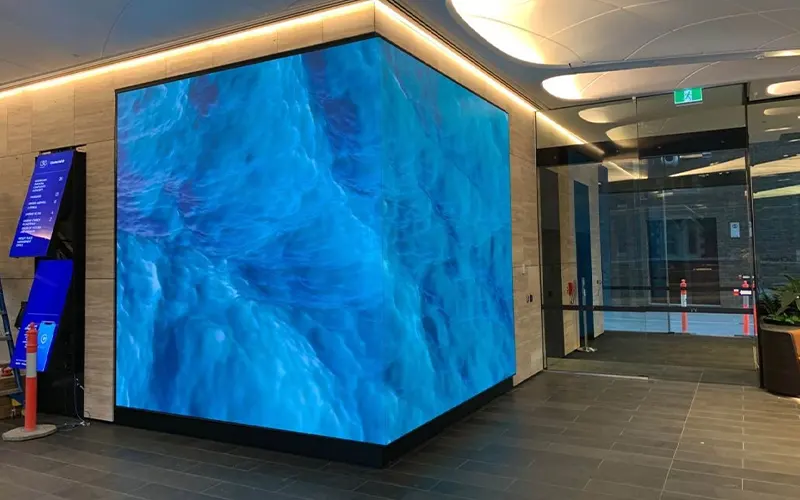
Each module is colour-calibrated before shipping, calibration data travels with the order, and the series is aged for 72 hours before dispatch. Certifications are CE, EMC and RoHS; warranty is 2 years. Control is Novastar by default, with Colorlight available on P1.875, and inputs include DVI, HDMI, SDI, DP, VGA and YPBPR. White-label branding is available.
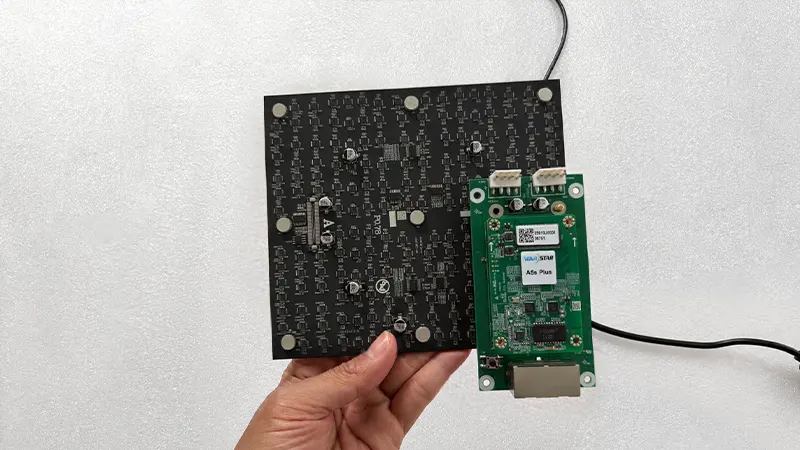
For rooms where the wall is part of a control or broadcast workflow, the control room LED display specification guide covers the requirements that sit around the panel — viewing distance, redundancy, signal chain and service access.