 All-in-One COB LED TV
 Flexible LED Displays
 Transparent LED Displays
 Led Poster
 Circular LED Displays
 Creative & Custom LED Displays
When selecting an outdoor LED display, you’ll often come across terms like P4, P6, P8, and P10. These model might seem confusing, but understanding them is key to choosing the right LED display for your needs. In this blog, we will explore the differences between P4, P6, P8, and P10 outdoor LED displays.
Understanding the “P” in P4, P6, P8, and P10

The “P” in P4, P6, P8, and P10 refers to the pixel pitch (also known as dot pitch). Pixel pitch is the distance between the centers of two adjacent pixels, measured in millimeters. For instance, in a P4 LED display, the pixel pitch is 4mm, meaning the distance between two LEDs is 4mm.
The pixel pitch is a crucial factor in determining the image clarity and sharpness of an LED screen. The smaller the pixel pitch, the more LEDs there are per unit area, resulting in higher pixel density and clearer images.
Pixel Density and Clarity
Smaller pixel pitch means a higher pixel density, which translates into better image quality and detail. A P4 LED display has a pixel pitch of 4mm, therefore,it is much sharper than a P10 display. For small area outdoor HD applications,you can choose smaller pixel pitch, such as P4 or P6 etc.
On the other hand, a larger pixel pitch, like P8 or P10, is suitable for further away applications, such as large outdoor billboards. The lower pixel density in these cases is acceptable because the human eye can’t distinguish the difference in pixel density from a distance.
Differences Between P4, P6, P8, and P10 outdoor LED Display
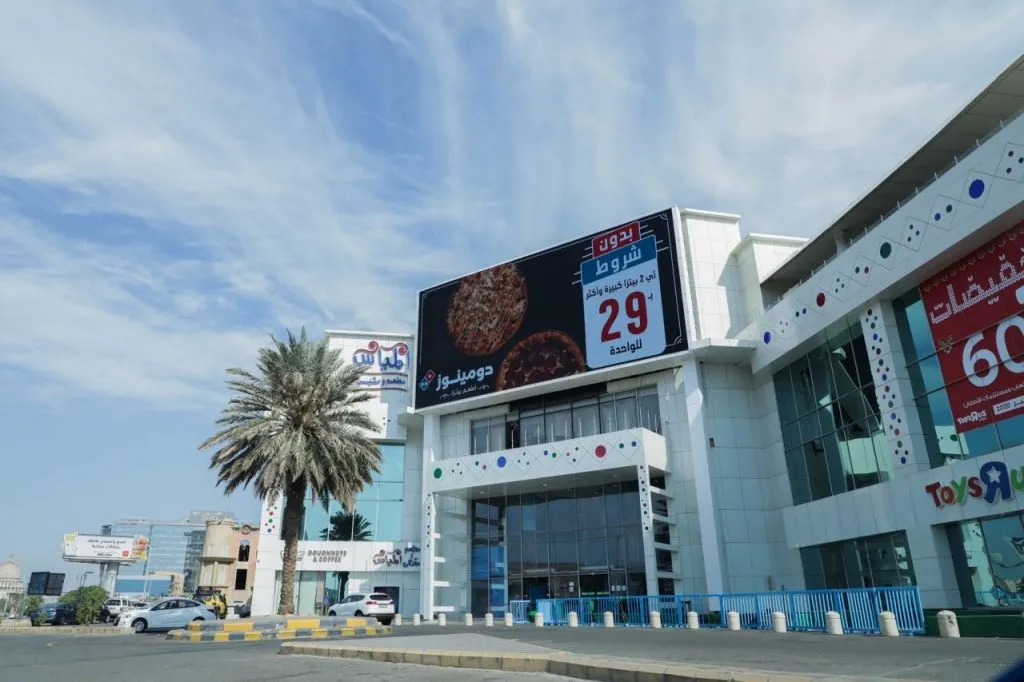
Now that we know the basic concept of pixel pitch, let’s look at the key differences between P4, P6, P8, and P10 outdoor LED displays.
P4 LED Display
– Pixel pitch: 4mm
– Viewing distance: Best for close viewing, starting from around 5-6 meters.
– Pixel density: High, detailed visuals and text.
– Application: P4 displays are often used for smaller outdoor advertising boards or installations , such as retail store signage.
– Cost: The higher cost- P4 is one of the more expensive options.
More
P6 LED Display
– Pixel pitch: 6mm
– Viewing distance: Ideal for viewing from 6-10 meters.
– Pixel density: Slightly lower than P4, but still provides excellent image clarity for moderate distances.
– Application: P6 is often used for medium-sized outdoor advertising, such as in sports arenas, event stages, or storefronts.
– Cost: While less expensive than P4, P6 still offers a good balance between pixel density and cost.So, it is a popular choice for many outdoor applications.
P8 LED Display
– Pixel pitch: 8mm
– Viewing distance: Best viewed from 8-12 meters.
– Pixel density: Lower than P4 and P6, less sharp, but still adequate for larger displays.
– Application: P8 displays are common in large-scale outdoor advertising, especially on highways or in open spaces .
– Cost: more affordable- It is a cost-effective solution for large displays.
P10 LED Display
– Pixel pitch: 10mm
– Viewing distance: Ideal for viewing from 10 meters and beyond.
– Pixel density: The lowest of the four, but suitable for very large installations due to the viewing distance.
– Application: P10 is typically used for giant outdoor billboards, such as roadside or stadium displays.
– Cost: P10 is the most cost-effective option among the four.
More:
How to Choose the Right Outdoor LED Display

When choosing between P4, P6, P8, and P10, there are several factors to consider beyond just pixel pitch.
Viewing Distance
The most important factor is the viewing distance, or how far your audience will be from the screen. The formula to determine the ideal pixel pitch for a given viewing distance is:
P = L / 1700
Where:
– P is the pixel pitch in millimeters.
– L is the closest viewing distance in millimeters.
For example, if the closest viewer will be 10.2 meters away from the screen, a P6 LED display would be appropriate. This formula helps ensure that the image will appear clear to viewers without unnecessary expense on higher pixel density.
Display Area
Larger displays generally need a larger pixel pitch, such as P8 or P10, especially if the viewing distance is considerable. Smaller displays can afford to use P4 or P6, as they will be viewed from closer distances.
Budget Considerations
Smaller pixel pitch displays are more expensive. If your budget is tight, P8 or P10 may offer a better balance between cost and functionality, especially for larger outdoor installations. However, if image quality is the top priority, investing in a P4 or P6 display may be worth the extra cost.
More:
How Much Do Outdoor LED Billboards Cost?
Brightness
All these screens should have a brightness level above 4,000 nits to combat direct sunlight. However, because P8 has fewer pixels and more space between each LED, it can often achieve slightly higher brightness than a P3 screen. The additional space allows for higher power output per pixel, improving brightness.
If your screen will be used in a very bright outdoor area, P8 or P6 may provide the added brightness needed to ensure visibility.
Special applications
The above is the selection method of conventional outdoor LED screens. However, for spherical screens, there is a slight difference.
For smaller spheres, like those under 2 meters in diameter, a P3 display is necessary to ensure high-quality images up close. As the diameter increases, you can opt for a larger pixel pitch since the viewing distance will naturally be greater.
– For a sphere under 2 meters: P3 is recommended.
– For spheres between 2 and 6 meters: P4 or P6 will offer a good balance between clarity and cost.
– For spheres above 6 meters: P8 will be more cost-effective without sacrificing too much clarity.
Viewing Angle and Flexibility
Spherical screens need a wide viewing angle so that the content can be clearly seen from multiple directions. Fortunately, P3, P4, P6, and P8 all offer relatively wide viewing angles, therefore, people can see the screen clearly from almost any angle.
Related:
P6 LED, P10 LED or P16 LED Display,Which is Better?
Conclusion:
We have guided you about the main differences between P4, P6, P8, and P10 outdoor LED displays. When selecting the right outdoor LED display, it’s important to consider the specific requirements of your project. Doitvision offers many P4, P6, P8, and P10 Outdoor LED display option. If If you are still confused ,we will help you make the right choice.