 All-in-One COB LED TV
 Flexible LED Displays
 Transparent LED Displays
 Led Poster
 Circular LED Displays
 Column LED Screens
 Creative & Custom LED Displays
Faced so many dome theater types on the market, you often wonder: What are the common dome theaters? What are their advantages and disadvantages? Which dome theater manufacturer is the most professional? What is the investment cost of a flying dome theater? Doitvision will provide a detailed introduction based on industry practices.
Advantages and Disadvantages of Three Main Dome Theater Types
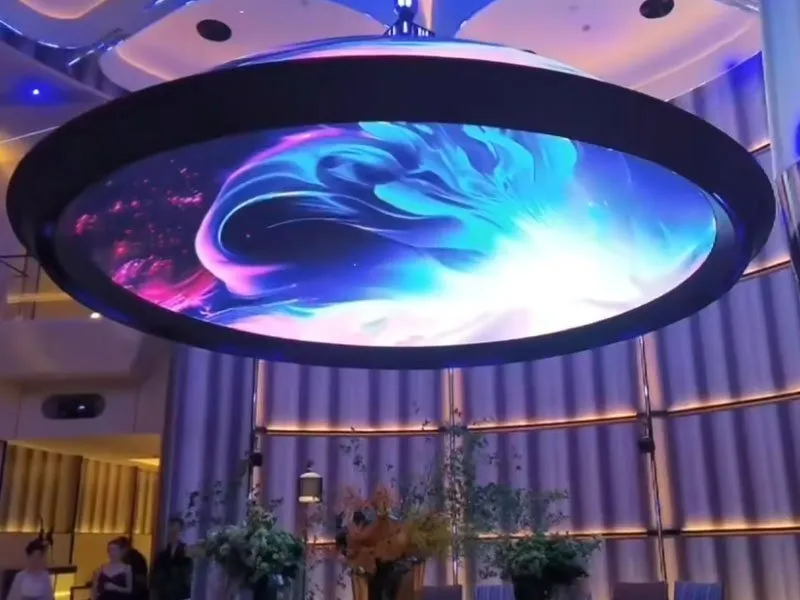
Dome theaters don’t have a single form factor. Based on screen installation method, spatial layout, and functional positioning, the most common types on the market can be categorized as tilted dome theaters, horizontal dome theaters, and vertical dome theaters.
Tilted Dome Theaters:
Tilted dome theaters were one of the earliest types used in science education. Their core feature is the screen’s tilted installation at a certain angle. This preserves the immersive feel of a dome while also ensuring spatial compatibility across various venues.
In terms of application scenarios, they offer strong cross-functionality, accommodating both serious science education in planetariums and lively entertainment venues for a relaxing experience. Therefore, they are one of the most widely dome types on the market.
Core Application Scenarios:
In planetariums, tilted dome theaters are the epitome of “starry sky educational aids.” Because the screen’s tilt angle is scientifically calculated, viewers can fully enjoy the full dome view without having to tilt their heads back or adjust their sitting position.
In entertainment venues, tilted domes emphasize immersion. Their immersive feel amplifies the visual impact of the film. Furthermore, mobile tilted domes are a common choice for these settings. They require no fixed structural structure and can be quickly set up and dismantled.
However, they also have a significant limitation: because the front of the screen is close to the ground, audience members entering and exiting during a screening can easily cast shadows on the screen, disrupting the viewing experience for others. Therefore, staff aoften require to guide audiences in and out between screenings.
Advantages:
- Strong spatial compatibility, adaptable to domes of any size
- Combining educational and entertainment functions
- Flexible application scenarios
- External screens can be customized for themed operations.
Disadvantages:
- Mobile devices can pose a “ground shadow” issue;
- The tilted screen design results in a smaller height clearance than similarly sized horizontal and vertical domes.
- Caution is required for use in venues with height restrictions.
Applicable Applications:
- Science and Technology Museums
- Planetariums (popular science education);
- Temporary exhibitions in shopping malls
- Cultural and tourism markets (entertainment experiences);
- Schools and museums (360° immersive learning);
- Small and medium-sized cinemas (feature film screenings).
Horizontal Dome Theaters
Unlike tilted domes, horizontal dome theaters have a horizontal screen, with the bottom approximately 2.5 meters above the ground.
This allows viewers to move freely within the dome while preventing human bodies from blocking the projected light. It can completely eliminates the “shadow interference” issue.
Core Application Scenarios:
The interactive nature of horizontal domes is maximized in commercial settings. For example, at brand launches, a horizontal dome can play brand storytelling films. Audiences don’t need fixed seats; they can stand, move around, or even set up a product display area beneath the screen, achieving a synergy between “video content and physical experience.”
In immersive consumer settings, horizontal domes create atmosphere. For example, in immersive restaurants, horizontal domes can change screens based on the menu’s theme.
Even in planetariums, some utilize a “horizontal dome + tiered seating” design: seats are arranged in a stepped, tilted pattern, allowing audiences to fully cover the screen while leaving the space beneath for aisles or equipment. If the seats are removed, audiences can lie on mats and watch astrology films in the most comfortable “stargazing” position.
Advantages:
- Unobstructed floor space allows for free movement
- Suitable for interactive settings
- Completely eliminates the problem of shadow interference
- More stable viewing experience
- Flexible combination of seats and mats
- Meets the needs of different groups and activities.
Disadvantages:
- Horizontal screen installation requires a certain diameter.
- A small-diameter horizontal dome results in a narrow field of view and a lack of immersion.
- Unsuitable for small dome projects under 10 meters.
- The screen must be 2.5 meters above the ground, which requires a certain height requirement for the venue.
Applicable Applications:
- Commercial events such as brand launches and company presentations;
- Immersive restaurants and themed cafes;
- Parties, weddings, and annual meetings;
- Large planetariums;
- Stage concerts.
Vertical Dome Theater

The core feature of a vertical dome theater is a hemispherical screen that vertically wraps around the audience. It is often combined with suspended flight simulator seats to create a “flying dome theater.” It utilizes a triple-action system of visuals (dome screen), tactile sensations (seat movement), and environmental effects (wind and fog) to simulate extreme scenarios such as flight, roller coasters, and high-altitude gliding. It is currently one of the most popular “star attractions” in amusement parks and tourist attractions.
Core Application Scenarios:
In amusement parks and tourist attractions, it can create an immersive experience, resulting in a significantly higher return rate than traditional rides.
More importantly, vertical dome flying theaters are weatherproof. However, installing a vertical dome requires a key prerequisite: additional engineering support.
Due to the large size and weight of the hemispherical screen, and the fact that the suspended seats require a stable load-bearing structure, the site structure must be reinforced and a dedicated support frame designed before construction to ensure the safety of the equipment.
Advantages:
- Highest immersive experience
- Ability to simulate extreme scenarios such as flight and exploration
- High return rate
- Fully indoor design, weatherproof and year-round operation
- Combined with environmental special effects and dynamic seating, the multi-sensory experience is enhanced.
Disadvantages:
- Large initial investment
- High site structural requirements, requiring additional engineering support
- Complex equipment commissioning, resulting in higher maintenance costs than other types.
Applications:
- Theme parks;
- Tourist attractions;
- Large-scale cultural and tourism complexes;
- Science and technology museums, flight simulations and educational activities.
How to choose a dome theater manufacturer?
After deciding on the dome theater type, the next key question is “which manufacturer to choose.” While there are numerous dome theater manufacturers on the market, few offer comprehensive equipment development, custom design, and on-site services. Doitvision possesses unique integration capabilities and project experience.
Our flying dome theater is more than a simple “screen + seats” combination; it integrates a comprehensive solution that combines dome display technology, eye-free special effects technology, a dynamic vibration platform, and environmental effects technology.
The core advantage of our solution is its “combination of strengths”: it combines the immersive feel of a traditional dome theater with the dynamic experience of a flying theater, and incorporates the environmental effects of a multi-dimensional theater, creating a “1+1 greater than 2” experience.
Compared to traditional 3D theaters, our flying dome theater’s “differentiated advantages” lie in three key areas:
Multi-sensory integration:
In addition to the 360° dome image and surround sound, it also incorporates tactile and environmental sensing, such as wind, snow, thunder, lightning, and water mist. For example, when lightning flashes in a film, the equipment will simultaneously emit a subtle electric light effect. When an explosion occurs, the seats vibrate violently, accompanied by a strong wind, allowing viewers to transition from “watching a movie” to “experiencing it.”
Enhanced Interactivity:
Some models feature an “interactive shooting system.” Audiences can aim at targets in the film using a joystick on the seat. The system provides real-time feedback on the hit rate, making the experience more engaging and engaging.
Flexible Theme Adaptation:
The film content and equipment themes can be customized to meet investor needs. For example, a scenic spot project can create a custom film titled “Flying Over the Scenic Spot.” You can incorporate local natural landscapes and cultural landmarks to enhance the project’s relevance to the scenic area.
Doitvision Dome Flying Theater Product Features
Excellent Display:
The display utilizes an LED dome, typically with a diameter of 20-30 meters (customizable depending on the venue). This ensures seamless viewing, regardless of seating position. The LED screen’s enhanced brightness and contrast ensure crisp, detailed images even in brightly lit environments. It can eliminate the problem of traditional projection domes being susceptible to ambient light.
Dynamic seats are reliable and durable:
The seating system supports three basic motion modes: lift, pitch, and swing.
Technical modifications have been made to suit the environment. For example, the seat’s load-bearing structure has been optimized to accommodate audiences of varying weights.
The moving parts have been improved to prevent dust and moisture, extending their service life.
Audio-linked vibrators:
Sound-controlled vibrators are installed inside the seats. Their core advantage is synchronization, with the vibration amplitude and frequency completely controlled by the theater’s audio signals.
When the movie’s “engine roars,” the vibrations are strong and high-frequency; when “quiet conversations” are heard, the vibrations are weak and gentle.
Low operating costs:
Compared to traditional motion theaters, our flying dome theaters can save approximately 30% energy. Furthermore, the equipment is easy to operate, requiring only one or two staff members for daily operations, reducing labor costs.
Easy Installation and Maintenance:
The equipment features a modular design, allowing each component to be transported and assembled separately, shortening on-site installation time. During subsequent maintenance, personnel can quickly locate faulty components without disassembling the entire equipment, minimizing downtime.
What is the cost of a dome flying theater?
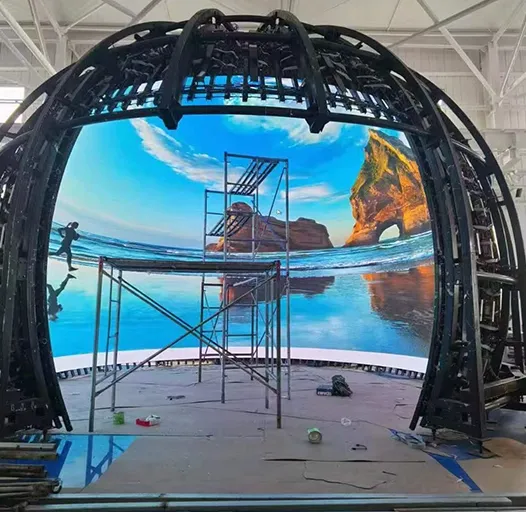
For investors, price is a key decision-making factor. The cost of our dome flying theater solution is not a fixed number. We need to comprehensively calculate the equipment configuration, site conditions, and operational requirements. However, we can provide a basic estimate based on both initial equipment costs and ongoing operating costs.
Initial Equipment Cost:
The initial cost of a dome flying theater primarily consists of equipment procurement and site preparation. The total cost is typically over $430,000 USD, broken down as follows:
Core Equipment Cost (approximately $314,000–$400,000 USD):
LED Dome Screen:
The cost varies significantly depending on the diameter. A 20-meter diameter dome costs approximately $114,000–$143,000 USD, while a 25–30-meter diameter dome costs approximately $171,000–$214,000 USD (including the screen module, mounting frame, and display control system).
Motion Seating System:
Each seat, including the suspension structure, motion motor, and control system, costs approximately $4,300–$7,100 USD. For a 24-seat configuration (accommodating 48 people), the total cost is approximately $103,000–$171,000 USD. Adding interactive shooting functionality adds an additional $700–$1,400 USD per seat.
Environmental Special Effects Equipment: Special effects equipment such as wind, fog, lightning, and snow cost approximately $29,000–$43,000 USD (including equipment procurement and wiring).
Sound and Video Systems:
A surround sound system (including speakers, amplifiers, and mixer) costs approximately $21,000–$29,000 USD; a custom video (5–8 minutes) costs approximately $14,000–$21,000 USD. Of course, pricing depends on the film’s image quality and content complexity.
Venue Preparation Costs (approximately $71,000–$114,000 USD):
Venue Requirements:
A minimum of 60 square meters is required. If the dome diameter exceeds 25 meters, an area of 100 square meters or more is required, and the venue height must be 8 meters or higher.
Structural Reinforcement:
If the venue is a regular commercial space (such as a shopping mall), structural reinforcement of the floor and ceiling is required to ensure it can support the weight of the dome and suspended seating. This will cost approximately $43,000–$71,000 USD.
Decoration and Wiring:
Venue interior decoration (including soundproofing and light-blocking) will cost approximately $14,000–$29,000 USD; equipment wiring (power and signal lines) will cost approximately $14,000–$21,000 USD.
It should be noted that the above is a basic cost estimate. If the investor has special requirements, such as a larger dome, more seats, or more complex special effects, the cost will increase accordingly.
Before the project begins, if requested, we will send a team to conduct an on-site site inspection and provide a detailed cost quote based on the dome diameter, number of seats, special effects configuration, and venue renovation requirements.
Post-Operational Costs
The post-operational costs of a dome flying theater primarily include labor costs, maintenance costs, and venue rental. The total annual cost is approximately $86,000 USD or more, varying depending on the city level and venue size.
Labor Costs (approximately $34,000–$43,000 USD/year):
Operation Staff:
Two to three staff members are required (responsible for equipment operation, audience guidance, and safety inspections). Monthly salaries range from approximately $570–$860 USD in second- and third-tier cities, and approximately $860–$1,140 USD in first-tier cities. The average annual cost is approximately $14,000–$29,000 USD.
Maintenance Staff:
Approximately $14,000–$21,000 USD per year, or one dedicated maintenance staff member can be hired (approximately $710–$1,000 USD per month).
Maintenance Costs (approximately $14,000–$21,000 USD/year):
Consumable Replacement:
Such as spray fluid for special effects equipment, leather seat trims, and spare modules for LED screens, the average annual cost is approximately $7,000–$11,000 USD.
Equipment Upgrades:
Film content needs to be updated every 2–3 years (costing approximately $7,000–$14,000 USD); core equipment (such as seat motors and display systems) requires partial upgrades every 5 years or so, costing approximately $14,000–$21,000 USD (amortized annually).
Venue Rental (approximately $21,000–$43,000 USD/year):
Rents vary significantly by city and location:
A 60-square-meter venue in a shopping mall or scenic area in a second- or third-tier city has an average annual rent of approximately $21,000–$29,000 USD; venues in core areas of first-tier cities can reach $36,000–$43,000 USD or even higher. Investors who own their own venues can avoid these costs.
Return on Investment and Customization Recommendations
Industry data indicates that the return on investment for a dome theater is typically 1–2 years. The specific price depends on visitor volume and ticket prices. For example, for scenic spot projects in second- and third-tier cities, if the ticket price is $7 USD per person and the average daily visitor count is 200, the annual revenue is approximately $521,000 USD (based on a 365-day operation). After deducting annual operating costs of $86,000 USD, the annual net profit is approximately $435,000 USD, and the initial equipment cost of $430,000 USD can be recovered in about one year.
Conclusion:
With the increasing consumer demand for “immersive experiences,” dome theaters have evolved from “niche entertainment equipment” to “must-have items” in the cultural tourism, education, and commercial sectors. Choosing a professional manufacturer is crucial to project success. Through technical integration and customized services, Doitvision not only addresses the issue of “equipment implementation” but also the core requirement of “project profitability.” If you are interested in this project, please feel free to contact us.