 All-in-One COB LED TV
  Flexible LED Displays
  Transparent LED Displays
  Led Poster
  Circular LED Displays
  Creative & Custom LED Displays
 MIP Fine Pitch LED Display
P0.78 & P0.9375 · 2 Models · 16:9 Native · HDR10+ · Front Access


Is MIP Right for Your Project?
MIP sits at the premium edge of fine pitch LED — where color accuracy, contrast, and long-term serviceability justify the investment. Here's when it fits and when a COB series might serve better.
- ✓ Your project involves broadcast cameras or live-to-air — MIP's 7680Hz native refresh eliminates scan lines across all camera sensors
- ✓ Color uniformity across multiple cabinets is critical — pixel-level RGB mixing means zero color cast between panels
- ✓ The display operates in a mission-critical environment where individual pixel repairability matters
- ✓ You need the deepest blacks available — 100,000:1 contrast with 99.03% black area ratio
- ✓ HDR10+ content is part of your workflow — 16-bit grayscale pipeline renders HDR metadata without banding
- ✓ You're willing to invest ~20–40% more per m² for color precision that COB cannot match
- ✗ Budget is COB-competitive, pitch above P1.0 → COB Pro
- ✗ You need 320×160mm standard modules → COB Beta
- ✗ Lead time is critical → per-pixel calibration adds 3–5 days
- ✗ You need P1.0+ pitches → MIP covers only P0.78 and P0.9375
- ✗ Large rental fleet → Matrix 500 for touring
MIP — Physical Overview
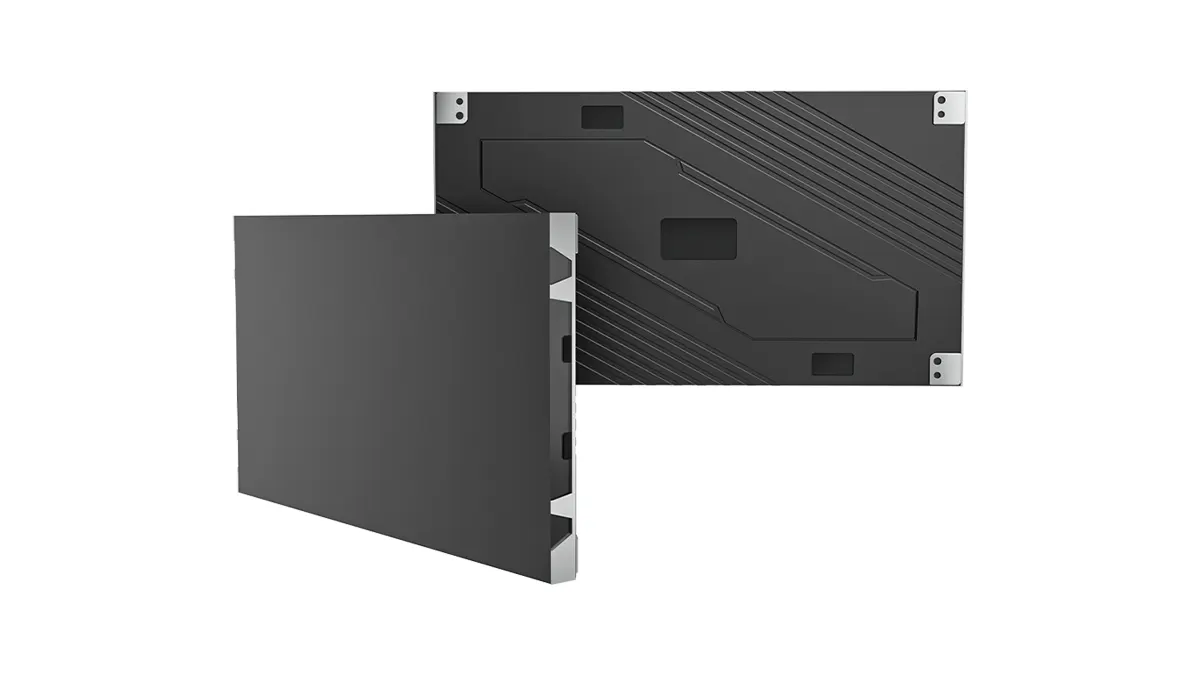
Lightweight 4kg aluminium die-cast cabinet with 16:9 native ratio. Front-access service, MIP 0202 pixel array with 99.03% black encapsulation surface. Individual pixel access for field replacement.
 MIP Cabinet — Front View with MIP 0202 Pixel Array
 Rear View — Novastar Card & Power Supply
 MIP 0202 Micro LED pixel closeup showing individual RGB package
MIP vs COB — Why the Architecture Matters
MIP (Micro LED in Package) and COB (Chip-on-Board) take fundamentally different approaches to the same problem — putting LED chips on a PCB. The differences in color accuracy, repairability, and contrast are not marketing numbers. They are direct consequences of how the chips are packaged.
MIP takes the opposite approach. Each pixel is packaged as an independent unit — a microscopic LED lamp containing individually binned and tested RGB chips. Red chips from batch A can be paired with green from batch B and blue from batch C, each selected to produce a precise target white point per pixel. This pixel-level color mixing eliminates the batch-level color cast that COB cannot escape. And because each pixel is individually encapsulated, a single dead pixel can be replaced in the field with a hot-air rework station — no module swap needed.
The contrast difference is immediately visible. MIP packages use black resin encapsulation that surrounds each pixel. At 99.03% black area ratio, a powered-off MIP panel appears approximately 30–40% darker than an equivalent COB panel. When powered on, this translates to a measured 100,000:1 contrast ratio — and the visual difference in dark scenes is unmistakable.
MIP is the newer, more expensive, and less common technology today. It offers two pixel pitches (P0.78 and P0.9375) versus COB's wider range. But its architecture — individual pixel packaging, per-pixel color mixing, field repairability, and a foundation designed for HDR10+ and 7680Hz from day one — represents a different class of performance altogether.
At a Glance
- ✓ Pixel Pitch:P0.78 & P0.9375 (2 models)
- ✓ Technology:MIP 0202 Micro LED in Package
- ✓ Cabinet Size:600×337.5×34mm · 4kg
- ✓ Aspect Ratio:16:9 native
- ✓ Contrast Ratio:100,000:1 · 7680Hz native
- ✓ Brightness:800–1,000 nits · HDR10+
- ✓ Color Mixing:Pixel-level RGB binning — zero color cast
- ✓ Repairability:Individual pixel replaceable in field
- ✓ MOQ:No minimum
- ✓ Lead Time:15–20 business days
- ✓ Warranty:2 Years
MIP vs COB — Five Differences That Matter
Both are fine pitch LED technologies. The differences are in the packaging architecture — and each architectural decision has a real-world consequence for your installation.
| Attribute | COB (Chip-on-Board) | MIP (Micro LED in Package) – This Product |
|---|---|---|
| Color Accuracy | Batch-level — all chips bonded at once from same wafer batch. Batch-to-batch color variations are corrected by calibration but cannot be fully eliminated. | Pixel-level — each pixel's RGB chips are individually binned and mixed. No batch-level color cast between cabinets. Per-pixel white point is consistent across the entire display. |
| Repairability | Module-level only — one bad pixel means replacing the entire sealed module. No field repair possible. | Pixel-level — individual pixels can be removed and replaced with standard SMD rework tools. Single-pixel repair in minutes, no module swap. |
| Contrast Ratio | 10,000:1 typical — resin layer reflects some ambient light. Surface coating film helps but cannot match MIP's black level. | 100,000:1 — 99.03% black encapsulation area per pixel. Visibly 30–40% blacker when powered off. Deep blacks in HDR content. |
| Refresh & HDR | 3,840Hz standard, up to 7,680Hz on select models. HDR support varies by model. | 7,680Hz native, HDR10+ standard — designed from architecture level for high dynamic range. 16-bit grayscale pipeline across all models. |
| Cost & Maturity | Lower cost, wider pitch range (P0.62–P2.5), dominant market share. Proven in volume manufacturing. | Higher cost (20–40% premium), narrower pitch range (P0.78–P0.9375), smaller market share today. Cost curve expected to decline faster as Micro LED ecosystem matures. |
Give suggestions on selection, point to the alternative series (inner chain), and conclude with a 24-hour response from the engineer.
Five Architecture Decisions That Define MIP
MIP 0202 is not a variation on COB. It is a fundamentally different packaging architecture — and each decision has consequences for color, contrast, serviceability, and total cost of ownership.
Per-Pixel Color Binning — No Batch-Level Color Cast, No Calibration Roulette
MIP packages each pixel independently, which means each pixel's red, green, and blue chips can be individually binned, tested, and mixed before the pixel is assembled. This is fundamentally different from COB's batch-bonding process, where every red chip on a board comes from the same wafer batch. In COB, if a batch of red chips runs 200K warmer, the entire board shifts warm — and global calibration cannot fix pixel-level color variations. With MIP, chips from different batches are mixed per pixel, producing a uniform white point across every pixel on the display. No color cast between adjacent cabinets, no visible color gradient across the wall.
Field-Replaceable Pixels — A Dead Pixel Does Not Mean a Dead Module
Because MIP packages each pixel as a discrete unit — essentially a microscopic SMD LED lamp — a single failed pixel can be removed and replaced in the field using a standard hot-air rework station. The repair takes minutes, costs pennies, and does not require returning a module to the factory. COB encapsulates the entire LED array under a single continuous resin layer: there is no individual pixel to remove, and a single dead pixel means replacing the entire module — typically $300–800 per module for fine pitch COB. Over a large installation, MIP's per-pixel repairability can reduce long-term service costs by a factor of 5–10×.
99.03% Black Area Ratio — The Display Looks 30–40% Blacker Even When Off
MIP 0202 packages use black resin encapsulation that surrounds each pixel, leaving only the active LED surface exposed. The result is a 99.03% black area ratio — at the microscopic level, over 99% of the display surface is pure black material. This is not a filter or a coating applied after the fact; it is the encapsulation material itself. COB's resin layer, even with surface coating film, reflects more ambient light because the resin must be optically transparent to allow light output. The visual consequence: a powered-off MIP panel looks noticeably blacker than a powered-off COB panel, and when content is playing, dark scenes are genuinely dark — not dark grey.
Designed for HDR10+ From Architecture Level — Not Adapted After the Fact
MIP was designed with HDR10+ as a baseline specification, not an afterthought. Both P0.78 and P0.9375 models deliver 7680Hz native refresh — not an overclocked 3840Hz — with a full 16-bit grayscale pipeline (65,536 luminance steps per channel). This combination is required to render HDR10+ dynamic metadata frame by frame without banding artifacts in near-black gradients. The 7680Hz refresh also eliminates scan-line artifacts on 4K and 8K broadcast cameras, making MIP the preferred choice for virtual production LED volumes and broadcast studio backdrops. Lower refresh rates (3840Hz) are available for non-HDR applications to reduce power draw, but 7680Hz is the true native mode.
Newer Technology, Higher Cost Today — Faster Cost Decline Tomorrow
MIP 0202 is a newer technology route than COB, and it currently carries a 20–40% cost premium per square meter with a narrower pitch range (P0.78 and P0.9375 only). Its market share today is significantly smaller than COB's. However, the MIP architecture scales more naturally with the ongoing shrinkage of Micro LED chip sizes — as chips get smaller, individual pixel packaging becomes more efficient, while COB's batch-bonding process faces tighter alignment tolerances. Industry analysts and LED chip manufacturers (Nationstar, Sanan, HC Semitek) are investing heavily in MIP mass transfer and chip-on-carrier technologies. The result: MIP's cost curve is expected to decline faster than COB's over the next 3–5 years, and it is widely viewed as the eventual dominant architecture for sub-P1.0 fine pitch applications.
Where MIP Excels
Six environments where 100,000:1 contrast, pixel-level color accuracy, and 7680Hz refresh are not luxuries — they are requirements.
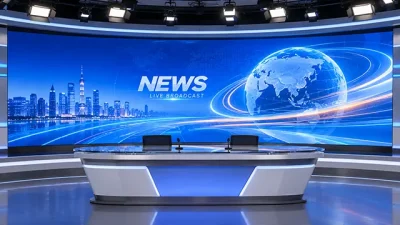
Broadcast & TV Studios
Camera-facing display at 1–2.5m. 7680Hz native refresh eliminates scan lines on 4K and 8K cameras — a hard requirement for broadcast. Pixel-level color mixing ensures every camera angle shows identical color temperature. Recommended: P0.78 at 800 nits.
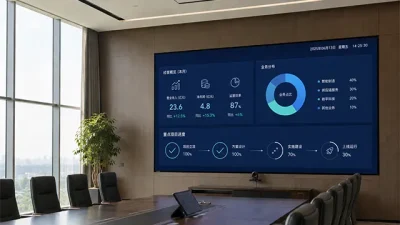
Executive Boardrooms & Premium Corporate AV
CEO-level presentation environment at 2–4m. 100,000:1 contrast means dark presentation slides are genuinely black — not the washed-out grey of lower-contrast panels. 16:9 native fills the wall without cropping. Recommended: P0.9375 at 1,000 nits for daylight environments.
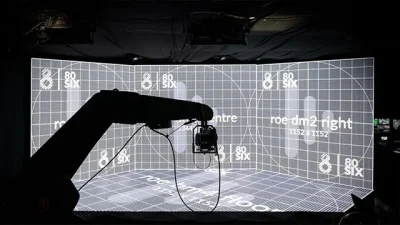
Virtual Production & XR Studios
In-camera VFX LED volume requiring pixel-level color uniformity across the entire wall — the LED surface IS the background plate. 7680Hz eliminates moiré and scan artifacts. HDR10+ matches the dynamic range of cinema cameras. Recommended: P0.78 at 1,000 nits.
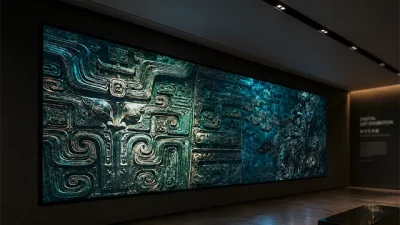
Museums & Digital Art Galleries
Close viewing for digital art where color accuracy is non-negotiable — a slight color shift means a different artwork. Pixel-level color mixing guarantees consistent reproduction across the entire display. HDR10+ preserves the artist's full dynamic range. Black encapsulation blends seamlessly with gallery walls. Recommended: P0.9375.
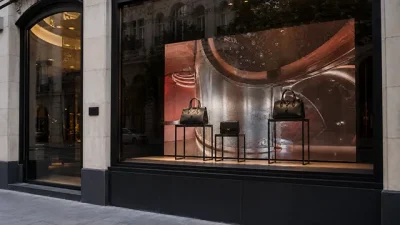
Luxury Retail Flagships
Brand-critical display in high-traffic window environments. 99.03% black area ratio means the display looks like a premium dark surface when off — essential for luxury brand environments where every design element is curated. 1,000 nits ensures content punches through strong ambient light. Recommended: P0.78 at 1,000 nits.
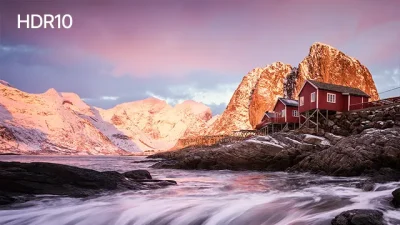
HDR10+ Content Showcase
Demonstration of MIP's full HDR10+ dynamic range. 100,000:1 native contrast combined with 1,000 nits peak brightness renders extreme specular highlights and deep blacks in the same frame — content that lower-contrast panels cannot reproduce faithfully. 7680Hz refresh ensures zero motion artifacts in fast-moving HDR sequences. Ideal for proof-of-concept demos and client showroom evaluations.
Send us your room dimensions, operator-to-screen distance, and ambient light conditions (lux measurements preferred). Our engineers respond with a pitch-and-brightness recommendation within 24 hours — no charge, no commitment. Submit your project specs →
MIP — 2 Models, Full Specifications
Select a pixel pitch below to view detailed specifications. Both models share the same MIP 0202 architecture, cabinet form factor, front-access service, and Novastar control system.
Model: MIP P0.78 · Module Size: 150×168.75 · Cabinet Resolution: 768×432 · Pixel Pitch: 0.78
Model: MIP P0.9375 · Module Size: 150×168.75 · Cabinet Resolution: 640×360 · Pixel Pitch: 0.9375
Recommended Viewing Distance by Pixel Pitch
| Model | Pixel Pitch | Min. Viewing Distance | Optimal Viewing Distance | Typical Application | Relative Resolution |
|---|---|---|---|---|---|
| 型号 1 | 间距 | 最小视距 | 最佳视距 | 典型应用 | |
| 型号 2 | 间距 | 最小视距 | 最佳视距 | 典型应用 |
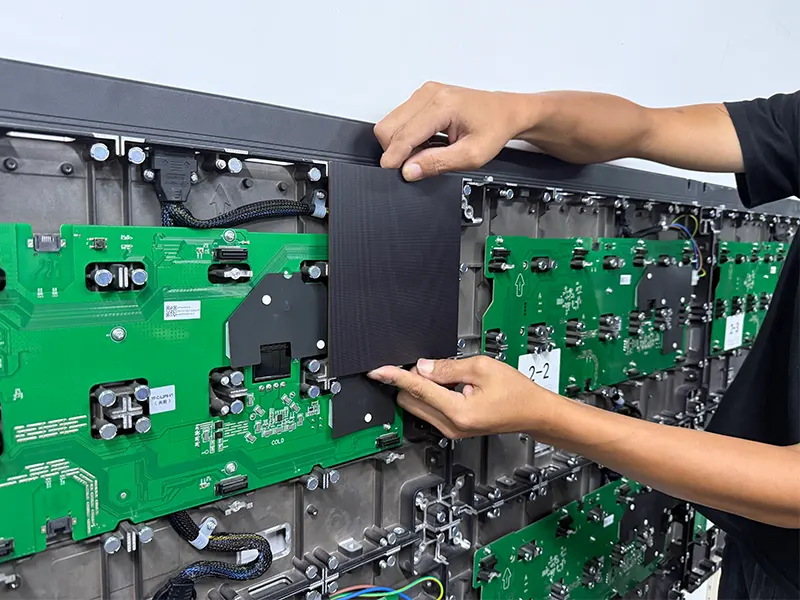
What's in the MIP Shipment
Every MIP order ships with everything needed for installation, calibration, and long-term service — including the tools for individual pixel replacement.
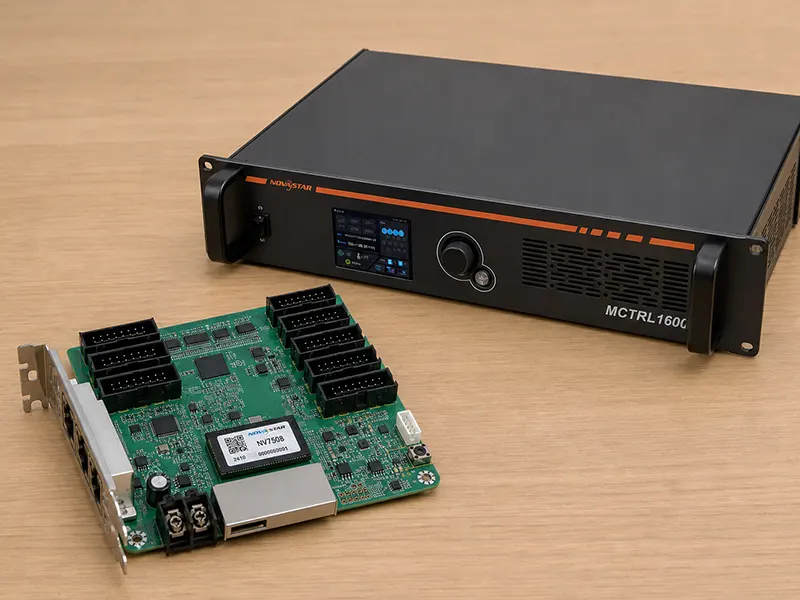

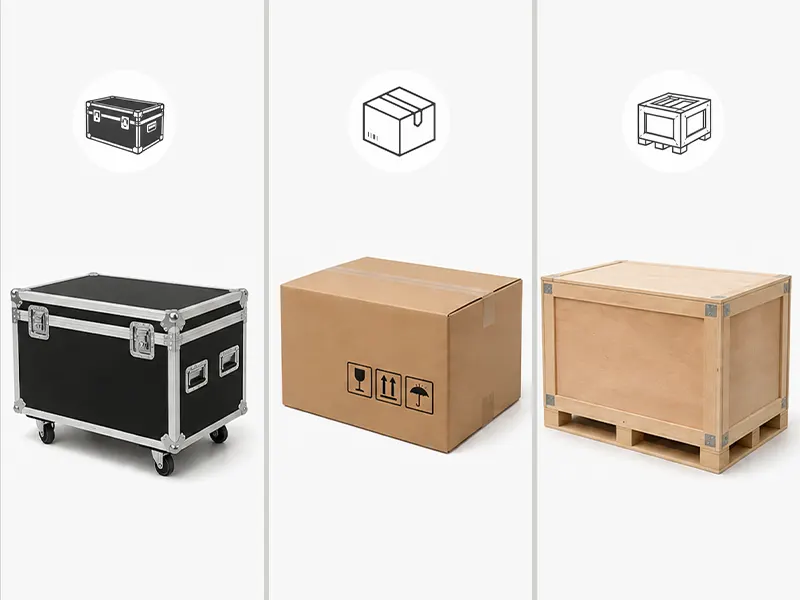
The First MIP Deployment — Your Project Could Be It
MIP is DOIT VISION's newest fine pitch technology. As of August 2026, the first field deployments are in engineering validation. The same Shenzhen factory and engineering team that delivered COB Pro installations across 55+ countries stands behind every MIP cabinet.

MIP — Engineered, Validated, Awaiting Its First Field Installation
MIP 0202 has completed internal engineering validation at DOIT VISION's Shenzhen factory. Both P0.78 and P0.9375 models have passed the full qualification cycle: 72-hour burn-in testing, per-pixel color calibration, temperature cycling (−10°C to +50°C operating range), vibration testing per ISTA 3A, and HDR10+ metadata pipeline validation with Novastar control. The technology is production-ready.
MIP is a newer architecture than COB — the market is still discovering what pixel-level color mixing and individual repairability mean in practice. Unlike COB which has been shipping in volume since 2021, MIP 0202 launched commercially in mid-2025. The first field deployments are in active engineering discussion with broadcast studios and premium AV integrators in Europe, the Middle East, and Southeast Asia.
MIP shares the same Shenzhen production line, the same 15 core engineers, and the same quality control process that delivered COB Pro installations in control rooms, broadcast studios, and luxury retail across 55+ countries. Every MIP cabinet undergoes the same per-pixel calibration and 72-hour burn-in that COB Pro cabinets go through. The engineering team that designed the COB Pro CNC edge-cutting and no-weld bracket systems is the same team that designed MIP's pixel-level repairability architecture.
For the first 5 MIP field deployments, DOIT VISION offers: (1) Priority engineering support with direct Kris Liang access, (2) Extended 3-year warranty at the standard 2-year price, (3) On-site commissioning by a DOIT VISION engineer (travel costs only), (4) Co-branded case study with your approval — suitable for your own marketing and GEO visibility. This is not a discount play; it's an invitation to be the reference installation that defines MIP in the market.
While MIP awaits its first field case, here are three COB Pro installations delivered by the same engineering team, same factory, same QC process. These demonstrate the project execution capability behind every DOIT VISION product.
Is your project the first MIP deployment?
Contact Kris Liang directly to chat about verification data + factory video connection.
WhatsApp Kris Liang — Discuss MIP →Technical Assets for System Design
Request any of these from our engineering team — no registration form, no lead-nurture sequence. Tell us which pixel pitch you're working with and we send the matching revision.
MIP Wall Calculator
Enter your wall dimensions to calculate cabinet count, total resolution, and power requirements — instantly, with no signup.
Results are estimates based on cabinet count rounding. Contact our engineers for a confirmed cabinet count and structural load calculation.
Common Questions from Integrators
MIP Resources & Guides
Engineer-reviewed articles, comparisons, and solutions to help you evaluate MIP versus COB for your project.