Creative LED / Custom cylinder

Cylinder LED Screen

For Column Wraps
Custom Displays

Turn a column into a display surface. Flexible LED modules and a custom frame bring video around architectural pillars and freestanding display objects.

360° formFull cylindrical surface
Front accessMagnetic module service
Custom frameBuilt around your space
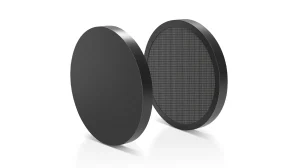
DOIT VISION cylinder LED screen product render
Cylinder LED screenProduct render

A display that follows the architecture

Built around a column.
Designed around the project.

A cylinder LED screen is a curved video display made from flexible LED modules mounted on a cylindrical frame. It can surround an existing pillar or form a freestanding display.

For AV integrators, the key decisions are the finished diameter, display height, viewing distance and access for installation and service. These inputs define the frame, module layout and playback canvas together.

Start with the structure

Which cylinder are you planning?

01

Wrap an existing column

Bring signage into circulation spaces, retail interiors and lobbies. The frame fits around the site’s column while leaving room for connections and service.

Start with
Column diameter, shape and site photos
Confirm
Finished diameter, height and support points
Plan for
Cable entry and access at every service position
02

Build a freestanding display

Create a cylinder or a can-shaped brand display with its own support structure. Coordinate the display surface with the base, silhouette and content.

Start with
Target outer dimensions and a sketch
Confirm
Base, stability, supports and display coverage
Plan for
Access routes, assembly and transport format

For repeated event use, include handling frequency and packing requirements in the
brief so the structure can be assessed for the intended use.

Product & factory media

See the product take shape.

Browse real cylinder displays, frame assembly, component access and playback.

1 / 1

Size, service & content

Get the geometry right first.

Measure the existing column separately from the finished display. They are different dimensions.

Frame spaceExisting columnLED surfaceFinished outer diameter
Top view / schematic, not to scale. Internal clearances follow the project drawing.

Define the space around the pillar.

The finished outer diameter includes the supporting structure, modules and space for cables and components. A nominal architectural diameter alone cannot define the final LED surface.

  1. Measure the siteColumn size and shape, usable height, available floor space and cable entry.
  2. Confirm the module layoutBending limit, whole-module count, closure detail and final dimensions.
  3. Agree the support interfaceMounting points, installed mass and access routes with the site team.

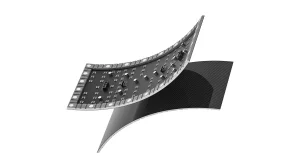
Flexible modules have a bending limit.

The minimum cylinder diameter depends on the base module. A smaller diameter means a tighter bend.

240 × 120 mm base module

Ø764 mm

Minimum cylinder diameter

D

320 × 160 mm base module

Ø509 mm

Minimum cylinder diameter

D

These values describe the base modules, not the existing pillar. Confirm bending direction, inner or outer curve, GOB and frame space for the selected configuration. Do not force a module below its approved bending limit.

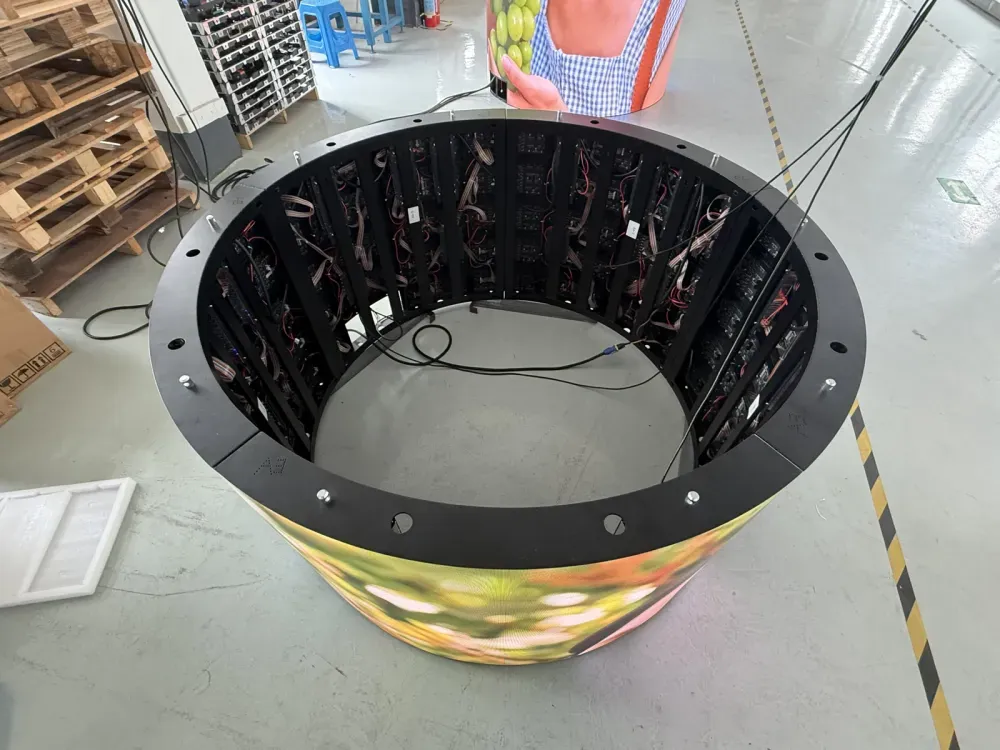
Internal power supplies and cable connections within the cylinder frame
Internal layout / factory photograph

Front service

Plan access beyond the display face.

Magnetic modules release from the front for service. Power supplies, signal equipment and connectors also need a reachable route through the structure.

Allow safe working space around the display and a service position at every height. Confirm removal methods and replacement spares as part of the handover.

One canvas. Several viewpoints.

Unwrap the cylinder into a rectangle to plan the media. People approaching from different directions see different parts of the surface.

Unwrapped content canvasWidth = confirmed pixel count
APPROACH 01Brand.
APPROACH 02Message.
APPROACH 03Motion.

Message zones illustrate a content layout, not physical module boundaries. Match the left and right edges
for a continuous wrap.

Confirm the pixel map

Developed width is π × finished diameter. The actual pixel canvas comes from the selected modules and their layout.

Place the important content

Keep text readable from primary viewing positions. Repeat key messages where the audience needs to see them.

Specify the playback

Mooncell control is configured with the pixel map. Agree the media source, playback mode, capacity and cable route.

Cylinder specifications

A clear specification, from the start.

Common product characteristics below. The project quotation defines the final display configuration.

Item Cylinder LED display
Display construction Flexible SMD LED modules on a custom frame
Display form Column wrap or freestanding cylinder / can-shaped display
Module service Magnetic modules; front access
Control system Mooncell
Base module: 240 × 120 mm Ø764 mm minimum cylinder diameter¹
Base module: 320 × 160 mm Ø509 mm minimum cylinder diameter¹
Input voltage 100–240 V AC
Ingress protection IP54 front / IP31 rear for the standard configuration²
Warranty 2 years

¹ Base-module limits; confirm bending direction, inner/outer curve, GOB and frame clearances.
² The IP rating applies to the standard configuration. Installation environment and protection requirements follow the project quotation.

Defined with your quotation

Pixel pitch, finished diameter and height, resolution, brightness, refresh rate, grayscale, maximum and average power, installed mass and operating environment.

Defined with your drawing

Frame and support interfaces, module layout, electrical distribution, service access, assembly sections,package dimensions and shipping weight.

Budget & handover

Compare the complete project scope.

The screen area is one input. Structure, system design and delivery responsibilities also shape the cost.

01 / Price the display

Size & configuration

For a full cylinder, emitting area = π × finished diameter × emitting height. Use metres to calculate
square metres.

  • Quantity, pitch and image requirements
  • Custom frame and mounting interface
  • Control and power distribution
02 / Define the boundaries

Supply & installation

Ask for a quote that makes each responsibility clear, from the display system to on-site work.

  • Spare modules and other replacement parts
  • Packing, freight and destination charges
  • Site installation and content preparation
03 / Agree the handover

Test & delivery records

Coordinate the order’s acceptance checks and documents before shipment.

  • Whole-screen aging and FAT records
  • Pixel map and playback configuration
  • Packing photographs and spare-parts list

Share the dimensions and destination first. We can then define a configuration and quotation scope for your installation.

Explore Manufacturing

Technical documents

Take the details into your project.

PDF

Product & project guide

8 pages / Structure, dimensions, bending limits, playback and project planning.

PDF

Technical datasheet

1 page / Common specifications and the configuration fields for your quotation.

Download PDF

Before you specify

Cylinder LED questions, answered.

Practical answers for planning the size, content and delivery of your display.

Can a cylinder LED screen wrap an existing column?

Yes. A column-wrap display uses flexible LED modules on a frame designed around the existing column. Send the column diameter, shape, required display height and site photos. The finished display must accommodate the frame, modules, cable routes and service access. Its outer diameter is therefore a separate design dimension, confirmed with the module layout and site constraints before production.

What is the minimum diameter of a cylinder LED screen?

The 240 × 120 mm base module has a minimum cylinder diameter of Ø764 mm; the 320 × 160 mm base module has a minimum diameter of Ø509 mm. These are base-module bending limits, not existing-column sizes. Confirm bending direction, inner or outer curve, GOB and frame space for your configuration. The finished display diameter follows the approved structural and module layout.

How do I choose the pixel pitch?

Start with the nearest viewing distance and the smallest text or image detail you need people to read. Then consider finished display size, ambient light, audience positions and budget. Send sample content with your site dimensions so the module choice and actual pixel canvas can be checked together. Final pitch, brightness and image-performance specifications are defined in the project quotation.

How much does a custom cylinder LED screen cost?

Cost depends on the emitting area, module configuration, custom frame, control equipment, power distribution and delivery scope. For a full cylindrical surface, area equals π × finished diameter × emitting height, using metres. Share the size, quantity, destination and intended use for a project quotation. Compare what each quote includes: structure, spares, packing, freight, installation responsibilities and content preparation.

Can it play a normal video?

A normal video can be placed within the cylinder’s content canvas. For a continuous wrap, prepare the media to the confirmed pixel map and check the join between the first and last columns. Repeat essential messages for different audience positions, because a viewer sees only part of the circumference. The Mooncell control configuration, media source and playback mode are agreed with the project.

How is a column-wrap LED screen serviced?

The cylinder uses magnetic front-service modules, allowing access from the display face. The structure still needs a planned route to power supplies, signal equipment and cable connections. Confirm safe working space around the cylinder and an access method for its full height. The project handover should cover module removal, component access, replacement spares and the approved power and signal layout.

What is the difference between a column wrap and a can-shaped display?

A column wrap is designed around an existing architectural column, so its shape, clearance and supports depend on the site. A freestanding cylinder or can-shaped display has its own structure and can serve as a branded display object. Specify the base, overall envelope and visible display surface. Any shaped top, taper or repeated transport requirement needs to be included in the engineering brief.

What information is needed for a project proposal?

Send the installation country, project type, quantity, column or target display diameter, and required display height. Site photos or a drawing help explain access and mounting conditions. Add the nearest viewing distance, sample content, indoor or outdoor location and target installation date if available. You can leave the pitch open for recommendation; the proposal will define the configuration direction and quotation scope.

Product & project guide

Get the cylinder guide.

Enter your name and email to request the PDF from info@doitvision.com. Our team will reply by email with the product & project guide.

We’ll use your details to respond to this request. Privacy notice.

You can also email info@doitvision.com.

Bring us the brief

Start your project.

A drawing, a site photo or an early idea. Tell us what you are planning and work through the details with our engineering team.

We use these details to respond to your project. Privacy notice.

Manufacturer
DOIT VISION
Founded
2013, Shenzhen, China
Headquarters
Shenzhen, Guangdong, China
Certifications
CE, FCC, RoHS, CB, ISO 9001
Official Website
https://www.doitvision.com/