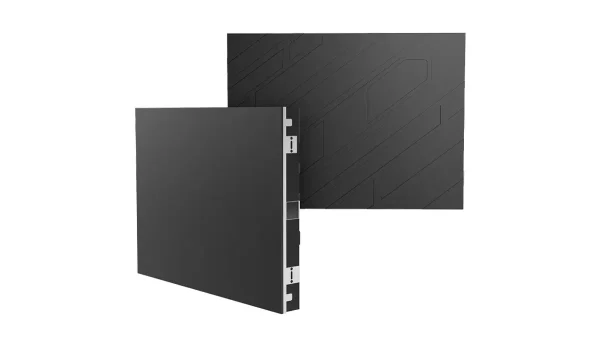
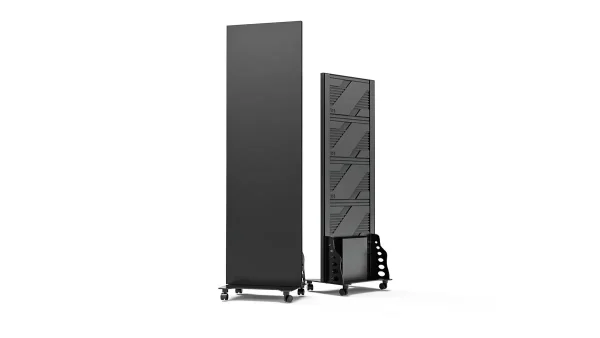
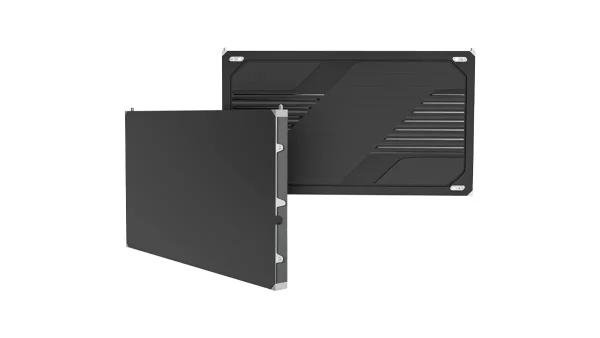
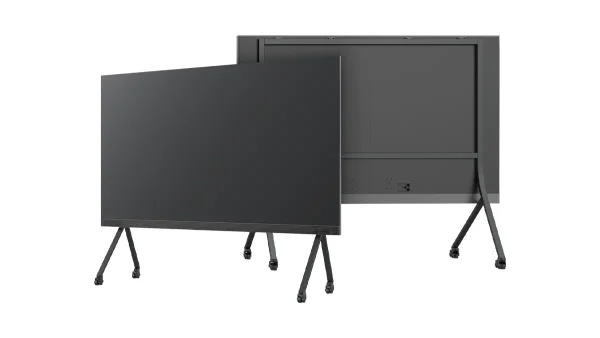
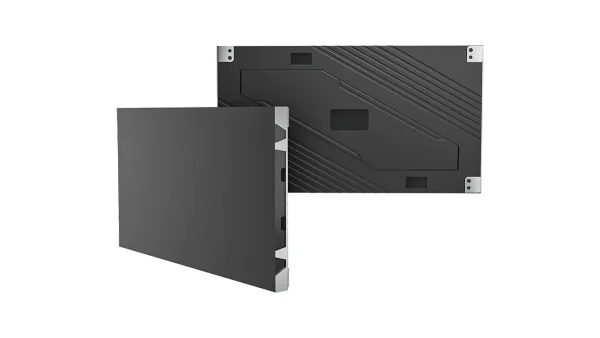
All-in-One COB LED TV
  Flexible LED Displays
  Transparent LED Displays
  Led Poster
  Circular LED Displays
  Column LED Screens
  Creative & Custom LED Displays
 In 2026, the LED wall vs LCD wall decision is a three-way comparison. All-in-One LED has entered the mainstream for 108″–163″ rooms, changing the TCO math that previously made LCD the default for boardroom-scale installations. This guide models real 5-year costs across all three formats — and shows where each format wins, by wall size.

- 2026 is a three-way decision: LCD video wall, conventional LED wall, and All-in-One LED for 108″–163″ rooms.
- Compare 5-year TCO, not panel price alone — brightness, seams, lifespan and maintenance change the winner by wall size.
- Panel reference (EXW): P0.9 COB $2,250–2,500/m²; P1.2 around $1,570–2,150/m² depending on COB vs SMD. Full systems need structure, control and install on top.
- Match format to room size. Boardroom-scale often fits All-in-One; larger walls usually need a modular LED build.
- → Wall area exceeds ~7.2m²
- → Custom shapes, curves, non-rectangular
- → Retail flagship / broadcast / large control room
- → Full system integration with specific controller
- → Wall area 3–7.2m² (108″–163″ units)
- → Seamless surface + LED lifespan at LCD-level cost
- → Fast deployment — no on-site tiling or frame work
- → Display may need to be relocated in future
- → Wall under ~3m², cost is primary driver
- → Close-viewing data dashboards, 4K panel resolution
- → Content is primarily text — bezels acceptable
Why the Old Two-Way Rule No Longer Holds
The standard LED wall vs LCD wall rule — LCD for anything small or budget-conscious, LED for anything large or premium — was already too blunt by 2025. In 2026, a third format has made it obsolete for the room size range where most integrators actually work.
All-in-One LED is a factory-integrated, single-chassis LED display combining the panel, power supply, and control system into a plug-and-play unit. Available from 108″ to 163″ diagonal, it occupies a category that did not exist at commercial scale two years ago: LED image quality, seamlessness, and lifespan — at installation cost and complexity closer to LCD.
This matters because the 3–7.2m² band is where the majority of commercial AV specification work lands: boardrooms, training rooms, briefing rooms, reception areas. In this band, the comparison is now three-way, and the cost gaps that previously made LCD the obvious default have largely closed.
DOIT VISION manufactures both tiled LED and All-in-One LED. This guide uses production cost data and post-installation service records across 300+ projects in 55 countries. The TCO models below show LCD still winning in the smallest rooms — because that’s what the numbers show, not because we’re selling LCD.
How LCD and LED Differ at the Hardware Level
The performance differences between LCD and LED video walls are determined by their physical construction — specifically, how each format generates light and how individual display units tile together.
LCD Video Wall: Backlit Panel Grid
An LCD video wall is built from commercial-grade LCD panels arranged in a grid. Each panel generates images using a liquid crystal layer that modulates light from a backlit source — typically an LED backlight array. Panels are mounted in a frame and connected by bezels: the physical border of each panel’s housing. Even in ultra-narrow bezel configurations, a seam of 0.44mm–3.5mm remains visible at the join.
For content that doesn’t cross panel boundaries — data dashboards, CCTV monitoring, application windows — the seam is operationally irrelevant. For branded visuals, video content, or any image that spans the full wall, the grid structure is visible and permanent.
LCD’s structural advantage is resolution density. A single 55″ 4K LCD panel delivers 3,840×2,160 pixels in a fixed format. In close-viewing environments (under 1.5m) displaying fine text or data, this matters.
LED Video Wall: Direct-View Pixel Surface
An LED video wall uses direct-view LED pixels — each pixel emits its own light rather than modulating a backlight. Cabinets tile together with sub-millimetre precision, creating a seamless image surface with no structural seams at any scale.
Pixel pitch determines resolution. The smaller the pitch, the higher the pixel density and the closer the minimum comfortable viewing distance. P1.2 is the current mainstream for indoor fine-pitch installations; P0.9 and P0.7 are commercially available for close-viewing premium applications.
LED’s brightness ceiling is significantly higher than LCD: fine-pitch indoor panels typically operate at 600–1,200 nits, adjustable. Outdoor LED exceeds 10,000 nits. LCD’s ceiling of 500–1,000 nits is a hard constraint in high-ambient-light environments.
In control rooms displaying independent data sources per panel — each operator’s workstation mapped to one screen — LCD’s bezel is a functional divider, not a flaw. In a boardroom where the wall displays a single presentation or video call, the same bezel becomes a visual disruption that clients notice. Specify based on content, not general preference.
Three Technologies, Side by Side
Specifications from production units and post-installation records, not marketing datasheets.
| Specification | Tiled LED (P1.5–P1.8) | All-in-One LED (108″–163″) | LCD Video Wall (55″ panels) |
|---|---|---|---|
| Bezel / seam width | 0mm seamless | 0mm seamless (single chassis) | 0.44mm–3.5mm visible seams |
| Brightness (typical) | 600–1,200 nits, adjustable | 600–1,000 nits, adjustable | 500–1,000 nits, fixed backlight |
| Native resolution | Pixel pitch dependent | Fixed per unit (163″ P0.93 ≈ 4K) | Fixed per panel (1920×1080 @ 55″) |
| Viewing angle | >160° horizontal | >160° horizontal | 178° (IPS) typical |
| Lifespan to 50% brightness | ~100,000 hours | ~100,000 hours (same modules) | ~50,000–70,000 hours |
| Power draw (W/m², typical) | 250–450W/m² | 250–450W/m² (identical modules) | 300–500W/m² |
| Size flexibility | Any size, curved, custom shape | Fixed: 108″ / 135″ / 163″ | Fixed 16:9 panel grid only |
| Calibration | Field calibration required at install | Factory pre-calibrated, plug-and-play | Moderate panel-to-panel variance |
| Installation complexity | High — frame, tiling, on-site calibration | Low — wall mount, single unit | Moderate — panel grid alignment |
| Repair unit | Module (~150×168.75mm) | Module (~150×168.75mm) | Full panel — two-person lift |
| Repair cost (typical) | $50–150 per module | $50–150 per module | $800–1,500 per panel |
Green = leading · Amber = acceptable · Grey = trailing. The standout row for boardroom-scale decisions is installation complexity: All-in-One inherits tiled LED’s repair economics and lifespan, but deploys with LCD-level simplicity.
What It Is, What It Isn’t, and Where It Fits

An All-in-One LED display integrates the LED panel (using the same COB/MIP modules as tiled walls), power supply, video processor, and control system into a single factory-assembled chassis. It ships pre-calibrated, mounts to a wall or floor stand as a single unit, and is operational within hours of delivery.
The difference from tiled LED is what happens before the truck arrives on site. A tiled LED wall ships as individual cabinets that must be assembled into a structural frame, tiled, wired, and calibrated on location by a specialist crew — a process that typically takes one to three days. An All-in-One unit arrives factory-calibrated and is lifted into place as a single object.
The difference from LCD is what’s inside. Because All-in-One uses COB/MIP module technology — not a backlit LCD panel — it inherits LED’s seamless surface, ~100,000-hour lifespan to 50% brightness, and module-level repairability. A failed section costs $50–150 to fix, not $800–1,500.
- 108″ · P1.25 · ~3.2m² · $8,500 EXW
- 135″ · P1.56 · ~5.0m² · $10,000 EXW
- 163″ · P1.56 · ~7.2m² · $15,000 EXW
- 163″ · P0.93 · ~7.2m² · $25,000 EXW
- Walls larger than ~163″ diagonal (7.2m²)
- Large-format retail storefronts
- Broadcast LED volumes and VP stages
- Multi-metre control room walls
- Custom shapes, curves, non-rectangular
All-in-One’s ceiling is 163″ (approximately 3.6m × 2.0m). Walls beyond 7.2m² remain the domain of tiled LED — which has no upper size limit and supports custom configurations. All-in-One is a category change for a specific room-size band, not a replacement for tiled LED at scale.
Which Format Wins by Wall Area
| Wall Area | Tiled LED | All-in-One LED | LCD | Typical Winner |
|---|---|---|---|---|
| Under 3m² | Higher cost at small scale | Not available below 108″ | Lowest hardware + install cost | LCD |
| 3–7.2m² (108″–163″) | Comparable — higher install cost | Closes gap to LCD almost entirely | Slightly lower — margin now small | All-in-One or LCD — close call |
| 7.2–12m² | Lower per m² at this scale | Not available (exceeds 163″) | Bezels visually disruptive at scale | Tiled LED |
| Over 12m² | Significantly lower per m² at scale | Not available | Structural complexity rises sharply | Tiled LED |
This is the wall size range behind the majority of “LED wall vs LCD wall” searches. It’s also where All-in-One changed the answer in 2026. The TCO models in the next two sections show the actual numbers.
The Numbers That Changed the Conversation
Scenario: A corporate boardroom wall of approximately 3.2–3.4m², operated 10 hours/day, 5 working days/week. Three real configurations: a 2×2 grid of 55″ LCD panels, a tiled LED wall at P1.5, and a 108″ All-in-One LED unit at P1.25 (EXW $8,500).
| Cost Category | LCD Wall (4× 55″) | Tiled LED (P1.5, 3.4m²) | All-in-One LED (108″, P1.25) |
|---|---|---|---|
| Hardware (Year 0) | $4,800 | $5,950 | $8,500 |
| Mounting / structure | $1,200 | $1,900 | $400 |
| Processor / controller | $800 | $900 | $0 (built-in) |
| Installation labour | $1,000 | $1,400 | $500 |
| Year 1–5 power (10hr/day, $0.12/kWh) | $1,825 | $1,460 | $1,400 |
| Year 1–5 maintenance & calibration | $1,800 | $1,200 | $800 |
| 5-Year TCO | $11,425 | $12,810 | $11,600 |
At this size, the decision is no longer “LCD because LED is too expensive.” The $175 gap over five years — roughly $35/year — gets you a seamless surface, factory pre-calibration, and roughly double the operational lifespan. For boardrooms where the wall is part of the room’s presentation to clients, that’s a straightforward trade. For a utilitarian back-office display where bezels are invisible to end users, LCD remains the rational default.
Where Tiled LED Wins Clearly
Scenario: An 18m² wall (approx. 6m × 3m) for a retail flagship storefront or 24/7 control room. All-in-One is not in this comparison — three separate units would have visible gaps between them, defeating the purpose. This is a two-way comparison: tiled LED vs LCD.
| Cost Category | LCD Wall (≈22× 55″ panels) | Tiled LED (P1.8, 18m²) |
|---|---|---|
| Hardware (Year 0) | $26,400 | $24,300 |
| Mounting / structure (incl. seam alignment) | $9,500 | $7,200 |
| Processor / controller (24/7-rated) | $2,800 | $2,800 |
| Installation labour | $5,500 | $5,000 |
| Year 1–5 power (24/7, $0.12/kWh) | $19,710 | $14,200 |
| Year 1–5 maintenance & replacement | $11,000 | $4,500 |
| 5-Year TCO | $74,910 | $58,000 (−23%) |
Tiled LED wins by $16,900 — a 23% reduction in 5-year TCO. Three drivers: lower per-m² hardware cost at scale; lower 24/7 power draw (250–450W/m² vs 300–500W/m² for LCD, per IEC 60364-4-43 continuous load calculations); and module-level maintenance at $50–150 per swap vs $800–1,500 per LCD panel, across 22 panels.
Send wall dimensions, pixel pitch, and operating hours. We’ll model 5-year cost across all applicable options — no RFQ required.
Tiled LED, All-in-One & LCD
Tiled LED Panel Cost by Pixel Pitch (Q2 2026, $/m²)
| Pixel Pitch | Market Position | LED Panel Cost ($/m²) | Equivalent LCD Cost ($/m²)* |
|---|---|---|---|
| P1.8 | Mid-size retail, control room | $900–1,500 | $1,200–1,600 |
| P1.2 ★ Mainstream | Best cost/performance 2026 | $1,570–2,150 | $1,500–2,000 |
| P0.9 (fastest-growing) | Close-viewing premium | $2,250–2,500 | $1,800–2,500** |
★ P1.2 is the highest-activity competition zone in 2026. * LCD cost normalised to $/m² based on 55″ panel pricing including bezels. ** Sub-P1.2 LCD equivalents require stacked 4K/8K configurations, raising cost disproportionately.
By Budget: Recommended Configuration
| Project Budget | Wall Area | Recommended Format | Key Trade-off |
|---|---|---|---|
| Under $10,000 | Under 3m² | LCD Video Wall | Visible seams; shorter lifespan |
| $10,000–$15,000 | 3–5m² | 108″ or 135″ All-in-One LED | Fixed size; no custom shapes |
| $15,000–$30,000 | 5–7.2m² | 163″ All-in-One LED (P1.56 or P0.93) | Fixed size; P0.93 at top of range |
| $30,000–$60,000 | 8–15m² | Tiled LED P1.8 | 2–3 day installation; frame required |
| Over $60,000 | Over 15m² | Tiled LED P1.2 / P0.9 | Best long-term TCO at scale |
The Long-Game Metrics

Uniformity Degradation: The LCD Problem That Worsens Over Time
LCD backlights degrade in brightness over their operating life, reaching 50% of initial output at approximately 50,000–70,000 hours. Panel-to-panel variance becomes visible by year 3–4 of continuous operation as a “patchwork” brightness pattern. Calibration software can correct for this partially, but cannot reverse the underlying backlight degradation. The result is a display that looks noticeably worse at year 4 than it did at installation.
Both tiled LED and All-in-One use module technology rated to ~100,000 hours to 50% brightness — roughly double LCD’s lifespan. The practical difference between the two LED formats is when calibration happens: tiled LED requires field calibration after installation; All-in-One ships factory pre-calibrated as a single unit with no panel-to-panel seams to drift out of alignment over time.
Energy Consumption and EU RoHS 3.0 Compliance
From 2026, EU RoHS 3.0 expands energy-related reporting requirements for commercial display equipment, making per-square-metre power draw a procurement criterion — not just an operating cost line item, but a compliance and documentation requirement for EU-based project submissions.
All-in-One units use the same cabinet and module technology as tiled LED. Power draw per square metre is identical at 250–450W/m². There is no integration overhead from the built-in power supply or control system. For procurement teams completing RoHS 3.0 energy disclosures, both LED formats are assessed on the same per-m² basis. LCD’s 300–500W/m² is the higher-consumption option across all three formats.
Order to Operational: What to Expect in 2026
Lead time and installation complexity affect project scheduling as much as cost. The table below reflects current production lead times from DOIT VISION’s Shenzhen facility (Q2 2026).
| Stage | LCD Video Wall | All-in-One LED | Tiled LED |
|---|---|---|---|
| Production lead time | 7–14 working days (stock items) | 20–30 working days | 15–25 working days (standard P1.2–P1.8) |
| Sea freight — Shenzhen to EU | 25–35 days | 25–35 days | 25–35 days |
| Sea freight — Shenzhen to US West Coast | 18–25 days | 18–25 days | 18–25 days |
| On-site installation time | 1 day (2-person crew) | 2–4 hours (1–2 person) | 2–3 days (specialist crew) |
| Calibration after install | Moderate (panel matching) | None — factory pre-calibrated | Full calibration required |
| Typical order-to-operational (sea freight) | 8–10 weeks | 8–12 weeks | 9–13 weeks |
Sea freight timelines above assume standard commercial shipping. Air freight is available for all three formats and reduces transit to 3–5 days. For time-critical installations, confirm with your DOIT VISION engineer at specification stage — air freight logistics for tiled LED cabinets require advance packaging planning.
Industry Positions, 2025–2026
Statements from AV integrator feedback and manufacturer communications, 2025–2026.
“All-in-One changed our default boardroom quote. We used to position LED as the upgrade conversation. Now we quote a 108″ or 135″ All-in-One alongside LCD as a like-for-like comparison, because the price difference is small enough that most clients choose the seamless option when they see both side by side.”
“All-in-One doesn’t replace tiled LED for our large-format work. But it’s solved a problem we had in smaller spaces within the same projects — huddle rooms, briefing rooms, reception areas. We can spec one LED technology family across an entire building instead of mixing LED and LCD.”
“All-in-One is the format we’re most active on in 2026. For an 18m² retail wall, it’s not in the conversation — tiled LED is still the answer. For a boardroom, it’s now a genuine like-for-like alternative to LCD, not just a premium upgrade. The job is knowing which conversation you’re having.”
Across North American, European, and APAC integrator networks, All-in-One LED has entered the standard boardroom specification conversation. It is no longer a specialist product — it is a line item on comparative quotes.
Questions to Ask Before You Spec
- What is the wall’s total area and shape?Under ~3m²: LCD is likely lowest 5-year TCO. 3–7.2m² and rectangular: All-in-One is a genuine contender. Over 7.2m² or non-rectangular: tiled LED is the only option that scales without visible joins.
- Is this a permanent installation, or might it need to be relocated?All-in-One’s self-contained single chassis is straightforward to redeploy. Tiled LED systems are installation-specific — disassembly, transport, and reinstallation require specialist labour and typically recalibration.
- What is the room’s ambient lighting and can it be controlled?LCD’s brightness ceiling of 500–1,000 nits is a constraint in high-ambient or daylit environments. Both LED formats handle ambient light comfortably at their standard operating range up to 1,200 nits.
- Does this project have EU RoHS 3.0 energy reporting requirements?Request per-m² power draw figures for all formats under consideration. Both LED formats report 250–450W/m². LCD typically runs 300–500W/m². Document this for the compliance submission before finalising the specification.
- What is the supplier’s calibration process and ongoing recalibration commitment?For All-in-One: confirm factory pre-calibration is included and ask what the recalibration trigger looks like over 5 years. For tiled LED: ask who performs on-site calibration and at what cost. For LCD: clarify the panel-matching procedure at installation.
- If specifying All-in-One, does the available size actually fit the space and viewing distance?Fixed sizing (108″/135″/163″) is the primary All-in-One constraint. The 163″ unit is approximately 3.6m × 2.0m. Measure the wall and verify minimum viewing distance before specifying — P1.56 is comfortable from 1.5m; P0.93 is the upgrade for under-2m close viewing.
- For close-viewing boardrooms (under 2m), is the P0.93 upgrade justified?The 163″ P0.93 All-in-One carries a 67% price premium over P1.56 ($25,000 vs $15,000). The upgrade makes sense for rooms where video calls and fine text are the primary content and viewing distance is under 2m. For presentation-focused boardrooms at 2m+ viewing, P1.56 is sufficient.