 All-in-One COB LED TV
 Flexible LED Displays
 Transparent LED Displays
 Led Poster
 Circular LED Displays
 Column LED Screens
 Creative & Custom LED Displays
As live streaming continues to evolve, the expectations for a quality live broadcast room have risen. The environment, design, and display technology used can greatly impact the experience for viewers. So, How to Choose the right LED display screen and create a professional and immersive live broadcast room. In this blog, we will explore the details. Let’s dive in.
Why the Right Display Matters

In live streaming, both the content and the environment play a huge role in keeping viewers engaged. While choosing the right products or topics for your stream is essential, creating an appealing atmosphere is equally important. A clutter-free, immersive space can elevate the overall quality of the stream, encouraging longer viewer engagement and boosting trust with your audience.
For immersive live broadcast rooms, LED screens are an ideal solution. They offer dynamic backgrounds, flexible layouts, and can even be customized for unique shapes and sizes.
Small-Sized Live Broadcast Room: Go with Small Pixel Pitch
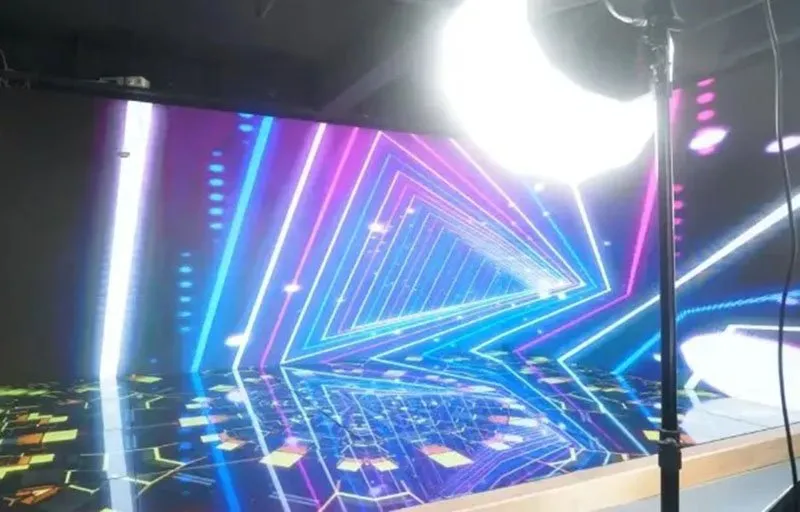
If you’re working with a small broadcast room, say a few square meters, the viewing distance will be short. In this case, using a small-pixel-pitch LED screen is highly recommended. For a room where the audience is about three meters away, a P1.5 or P2 display would be perfect. These screens have a smaller pixel pitch, which can display clearer, more detailed images even at close distances.
You may also want to consider using a curved or single-sided display, which can make the space feel more immersive without taking up too much room. For a little extra flair, consider creating an “L” shaped display background, which adds a 2.5D visual depth. This subtle illusion can make your small space feel larger while maintaining an engaging visual presentation.
Mid-Sized Live Broadcast Room: Consider P2.5 or P3.9 Displays

For a live broadcast room that spans several dozen square meters, where the viewing distance is about five meters, using a P2.5 or P3.9 LED display is more appropriate. These screens have slightly larger pixel pitches, which allow for effective viewing at a greater distance without sacrificing too much detail. In larger spaces, these screens also help keep costs down since you won’t need the higher resolution of smaller pixel-pitch screens.
In a mid-sized room, you have the flexibility to build more elaborate immersive environments. A five-sided screen setup can fully surround your broadcast area, providing a fully immersive experience. One of the most eye-catching setups is a 3D dynamic background, which can switch between various scenes to keep your stream fresh and visually exciting. This type of setup is popular in professional live streaming environments and can significantly enhance viewer interaction.
For instance, many people have seen large-scale immersive live stream setups like those of popular influencers. Their broadcast rooms make use of multiple LED displays to create dynamic and engaging backgrounds. It’s not just the product on display that matters; the environment plays a huge role in keeping the audience engaged.
Large-Sized Live Broadcast Room: Go Bigger with P3.9 or P4.8
In larger rooms, such as those over six meters in width or depth, it is easier to use LED screens with a larger pixel pitch, such as P3.9 or P4.8. These screens work well when the audience is viewing from a farther distance.
In these setups, transparent LED screens are a great option. They allow you to create unique, eye-catching shapes and effects while still keeping the space open. Transparent screens offer high levels of brightness and can be arranged in a jigsaw-style setup, making them highly flexible for immersive live broadcasts.
Transparent screens also let light through, giving you the ability to combine natural and artificial lighting. This can create a beautiful contrast in the live stream, improving the visual quality and setting a unique atmosphere for the broadcast.
Soft vs. Rigid Modules
When it comes to designing a broadcast room, you also need to decide between soft modules or rigid LED displays. This choice depends on the needs of the broadcaster and the room’s design. Soft modules are more flexible and allow for creative setups, such as curved or irregular shapes. This is great if you’re looking to create a more artistic, custom design for your live broadcast.
On the other hand, rigid LED displays are more structured and stable. They are easier to maintain and are often preferred for more traditional rectangular or square setups. Both options can offer immersive experiences, but the decision ultimately depends on your design preferences and technical requirements.
We have introduced some commonly used immersive live broadcast options above. Among them, 5-sided immersive LED screen is the most popular option, let’s learn more details.
What is 5-sided immersive LED screen?

A 5-sided immersive LED screen setup surrounds the space with LED panels on five sides, offering an all-encompassing visual environment. Unlike standard flat screens, it lets you engage your viewers from almost every angle, making them feel like they are part of the scene.
More:
What is An immersive LED display?immersive LED Screen For Sale
Control Principles of a 5-Sided Immersive LED Screen

The 5-sided immersive LED screen system relies on precise coordination between various components. At the heart of this system is the 4K independent controller, which manages the display across all five surfaces: the ceiling, left, front, right, and floor. Each surface measures 3072mm x 3072mm, ensuring uniformity in display size and clarity.
To begin, the LED screens receive image data through receiving cards. These cards act as the bridge between the control system and the LED panels, so it can ensure real-time communication and synchronization of the visuals across all five surfaces. The data from the main control unit is processed and distributed efficiently to ensure that all panels work harmoniously.
The 4K independent controller is the central processing unit. It manages and sends 4K-quality video to each of the five LED screens. This controller processes high-resolution content and ensures that it is distributed evenly, allowing for smooth transitions between each display. The controller’s 4K capability allows the content to remain sharp and detailed, no matter how complex the visuals.
Conclusion:
In summary, choosing the right LED display screen for your live broadcast room depends on a variety of factors. For small rooms, a P1.5 or P2 display is perfect for close-up viewing, while larger rooms can benefit from P2.5, P3.9, or even P4.8 displays. Transparent LED screens and curved displays are also excellent options for adding depth and visual interest to your live broadcasts.
Immersive live streaming is not just about the products you showcase; it’s about creating an environment that captures the viewer’s attention. So, invest in a quality LED display screen, and watch as your live broadcast room transforms into an immersive space. As a professional LED screen manufacturer, Doitvision provides a variety of immersive LED screen options. If you need, please feel free to contact us.