 All-in-One COB LED TV
  Flexible LED Displays
  Transparent LED Displays
  Led Poster
  Circular LED Displays
  Creative & Custom LED Displays
 When it comes to choosing the right LED display for specific projects, many people get confused between LED transparent screens and LED glass screens. Both belong to the family of LED displays. However, they differ significantly in various technical aspects, application scenarios, and maintenance requirements. As a professional LED display brand, Doitvision will guide you these details.
What Exactly Is an LED Transparent Screen?
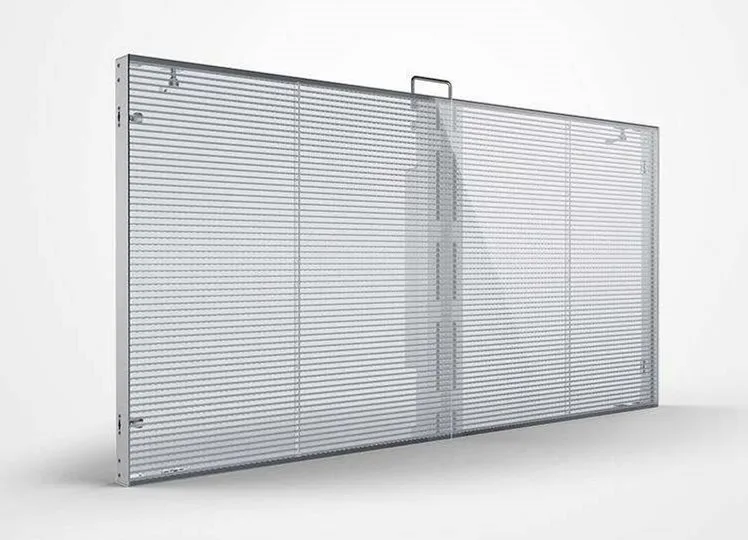
As the name suggests, an LED transparent screen possesses the light-transmitting property similar to glass. Its realization relies on minor innovations in light bar screens, with targeted improvements made to the SMD packaging process, LED bead encapsulation, and control systems. Additionally, the hollowed-out structural design reduces the obstruction of the line of sight by structural components, maximizing the perspective effect and enabling it to blend seamlessly with the surrounding environment.
In the early days, conventional LED displays were commonly used for outdoor applications. But conventional LED displays are composed of multiple modules, and installing one is like putting up a thick wall, which blocks the view and natural light. To address these shortcomings, LED experts added a hollowed-out design to conventional screens to increase their transparency.
The gaps in grid screens were further optimized, leading to the evolution of LED strip screens. So, it is also known as grid screens, sky screens, wall screens, or curtain screens. These have become widely used outdoor LED screens. However, LED transparent screens take this transparency to a higher level, making them suitable for more diverse scenarios beyond just outdoor use.
What Exactly Is an LED Glass Screen?

An LED glass screen is a high-end custom photoelectric glass that uses transparent conductive technology to bond the LED structural layer between two layers of glass. According to application requirements, the LEDs can be designed into various arrangements such as star shapes, matrices, text, patterns, and decorative patterns. It’s important to note that LED glass screens fall into the category of bright screens, but they have distinct characteristics.
Key Differences Between LED Transparent Screens and LED Glass Screens
Now, let’s know the detailed differences between these two types of screens. We’ll analyze them from 10 key aspects.
Different Application Fields
As a new type of display, transparent LED screens offer flexible and engaging support for product promotion and sales. Due to Their excellent transparency and versatile installation options, they are ideal for a wide range of scenarios. You can commonly find them in chain stores, architectural media facades, science and technology museums, museums, glass windows of brand stores, and commercial complexes.
The LED Glass Screens is an improved version based on traditional LED displays. Leveraging its feature of having laminated safety glass, it is mostly paired with glass curtain walls. Its common application scenarios include stage backdrops, large square lighting projects, high-end hotels, and automobile 4S stores.
Different Structures
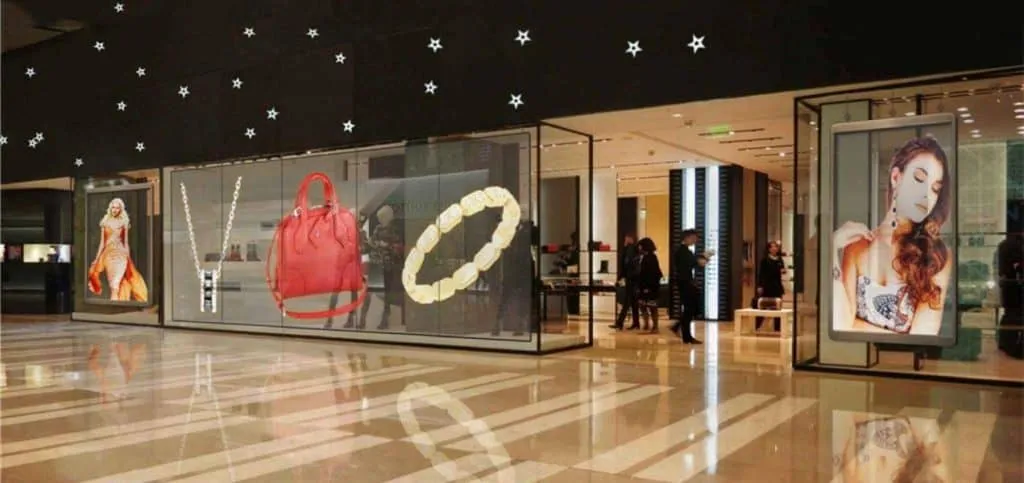
Transparent Screens utilize SMD packaging technology to fix LED beads in the grooves of the PCB . It can not only ensures the stability of the LED beads but also allows for flexible customization. They can be made into standard cabinets or designed and installed according to specific project requirements. Moreover, this structure enables the screens to freely play videos and images without being restricted by fixed patterns.
LED Glass Screens rely on transparent conductive technology to fix the LED structural layer between two layers of glass. Unlike LED transparent display, they can only be customized into different patterns based on project needs and do not have a fixed standard shape. Therefore, once the pattern is determined during production, it cannot be easily changed later, which reduces its adaptability to changing display requirements.
Different Weights
For transparent Screens, the thickness of the PCB is only 1 – 4mm, and the weight of the screen body is approximately 10 – 12kg per square meter. This light weight allows them to be directly installed on existing glass curtain walls without causing excessive load on the building structure.
However, LED Glass Screens are much heavier. Since they include the weight of the two layers of glass, the weight per square meter is usually more than 28 – 30kg. This heavy weight imposes strict requirements on the building’s structure. If you want to install an LED glass screen, the building must be designed with the weight of the screen in mind during the initial design phase.
Different Display Effects
Transparent display offer excellent display flexibility, allowing you to play any type of video or image without restrictions on the display content. Whether it’s high-definition promotional videos, dynamic graphic designs, or real-time data displays, they can handle it all. Moreover, their display effect is superior to that of ordinary LED displays. The combination of high transparency and high brightness ensures that the displayed content is clear and vivid, even in bright environments.
LED Glass display capabilities are relatively limited. They can only show some simple videos and images, and the complexity of the content is restricted by the arrangement of the LEDs. If you need to display more complex content, you have to adjust the building’s design and the screen’s structure in advance, which is not feasible in most cases.
Different Transparency Levels
Both LED transparent screens and glass screens can maintain the original lighting and perspective functions of glass walls, but there is a certain difference in their transparency rates.
For Transparent LED display, the maximum transparency rate can reach up to 90%. This high level of transparency ensures that when the screen is not in use or is displaying transparent content, it does not significantly block the view of the outside environment.
However, the maximum transparency rate of LED Glass Screens is slightly higher, up to 95%. However, it’s important to note that this higher transparency is achieved under specific conditions, such as when the LED beads are arranged in a sparse pattern. Once the density of the LED beads increases to improve the display effect, the transparency rate will decrease accordingly. In practical applications, the actual transparency of glass screens may not always be higher than that of LED transparent screens, especially when considering the comprehensive display performance.
Different Brightness Levels
The brightness of LED Transparent Screens depends on the type of SMD LED beads used. Whether for indoor or outdoor applications, they can meet the required brightness levels. Generally, the brightness can reach up to 5000cd/m².
LED Glass Screens brightness is determined by the luminous intensity and density of the LEDs. Due to the limitations of the glass structure and the arrangement of the LEDs, the brightness is usually lower. Therefore, it is more suitable for indoor use. If used outdoors, the low brightness will result in poor visibility of the displayed content, failing to achieve the expected promotional or display effect.
Different Installation Methods

Transparent display Screens have strong compatibility and can be installed in various ways, including hoisting, fixed installation, stacking installation, and pasting installation. This versatility allows them to adapt to different installation environments.
LED Glass display installation process is much more complex and restrictive. During the design phase of a building, specific positions for installing the screens must be reserved, and then the glass with the LED structure is installed on the glass frame.
Different Operation Difficulties
Transparent Screens operation difficulty is relatively low, both during the initial installation and later maintenance. The installation process follows clear steps, and with the guidance of professional technical personnel from
Glass display operation difficulty is much higher. They can only be installed as a special device, and the construction process has strict requirements. The installation requires close coordination between the construction team. Any deviation in the size of the glass, the position of the LED beads, or the installation of the conductive layer will lead to installation failure. In daily operation, changing the display content is also not easy, as it often requires modifying the internal circuit or even replacing the entire screen, which is not only time-consuming but also increases the operation cost.
Different Maintenance and Repair Requirements
Transparent displays Maintenance and repair are convenient and fast. It can save a lot of manpower, material resources, and financial resources. Thanks to the modular design and easy access to the internal components, when a fault occurs, technicians can quickly locate the faulty module or component and replace it on-site.
LED Glass Screens Maintenance and repair are extremely difficult, and in most cases, it’s almost impossible to carry out effective maintenance. Since the LED structural layer is sealed between two layers of glass, if a fault occurs ,such as a damaged LED bead or a problem with the conductive layer, the entire glass screen must be replaced.
Different Investment Costs
LED Transparent Screens overall investment cost is relatively low. First, during installation, they can be directly attached to the existing glass curtain wall without the need for additional steel structures to support the screen, which saves a large amount of installation and structural reinforcement costs. Second, the maintenance cost is low. As mentioned earlier, maintenance only requires replacing faulty components, not the entire screen, which reduces long-term maintenance expenses. Additionally, Doitvision offers cost-effective LED transparent screen solutions, providing customers with high-quality products at a reasonable price, further lowering the investment threshold for customers.
LED Glass Screens investment cost is significantly higher. The special glass production, the precise installation of the LED structural layer, and the necessary building structure modifications all add to the installation cost.
Conclusion
We have guide you the distinguish between transparent ED screens and glass LED screens. At Doitvision, we have been committed to the research, development, and production of high-quality LED displays, including transparent screens. We understand that every customer has unique project requirements, and our professional team is dedicated to providing customized solutions to help you. Whether you need a display solution for a commercial complex, a museum, a brand store, or any other scenario, we are here to assist you. If you have any questions about LED screens. feel free to contact us. We look forward to working with you to create outstanding visual experiences.