 All-in-One COB LED TV
 Flexible LED Displays
 Transparent LED Displays
 Led Poster
 Circular LED Displays
 Column LED Screens
 Creative & Custom LED Displays
Glue is a silent hero in LED module packaging. It keeps modules stable and durable. It protects them from moisture, water, and heat. Many people overlook glue selection. But choosing the wrong glue can ruin your LED project.
Imagine this: An outdoor LED screen fails after 6 months. The modules crack and leak. The root cause? Cheap, low-quality packaging glue. It couldn’t stand rain, UV rays, or temperature changes. Today, we’ll talk about LED module packaging glues.
What Is LED Module Potting Glue?

LED module potting glue is a special adhesive. It’s liquid before curing. It turns solid after curing.
Its job is to seal LED diodes and components. It provides protection against moisture, water, heat, and electricity. It also fixes components in place.
After curing, it can be either soft and elastic or hard and rigid. It can be transparent or opaque. For example: Outdoor LED modules need glue that resists UV and rain. Indoor modules may need glue that’s easy to repair.
Common Types of LED Module Potting Glues
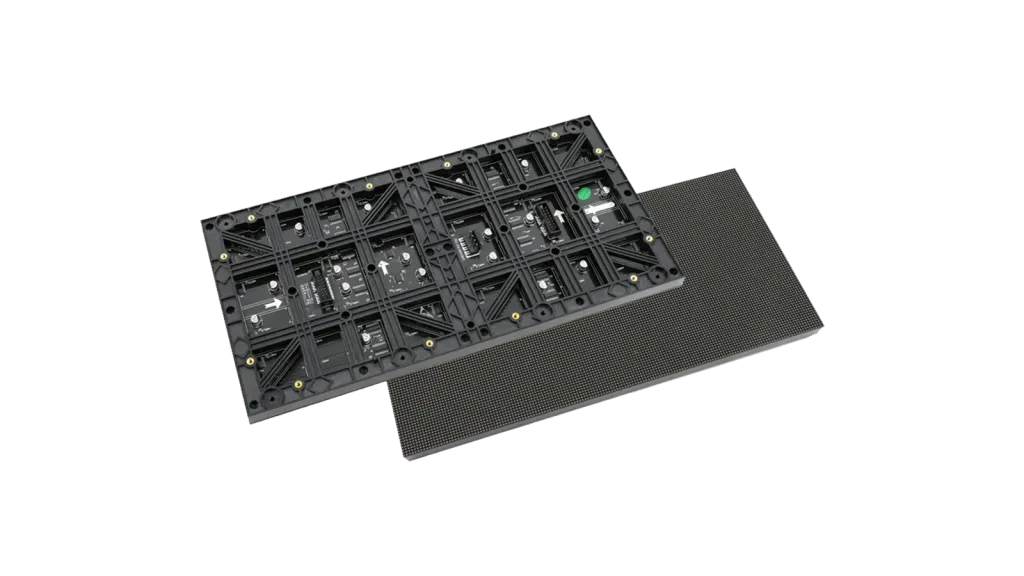
Four types of glues are widely used for LED module packaging. Each has unique features and uses. Let’s break them down.
Silicone Potting Glue
Silicone glue is the top choice for outdoor use. It’s also great for wet or harsh environments》
Key features:
– Soft and elastic after curing. Easy to remove and rework.
– Excellent weather resistance. It stands high/low temperatures, rain, snow, UV rays, and acid rain.
– No shrinkage during curing. It won’t damage components with stress.
– Resists yellowing. It keeps its appearance and performance for years.
In actual use, almost all large outdoor LED screens use silicone glue. You can think stadium screens, billboards, and street signs. I’ve seen these screens run smoothly for 3-5 years with good silicone glue.
Epoxy Resin Potting Glue
Epoxy glue is hard and rigid after curing. It’s non-removable once set.
Key features:
– High hardness and strength. It protects components from physical damage.
– Good thermal conductivity and insulation. Suitable for power modules.
– Low cost compared to silicone glue. Popular for budget indoor projects.
Limitations: It shrinks during curing. It may damage sensitive components. It yellows over time under UV light. Not ideal for outdoor use.
Polyurethane Potting Glue
Polyurethane glue has medium elasticity. It’s hard to remove once cured.
Key features:
– Balances flexibility and strength. It absorbs shocks well.
– Good water and chemical resistance. Suitable for some industrial LED modules.
Limitations: It’s less weather-resistant than silicone. It may degrade in extreme temperatures. Not common for large LED screens.
UV-Curable Potting Glue
UV-curable glue cures quickly under UV light. It’s ideal for mass production lines.
Key features:
– Fast curing . Boosts production efficiency.
– Shallow potting ability. Good for thin LED modules or surface sealing.
– Transparent and low shrinkage. Preserves LED light output.
Limitations: It needs UV light to cure. Hard to use for thick or opaque modules. Not suitable for outdoor use.
How to Judge Potting Glue Quality? 4 Grades
Glue quality varies greatly. It directly affects LED module lifespan. We can divide glue into 4 grades:
High-Quality Potting Glue
Top-tier glue has excellent performance. It’s used for high-end projects and exports to Europe/US.
Key traits:
– High elasticity, toughness, tensile strength, and adhesion.
– Withstands harsh outdoor conditions for years. Stable performance over time.
– Extremely low shrinkage.
– May have extra features: Matte finish, heat conduction, or flame retardancy.
Good-Grade Potting Glue
This glue is reliable for most projects. It’s a balance of quality and cost.
Key traits:
– Good elasticity, flexibility, tensile strength, and adhesion.
– Withstands outdoor conditions for 1-2 years. Stable performance.
– Low shrinkage .
Average-Grade Potting Glue
Average glue meets basic needs. It’s cheaper but has shorter lifespan.
Key traits:
– Basic elasticity and flexibility. Good tensile length but low strength.
– Lower adhesion than good-grade glue.
– Noticeable shrinkage after 1 year of use.
Low-Quality (Unqualified) Potting Glue
This glue is risky. It’s made with cheap materials and poor technology.
Key issues:
– Very high shrinkage. Low pure material content.
– Prone to problems: Peeling, cracking, or oozing oil.
– Unpredictable quality. May fail in a few months. Causes safety hazards.
Pro tip:
Shrinkage is a key quality indicator. Lower shrinkage means higher pure material content. Higher cost, but It is worth it for long-term projects.
Related:
What is the Key Raw Materials for LED Packaging
Differences Between Soft and Hard Glues
Soft and hard glues are the two main categories by hardness. They differ in operation, physical/chemical properties, use cases, and repair difficulty. Let’s compare them in detail.
Operational Differences
– Application process:
Soft glue flows well. It’s easy to pour or drip. Good for complex shapes and irregular surfaces. Hard glue is thick. It’s hard to use for high-precision, small-gap packaging.
– Curing speed:
Soft glue cures slowly. Longer working time. You can adjust positions after applying. Hard glue cures fast. Finishes bonding in a short time.
– Shrinkage:
Soft glue has low shrinkage. Reduces stress and deformation. Hard glue has higher shrinkage. May cause component damage.
Physical Property Differences
– Hardness:
Soft glue stays elastic. Shore hardness is 30-80. Hard glue is rigid. Shore hardness is over 80. It is close to some metals.
– Tensile strength and toughness:
Soft glue stretches well. It can bend or twist without breaking. Hard glue is brittle. It cracks or breaks under strong force.
– Thermal expansion coefficient:
Soft glue expands more with temperature changes. Adapts better to heat/cold. Hard glue expands less. It may crack if temperatures change sharply .
Example: In northern China, winter temperatures drop to -20℃. Hard glue may crack on outdoor LED modules. Soft silicone glue handles the cold easily.
Chemical Property Differences
– Composition:
Soft glue has flexible additives ,like plasticizers. Silicone soft glue has a silicon-oxygen backbone. Hard glue has high cross-link density. Epoxy hard glue cures via cross-linking reactions.
– Weather resistance:
Soft glue has good chemical stability. Resists UV, ozone, and humidity. Hard glue is also weather-resistant, but some yellow or crack under long UV exposure.
– Chemical resistance:
Soft glue is less resistant to solvents, acids, and bases. Hard glue resists more chemicals.
Application Scenario Differences
– Indoor LED screens:
Soft glue is for indoor modules needing flexibility and repairability. Hard glue is for high-end indoor screens requiring hardness and wear resistance.
– Outdoor LED screens: Soft glue is for flexible outdoor screens, such as curved billboards. Hard glue is for fixed large outdoor screens needing impact resistance.
Repair Difficulty Differences
– Soft glue:
Easy to remove. Heat or solvents work. Little damage to LED chips or substrates. Good for modules needing maintenance.
– Hard glue:
Hard to remove once cured. Needs professional tools. Risk of damaging chips or circuits. Not ideal for repairable modules.
How to Choose Soft/Hard Glue Cost-Effectively?
Here’s a step-by-step guide:
Prioritize Stability and Reliability
LED modules face harsh conditions. Glue must stand high/low temperatures, rain, UV rays, and snow. Long-term stability is more important than low cost.
Match Glue to Environment
– High temperature/humidity: You can choose silicone soft glue. It resists moisture and heat.
– Low temperature : Soft glue with high elasticity. Avoid hard glue, it is prone to cracking.
– Outdoor UV exposure: Silicone soft glue resists yellowing.
– Indoor fixed screens: Epoxy hard glue . It is low cost, high strength.
Consider Repair Needs
If modules may need repair, you can choose soft glue. It’s easy to remove and rework. If modules are permanent , hard glue is acceptable.
Balance Cost and Quality
– High-end projects/exports:
High-quality silicone soft glue. Ensures long lifespan and compliance with international standards.
– Mid-range projects:
Good-grade soft or hard glue. Balances performance and cost.
– Budget projects (indoor only):
Average-grade epoxy hard glue. Avoid low-quality glue .
Test Before Mass Use
You should always test glue samples first. Apply them to a small batch of modules. Test in the target environment. Check for shrinkage, yellowing, or peeling after 1-3 months.
Final Thoughts
Choosing the right packaging glue is important for LED module lifespan. Don’t overlook it.
When you are choosing between soft and hard glue, you should consider environment, repair needs, and cost.
If you’re confused about glue selection, or if you’ve had bad experiences with low-quality glue. Contact us today. Our technical team will help. Share this guide with colleagues working on LED projects. Help them avoid the same mistakes!