All-in-One COB LED TV
 Flexible LED Displays
 Transparent LED Displays
 Led Poster
 Circular LED Displays
 Column LED Screens
 Creative & Custom LED Displays
Sphere combines an exterior architectural display with a separate immersive interior system. Explore how those systems work, then compare four approaches for a smaller sphere project.
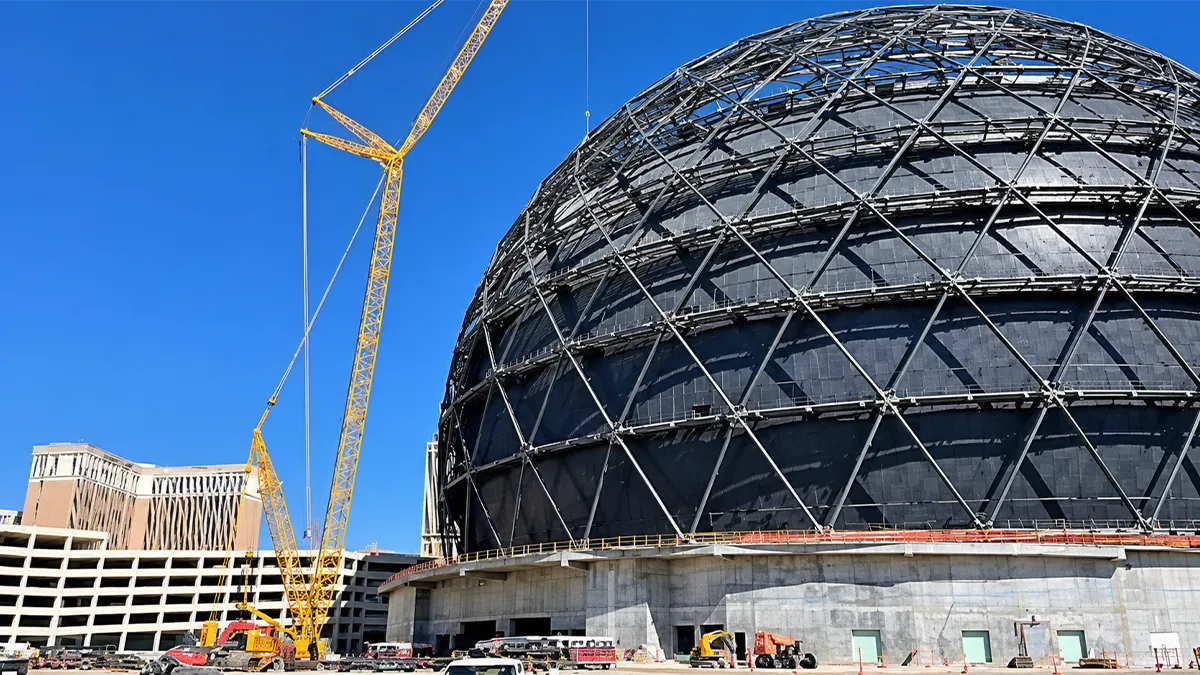
As the Entertainment Capital of the World, Las Vegas is constantly creating wonders for the entertainment experience. One of the highlights is the MSG Sphere. Do you know about this giant LED sphere? Let’s unveil its mystery.
What is an MSG LED Sphere?
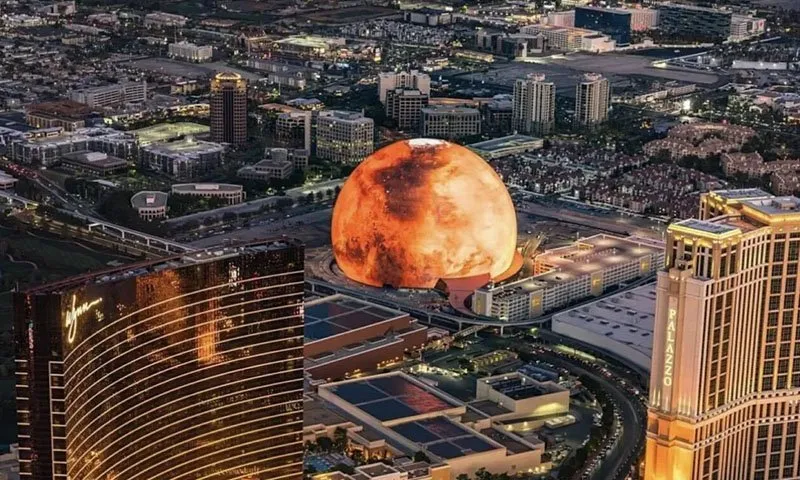
Sphere in Las Vegas is a purpose-built entertainment venue combining a spherical exterior media surface with an immersive interior display and audio system. The two screens serve different audiences: the exterior can be seen from the surrounding city, while the interior surrounds the seated audience. They should not be treated as one screen with one resolution or pixel pitch.
The venue's official technology overview lists about 580,000 square feet of exterior display and 160,000 square feet of interior display, with a 16K interior presentation system. These figures describe a large architectural project, not a standard sphere product that can simply be scaled by ordering more cabinets.
For someone planning a smaller installation, the useful lesson is the coordination of display geometry, content, structure and viewing positions. A sphere-shaped attraction might prioritize exterior branding, an immersive interior, or a combination. Define that experience first; it determines the display approach and much of the supporting infrastructure.
How is the MSG Sphere made up?
Architectural exterior design
Sphere’s exterior uses approximately 1.2 million LED pucks, with 48 individual LED diodes in each puck, according to Sphere’s exterior-launch announcement. Pucks and individual diodes are different counting units; neither should be casually relabeled as a conventional rectangular pixel grid.
The exterior display, called the Exosphere, turns the building into a large media canvas. Content must account for a curved surface, distant viewing and the directions from which people approach. Fine text that works on a nearby flat monitor may not read clearly on an architectural sphere, so large shapes, contrast and motion need to be designed for the site.
Architectural Interior Design
Inside, the wraparound screen, spatial audio and selected sensory effects support an immersive seated experience. The venue currently lists 17,385 seats on its technology overview; event layouts and capacity descriptions should be checked for the specific show. Visual, auditory, tactile and environmental effects work together, rather than being interchangeable features of the LED screen.
Visual system
The large wraparound display extends imagery beyond a conventional stage backdrop. Producing content for this geometry requires careful camera, rendering and playback decisions. A panoramic source must be mapped to the display surface so that scale and perspective work for the audience. Simply stretching a standard flat video across a sphere would distort important subjects.
Audio system
Sphere Immersive Sound uses HOLOPLOT technology to control sound coverage across the venue. The system is integrated with the architecture and show playback. Sound-system design is a separate engineering discipline from specifying LED pixels, even though the two must remain synchronized during the performance.
HOLOPLOT’s beamforming and wave-field-synthesis approach helps direct sound within the audience area. For a smaller venue, begin with intelligibility, coverage and synchronization requirements instead of assuming that the same loudspeaker arrangement should be copied.
But on top of that, the system delivers a clear and personalized sound experience for each audience member, depending on where they’re sitting. It can even highlight the sound of different instruments or make the audience feel like someone is whispering in their ear.
MSG Sphere also uses HOLOPLOT’s Wave Field Synthesis technology, which is a spatial audio rendering technique that lets sound designers create virtual points of sound at precise locations. This means that audio can be directed to the listener and sound very close even when the source of the sound is far away.
Touch system
Haptic seats can add physical feedback synchronized with a presentation. Environmental effects such as wind can support particular scenes. These effects belong to the venue's show systems and should not be described as properties of the LED display itself.
For a smaller immersive attraction, decide whether tactile feedback adds enough to the experience to justify dedicated control, seating and maintenance. Content timing matters: a vibration arriving after the visible action can weaken the effect. The show design should define when and where each effect operates, rather than running every effect continuously.
Olfactory system
The olfactory system is another cool feature. It releases different odors for different themes, enhancing the audience’s sensory experience.
Internal center stage screen
A performance can add stage scenery and temporary display surfaces in front of the venue's permanent wraparound screen. Those production elements have their own dimensions, support systems and suppliers. They should not be used to infer the cabinet count or construction of the permanent interior display.
The stage and the surrounding image need a shared visual plan. A central platform can provide a physical reference while the large background changes scale or location. Content teams should account for sightlines, live cameras, performer visibility and the transitions between stage lighting and screen imagery.
For a custom project, separate the permanent display scope from show-specific scenery in the equipment list. This helps clarify which team supplies the playback canvas, which team manages event graphics, and who checks synchronization and access during rehearsals.
How to Build it?
Building a venue-scale sphere requires the structure, enclosure, media system and operations plan to be engineered together. The display adds weight, power demand, heat and service requirements. The support structure must be designed for its actual site and loads, with access for both initial installation and later component replacement.
Display geometry also affects production. Curved layouts need a defined pixel map and content workflow; the apparent shape changes as viewers move. Before committing to the final design, model the audience positions and rehearse representative content. A visually impressive rendering does not by itself establish readability or maintainability.
For a smaller installation, divide the work into structure, display, electrical distribution, playback and access. Agree on the interfaces between the teams. Confirm how modules can be reached after the sphere is enclosed, how equipment can be isolated for service and how content will be updated. These practical decisions often matter more than copying a famous building's construction sequence.
Low-Cost Las Vegas LED Sphere Alternative
A smaller sphere can borrow the visual idea without reproducing the entire Las Vegas venue. The right budget depends on diameter, viewing distance, indoor or outdoor conditions, image detail and supporting systems. The following four approaches serve different goals; a lower-cost decorative effect is not equivalent to an immersive video display.
Custom LED Sphere display
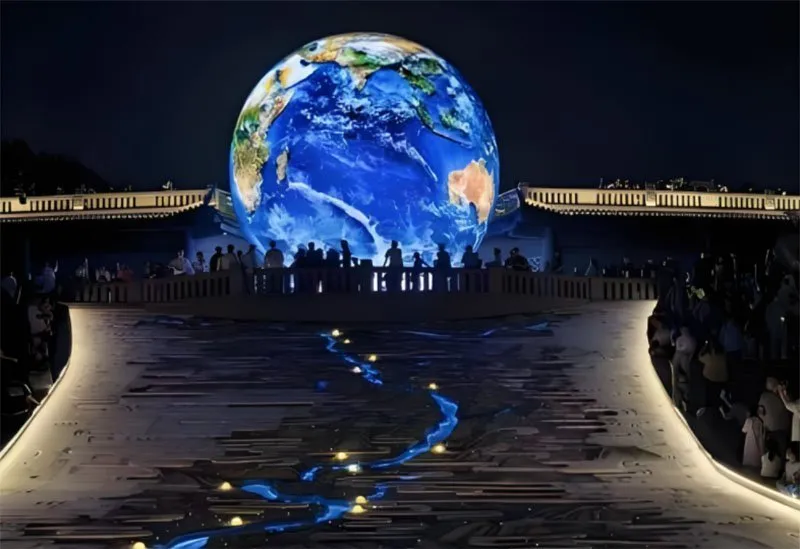
A custom direct-view LED sphere uses a mapped arrangement of LED modules to form the image. Choose diameter and pixel pitch together with the nearest viewing position and content detail. A pitch range cannot be declared sufficient for every venue. Evaluate the seams, surface continuity and service method on the proposed design.
Pros:
Having a great display effect;
Brightness can be selected for the intended use;
Modular construction can support component replacement;
Environmental protection and brightness must match the installation;
Can display during the day or night.
Cons:
The budget includes custom geometry, structure, content mapping and service access.
See custom LED sphere displays.
Projection mapping on a sphere
Projection mapping uses a suitable spherical surface and one or more projectors. It is not the same as a hologram. Required output depends on image area, surface reflectance, throw distance and ambient light; there is no universal 20,000-lumen minimum. Check shadows, blending and maintenance access before choosing this route.
Pros:
Moderate cost;
Detailed imagery is possible with appropriate projection coverage;
Great sound and light effects;
It’s easy to maintain, and the daytime building looks great too.
Cons:
it’s prone to light interference, which can affect the perception.
Point light source
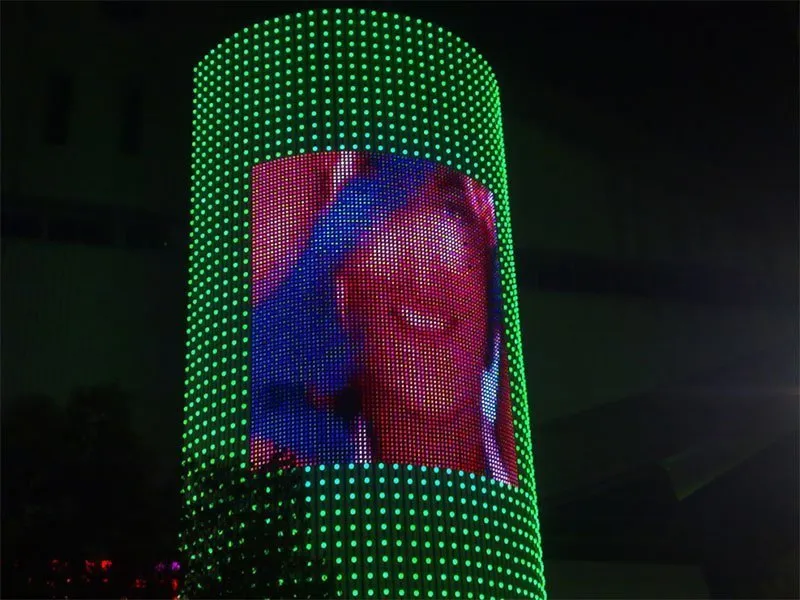
This case also needs to do a spherical building (hollow can be), which is relatively affordable.
Pros:
Useful for large luminous patterns, with brightness selected for ambient light.
Distributed points can cover a large surface.
Cons:
Due to Low imaging pixels, so you can’t get a really sharp picture.
You’ll need to watch from a distance,
It is slightly worse effect in the daytime;
Color light belt
This case also needs to do a spherical building (hollow can be), and the cost is slightly lower.
Pros:
Can create visible architectural patterns; daylight contrast needs evaluation.
Repeated lighting elements can suit decorative animations.
Cons:
Low imaging pixel and it can’t come out of the fine picture. You have to view it from a distance;
The landscape effect is slightly worse during the day.
Conclusion:
Sphere demonstrates how a building-scale canvas can combine with spatial audio and show design. A smaller custom sphere should start with its own audience and operating requirements. Compare the four approaches above, then define diameter, content, viewing distance and access before selecting the display system.
Plan a custom LED sphere around the actual site
Begin with the sphere diameter, indoor or outdoor location, nearest viewing distance and the content you want to show. A decorative animated pattern and close-view video need different pixel layouts. Include the support arrangement and the space available for service, because access becomes harder once a curved enclosure is complete.
Ask for the proposed pixel map before commissioning final content. Review how graphics meet around the surface and how the image reads from the main approach directions. The complete budget should distinguish the display from structure, electrical work, playback, installation and content production.
See custom LED sphere displays for the product route. Share a site drawing and these project inputs to discuss a scope suited to your installation.
Bring the screen dimensions, viewing distances, content and installation conditions to the next step.