All-in-One COB LED TV
  Flexible LED Displays
  Transparent LED Displays
  Led Poster
  Circular LED Displays
  Creative & Custom LED Displays
 In today’s rapidly evolving landscape of display technology, the LED display industry is undergoing a profound transformation. MiP (Micro LED in Package) and COB (Chip-on-Board), as two cutting-edge technological pathways, are collaboratively painting a grand vision that transcends traditional competition. This is not merely a clash of technologies but a redefinition of the industry ecosystem. Through competition and complementarity, they are injecting boundless possibilities into the future of the display sector.
A New Direction for the Display Industry
In recent years, as consumer demand for high-definition and reliable display devices has surged, LED display technology has entered a new phase of development. The rise of small-pitch LED direct-view technology has become a pivotal force driving this shift. Since 2023, MiP encapsulation technology has emerged like a fresh breeze in the small-pitch domain, capturing attention with its seamless integration into the surface-mount process.
Meanwhile, COB technology continues to solidify its leadership in the ultra-small-pitch market with its deep-rooted advantages. The parallel advancement of these two technologies has not only expanded the application boundaries of LED displays but also provided diverse pathways for industrial upgrading.
MiP’s rise stems from its innovative encapsulation structure. As an independent device packaging format, it integrates miniaturized LED crystal particles with traditional surface-mount processes, reducing the cost of technological iteration while offering the market a fresh option.
On the other hand, COB leverages its full-chain integration and superior display performance to maintain a stronghold in the ultra-small-pitch segment. Against this backdrop, discussions within the industry about the future trajectories of MiP and COB have grown increasingly fervent—are they rivals or partners in progress?
MiP and COB: Symbiosis Amid Competition
On the surface, MiP and COB appear to overlap in the small-pitch LED direct-view market, particularly in the ultra-small-pitch realm below P1.0. By introducing surface-mount processes, MiP has extended its reach into this high-precision market, engaging in direct competition with COB.

Data suggests that in the sub-P1.0 market, COB commands over 50% of the share, while the “four-in-one” technology (IMD, also known as MiP in one) secures a foothold with its cost advantages. In contrast, MiP’s application in ultra-small-pitch scenarios remains in its infancy, though its potential is undeniable.
As market demands evolve, COB has made continuous strides in cost optimization and performance enhancement. For instance, the penetration rate of P1.5-level products has approached 20%, and in the sub-P2.0 market, COB is projected to capture 30%-50% of demand in the coming years. Meanwhile, MiP’s applications in larger pitch ranges are expanding to P2.0 and even P3.0-4.0, creating evident market overlap with COB. However, this overlap is not a zero-sum game but a natural division driven by their distinct technological traits.

MiP and COB also share striking similarities in the challenges they face. Whether it’s the hurdle of mass transfer in ultra-small-pitch applications or the pressure of high costs, both encounter comparable bottlenecks. While MiP mitigates some transfer density issues through independent device encapsulation, it has not fundamentally resolved the demand for massive device quantities in ultra-small-pitch displays.
COB, with its shorter industrial process and higher terminal reliability, remains the preferred choice for many companies in this domain. Experts note that for products like P0.5, both MiP and COB rely on sophisticated mass transfer technologies, intertwining their technical foundations.
In larger pitch markets, competition between MiP and COB shifts toward cost and user experience. MiP capitalizes on the flexibility of surface-mount processes to carve out a niche in traditional RGB device markets, while COB reinforces its dominance in high-end segments with its durability and display quality. This differentiated competition creates room for their coexistence.
A Symphony of Industrial Upgrading and Replacement
A growing consensus within the industry views MiP and COB not as adversaries but as complementary allies. MiP is seen as a technology of “industrial replacement,” while COB represents “industrial upgrading.”
MiP’s core value lies in its revitalization of the traditional RGB LED market. By introducing mini/micro LED crystal particles into surface-mount-dominated markets, it provides a solution for the miniaturization upgrade of products above P2.0. This approach not only enhances the luminous efficiency of LED products but also breathes new life into traditional market iterations. Conversely, COB’s strength lies in its full-chain integration.
From epitaxial wafers to terminal display units, COB optimizes the manufacturing process—a critical advantage in the ultra-small-pitch era, as it shortens production cycles and boosts technical concentration and market competitiveness.
In practice, MiP and COB each shine in their respective domains. MiP drives technological renewal in mid-to-large pitch markets by replacing traditional RGB beads, while COB, with its reliability and performance, propels small-pitch LEDs toward even smaller pitches. Yet, their development is not isolated.
Challenges such as mass transfer breakthroughs and micro LED crystal quality improvements are upstream issues they must tackle together. As one expert remarked, “MiP can be seen as a single RGB-encapsulated variant of COB—both are paving the way for the industry’s future.”
This technological convergence transforms their competition into a symphony—each playing distinct melodies that harmonize to advance the industry. Whether MiP’s “divide and conquer” or COB’s “unite and excel” proves superior will ultimately be determined by real-world industrial practice.
Dual Approach: A Rational Market Choice
In today’s market landscape, companies investing deeply in both MiP and COB technologies are not uncommon. This “dual-track” strategy has become a rational choice for industry leaders to mitigate the risks of rapid technological iteration.
For companies with established COB expertise, abandoning prior investments is impractical. However, MiP’s potential to replace traditional RGB beads in markets above P1.0 and its exploratory space in ultra-small-pitch applications compel these firms to closely monitor its progress. For enterprises yet to enter the ultra-small-pitch market, MiP serves as a gateway to the mini/micro LED era, with its appeal hinging on cost competitiveness in traditional pitch ranges.
“Customer needs and technical capabilities dictate companies’ differing stances on MiP and COB, but no one denies their future value,” an industry insider observed. From the shift from SMD to COB to MiP’s recent rise, each technological leap in the display industry has been marked by innovation and challenges.
The future may bring entirely new solutions or a convergence of existing ones, but for now, pursuing multiple pathways remains a prudent strategy for leading firms to seize opportunities and hedge risks.
Mature Market Showdown: Cost Takes Center Stage
Since the MiP concept emerged in 2021, its momentum has been remarkable. By 2024, industry focus peaked, with key products hitting the market. Yet, this period also marks COB’s rapid maturation. Projections indicate that by 2025, COB’s substitution rate in the small-pitch LED market will reach 15%-30%, potentially exceeding 40%-50% within two to three years. This suggests that, starting from 2021, COB could achieve over fivefold market growth within five years.
In mature markets above P0.7, competition increasingly centers on cost and reliability. Beyond display quality, customers demand long-term stability and supply chain maturity. COB’s first-mover advantage gives it a strong edge in this arena, while MiP faces the critical challenge of enhancing cost competitiveness beyond its technical merits.
Yet, MiP and COB are not locked in a “life-or-death” struggle. They are more like partners running side by side, each shining in its unique market space. In the short term, these two technologies will serve as the “twin engines” propelling the LED direct-view industry toward a brighter future.
Looking Ahead: A Collaborative Triumph
The future of the display industry promises a grand celebration of technology and market synergy. The parallel development of MiP and COB not only enriches industry options but also fuels boundless innovation. Amid this transformation, numerous companies are embracing change with open arms. Take DOIT VISION, a global innovator in the LED display sector, as a prime example.
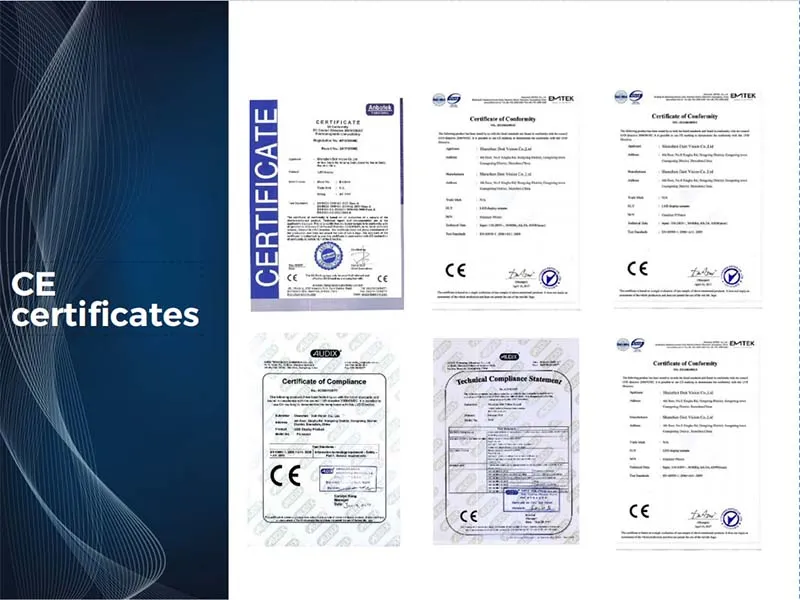
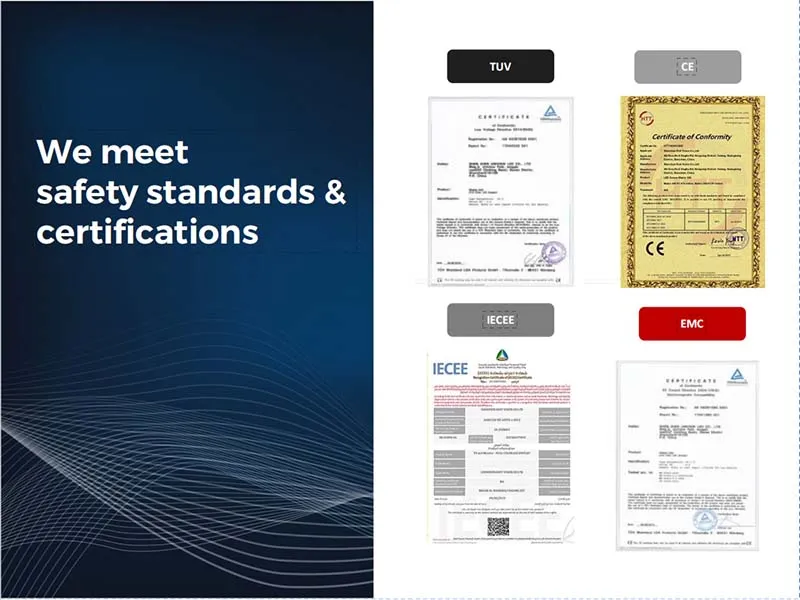
Headquartered in Shenzhen, China, DOIT VISION was founded in 2013 and has swiftly risen to prominence, driven by founder Kris Liang’s over a decade of expertise in LED displays and a top-tier R&D team. Specializing in the design and manufacture of LED screens, the company has launched groundbreaking products like the Matrix 500 rental panel and small-pitch outdoor IP68 flexible LED displays, showcasing its technical prowess. Committed to a “customer-first” philosophy, DOIT VISION offers both high-quality standard products and tailored solutions, with a service network spanning over 50 countries and more than 500 successful projects worldwide. Certified by CE, UL, ETL, and other international standards, DOIT VISION combines exceptional quality with professional service, earning the trust of global clients.
As MiP and COB technologies reshape the industry landscape, companies like DOIT VISION contribute to its prosperity with their innovative spirit and market insight. Looking forward, whether through technological breakthroughs or market expansion, the display industry will shine even brighter through collective efforts.